Residential ant control
Pleasant Hill homes can need interior trail treatment plus exterior work around slabs, siding, crawl spaces, and foundation entry points.
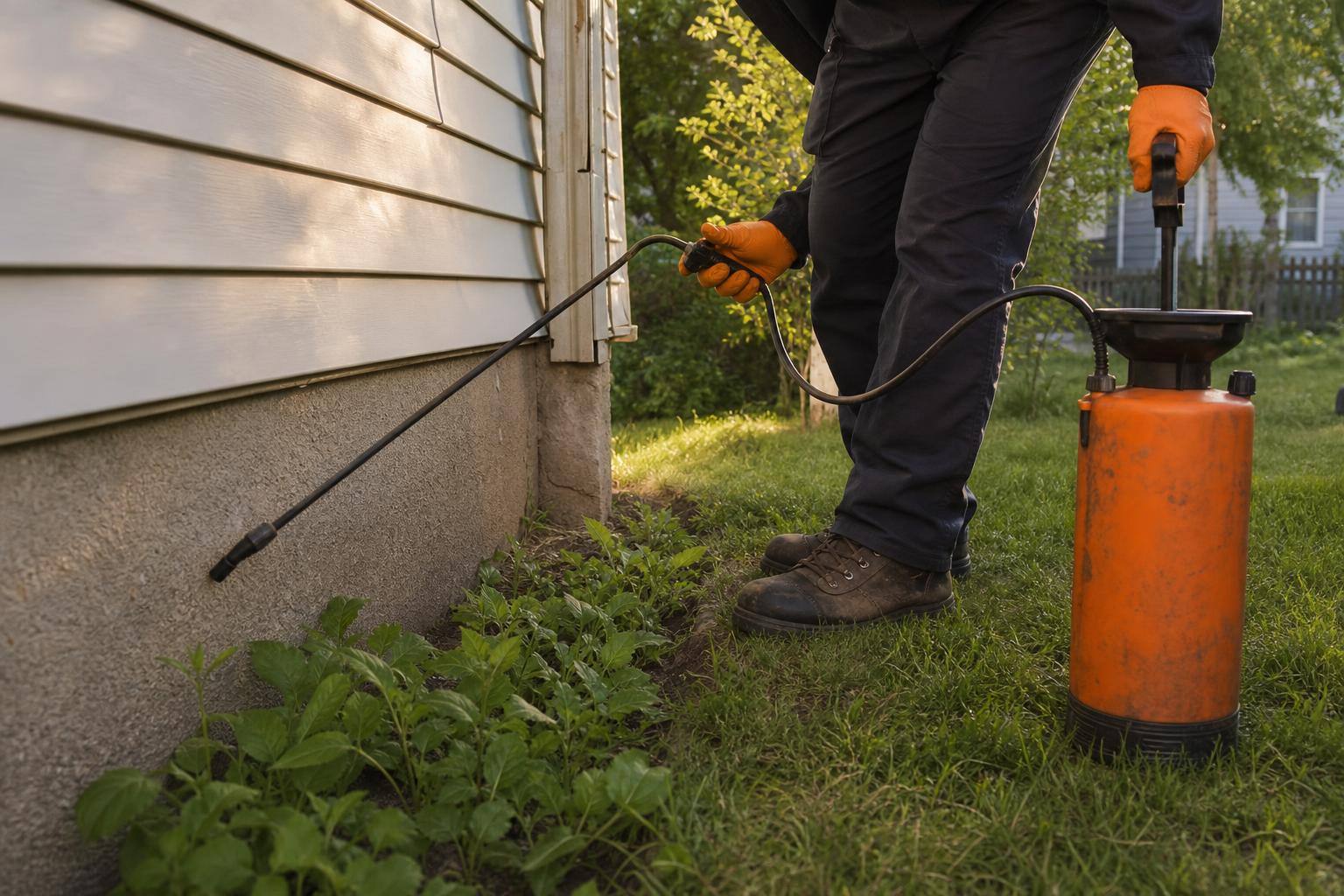
Ant control service · Pleasant Hill, MO
Older farmsteads near Pleasant Hill’s town edge often need ant work around foundations, kitchens, and outbuildings. One call gets the activity assessed and the right ant treatment lined up.
A real person answers · No forms · No waiting on a quote email
Plan
Older Pleasant Hill houses and expanding fringe properties usually start with an inspection, then move to targeted treatment or whole-home control when trails return.
Quote
The quote is given on the call and changes with activity, access, treatment areas, materials, and time on site.
Time
The visit time is set on the call around access to the home, yard, crawl space, or commercial work area.
Pleasant Hill homes near downtown, older farmsteads beyond the developed streets, and newer Kansas City fringe properties see different ant entry points. Work may involve kitchen cabinets, slab edges, crawl spaces, foundation cracks, yards, or detached structures, with Cass County soil and storm conditions shaping access.
Services
Pleasant Hill
Pleasant Hill combines established homes, newer fringe construction, rental units, and older farmsteads. That mix changes where ants travel and nest. Kitchen activity may trace plumbing or wall penetrations, while carpenter ants can follow damp wood near crawl spaces. Humid summers, spring saturation, expansive clay soils, and severe storms also change exterior conditions around slabs, foundations, yards, and outbuildings.
Pleasant Hill homes can need interior trail treatment plus exterior work around slabs, siding, crawl spaces, and foundation entry points.
Kitchen activity in Pleasant Hill may follow cabinet gaps, plumbing openings, or food sources, so the treatment starts by tracing the trail.
Older Pleasant Hill farmhouses and damp exterior wood can support carpenter ant activity around crawl spaces, porches, and detached structures.
Fire ant control addresses outdoor mounds and activity in Pleasant Hill yards, especially where saturated soil later dries and cracks.
Outdoor treatment covers Pleasant Hill foundation lines, patios, planting beds, utility penetrations, and accessible areas near the home.
Cass County offices, shops, and work buildings need activity mapped around break areas, utility rooms, loading areas, and exterior walls.
A Pleasant Hill prevention plan monitors recurring trails and refreshes accessible preventive treatment as conditions change around the property.
Most Pleasant Hill ant jobs begin with an inspection because older houses, newer fringe homes, and farmstead buildings can hide activity differently. A targeted treatment fits limited activity, while recurring trails across rooms and exterior edges may need whole-home control or prevention.
A technician identifies ant species, entry points, trails, and nesting conditions.
An inspection fits a Pleasant Hill homeowner who sees scattered ants but cannot locate the entry point. The technician checks species, trails, nesting conditions, foundation edges, and accessible interior areas.
Treatment addresses visible activity and accessible nesting or entry areas.
Targeted treatment suits a kitchen trail, one foundation section, or an accessible outdoor nest at a Pleasant Hill property where activity is limited to identified areas.
A coordinated interior and exterior treatment targets recurring activity around the property.
Whole-home control fits recurring activity moving between rooms, slabs, crawl spaces, and exterior edges, a pattern possible in older Pleasant Hill houses and expanding fringe properties.
Scheduled visits monitor activity and refresh preventive treatments as needed.
A prevention plan suits properties with repeated seasonal activity, detached buildings, damp yard edges, or several access points around a Pleasant Hill home or farmstead.
Cost
The exact quote is given on the call after the activity and property are described. Cost depends on the ant type, size of the treatment area, interior and exterior access, time on site, distance from Pleasant Hill, and parts or materials needed.
The ant species, number of active areas, building size, and whether activity reaches several rooms or exterior sides affect the work planned.
Distance to outlying farmsteads, narrow drives, detached buildings, crawl spaces, and blocked foundation lines can change travel and time on site.
Treatment materials and any parts needed to reach or address accessible entry areas affect the quote, based on the conditions found.
Spring saturation, expansive clay movement, storm debris, and wet or frozen ground can change exterior access and the work area.
Describe every active area during the call, including detached buildings and recurring trails. The quote is based on the stated scope, and changes in access or added treatment areas should be discussed before work expands.
What goes in
Indoor activity includes ants in kitchens, bathrooms, utility rooms, basements, and living areas. Pleasant Hill homes may show trails near plumbing openings or slab edges.
Outdoor work includes accessible nests, mounds, foundation lines, planting beds, and yard activity. A typical Pleasant Hill load may include soil, mulch, or storm debris near the work area.
Carpenter ant work covers activity associated with damp or damaged wood, crawl spaces, porches, wall voids, and detached structures around older Pleasant Hill properties.
Not accepted. Ant treatment does not cover inaccessible areas, unrelated structural repairs, hazardous conditions, or materials and pests outside the agreed treatment scope.
Projects
Kitchen ant control traces activity around cabinets, sinks, plumbing openings, and food storage in Pleasant Hill homes before accessible treatment areas are selected.
Foundation work checks slab edges, crawl space openings, siding transitions, and soil contact around Pleasant Hill houses affected by clay movement and storms.
Carpenter ant control fits older farmsteads and houses near Pleasant Hill where damp wood, porches, crawl spaces, or detached structures may shelter activity.
Fire ant control addresses identified outdoor mounds and activity in accessible Pleasant Hill yards, planting beds, and open areas near buildings.
Yard treatment covers accessible nests, trails, foundation edges, and outdoor areas in Pleasant Hill where spring moisture and summer humidity affect ant movement.
Apartment ant control considers kitchens, shared walls, utility penetrations, and neighboring units, with landlord or property manager rules addressed before work.
Commercial control maps activity in Cass County offices, shops, work buildings, break areas, utility rooms, and exterior walls without disrupting unapproved areas.
Describe the property, visible ants, and the areas where activity appears. An inspection can identify species, trails, entry points, and nesting conditions.
Share when ants appear, how often trails return, whether activity is indoors or outdoors, and any moisture or storm damage nearby.
The technician explains the recommended treatment scope and the accessible areas involved. Work proceeds after the plan and quote are approved.
Follow preparation guidance, correct accessible moisture conditions, and consider a prevention plan if trails return across seasons or property areas.
Weather
Pleasant Hill’s humid summers can increase ant movement, while severe storms may wash out outdoor activity or leave debris near foundations. Spring saturation and expansive clay soils can change cracks, drainage, and access. Snowy freezes slow exterior work and may shift activity indoors.
Placement
Work may occur in kitchens, basements, utility rooms, crawl spaces, slab edges, foundation lines, yards, and detached buildings. Stored items, low crawl spaces, wet or frozen ground, storm debris, locked gates, and narrow farm drives can limit access.
Permits
Ant treatment at a private property usually does not require a local construction permit, but structural changes, public right of way work, or other related work may involve the City of Pleasant Hill or Cass County. The call covers whether an inspection or approval applies and who arranges it.
Some Pleasant Hill subdivisions, rental properties, and Cass County communities have covenants or landlord rules about exterior treatment, scheduling, notices, and visible equipment. Check those rules before exterior work or treatment near shared property.
Keep the active rooms, utility spaces, crawl space access, foundation edges, and yard areas reachable. Provide safe parking for the work vehicle, secure people and pets, unlock gates, and mention wet ground, frozen conditions, storm debris, or other hazards.
Service covers homes and businesses in downtown Pleasant Hill, established residential streets, newer Kansas City fringe growth, and rural properties around the town edge. Work can also be discussed for nearby Osawatomie, Lawrence, Tecumseh, Jerico Springs, and Holton when the property location is confirmed.
Not sure about your street? Ask on the call and we will tell you which office handles it.
Timing
Ant activity in Pleasant Hill often becomes more noticeable during humid summer conditions and after spring moisture changes soil around foundations. Severe storms can shift outdoor trails, while snowy freezes push activity toward protected interior areas. Older farmsteads and newer fringe homes may show different seasonal entry routes.
Saturated ground around Pleasant Hill foundations can redirect ants toward slabs, crawl spaces, and wall openings. Clear storm debris and note drainage or clay movement before exterior areas are assessed.
Humid summer conditions can increase visible trails around kitchens, yards, and exterior walls. A prevention plan may help properties with repeated activity across the developed town edge or nearby farmsteads.
Service area
Pleasant Hill is part of our Cass County coverage, and we also serve the neighboring communities below.
Why us
Pleasant Hill’s mix of older farmsteads and growing fringe construction creates different ant routes. A technician may need to compare kitchen trails, slab edges, crawl spaces, detached buildings, and yard nests instead of treating one visible spot alone.
Getcha Pest Control · Pleasant Hill
Cass County weather and expansive clay soils affect exterior access and foundation conditions. Spring saturation, severe storms, humid summers, and snowy freezes can all move ant activity, debris, and moisture around the work area.
Click Here to Call (888) 510-9023FAQs
Still have a question about Pleasant Hill? Call (888) 510-9023 and ask a real person.
The exact quote is given on the call. Cost depends on the ant species, treatment area, building size, interior and exterior access, time on site, distance from Pleasant Hill, and parts or materials needed.
An inspection is the starting point when the species or entry point is unclear. Targeted treatment fits limited activity, while whole-home control or a prevention plan suits recurring trails across rooms, foundations, yards, or detached buildings.
The visit time is set on the call after the property and activity are described. Ask about available scheduling, and explain if ants are affecting a kitchen, rental, commercial space, crawl space, or outdoor area.
An ant treatment addresses identified activity and accessible entry or nesting areas within the approved scope. Depending on the job, that may include interior trails, foundation lines, crawl spaces, yards, or detached structures.
It does not cover inaccessible areas, unrelated structural repairs, hazardous conditions, or pests and materials outside the agreed scope. Mention moisture damage, blocked access, and previous treatments before the quote is set.
Routine ant treatment on private property usually does not need a construction permit. Structural changes, public right of way work, or related local requirements may involve the City of Pleasant Hill or Cass County, and the call covers who arranges any needed review.
Access is needed to the active rooms, utility spaces, crawl space openings, foundation edges, yards, and any detached structure included in the plan. Move stored items, unlock gates, provide vehicle parking, and keep pets and people clear.
Have the property address, building type, rooms or outdoor areas affected, ant appearance if known, activity pattern, prior sprays or bait use, moisture concerns, pets, and access limits ready for the call.
Yes. Humid summers can increase trails, spring saturation can redirect activity toward foundations, severe storms can block or wash out exterior areas, and snowy freezes can shift ants indoors. Weather may change which areas are accessible.
Entry may follow plumbing openings, slab edges, foundation cracks, damp wood, crawl spaces, siding transitions, or disturbed soil. Older farmsteads and newer fringe homes can have different routes, so the inspection checks the property rather than assuming one cause.
A real person answers · No forms · Every quote given on the phone