Residential cockroach control
Treatment for Abingdon houses, townhomes, and split-levels, with attention to kitchens, bathrooms, basements, and utility penetrations.
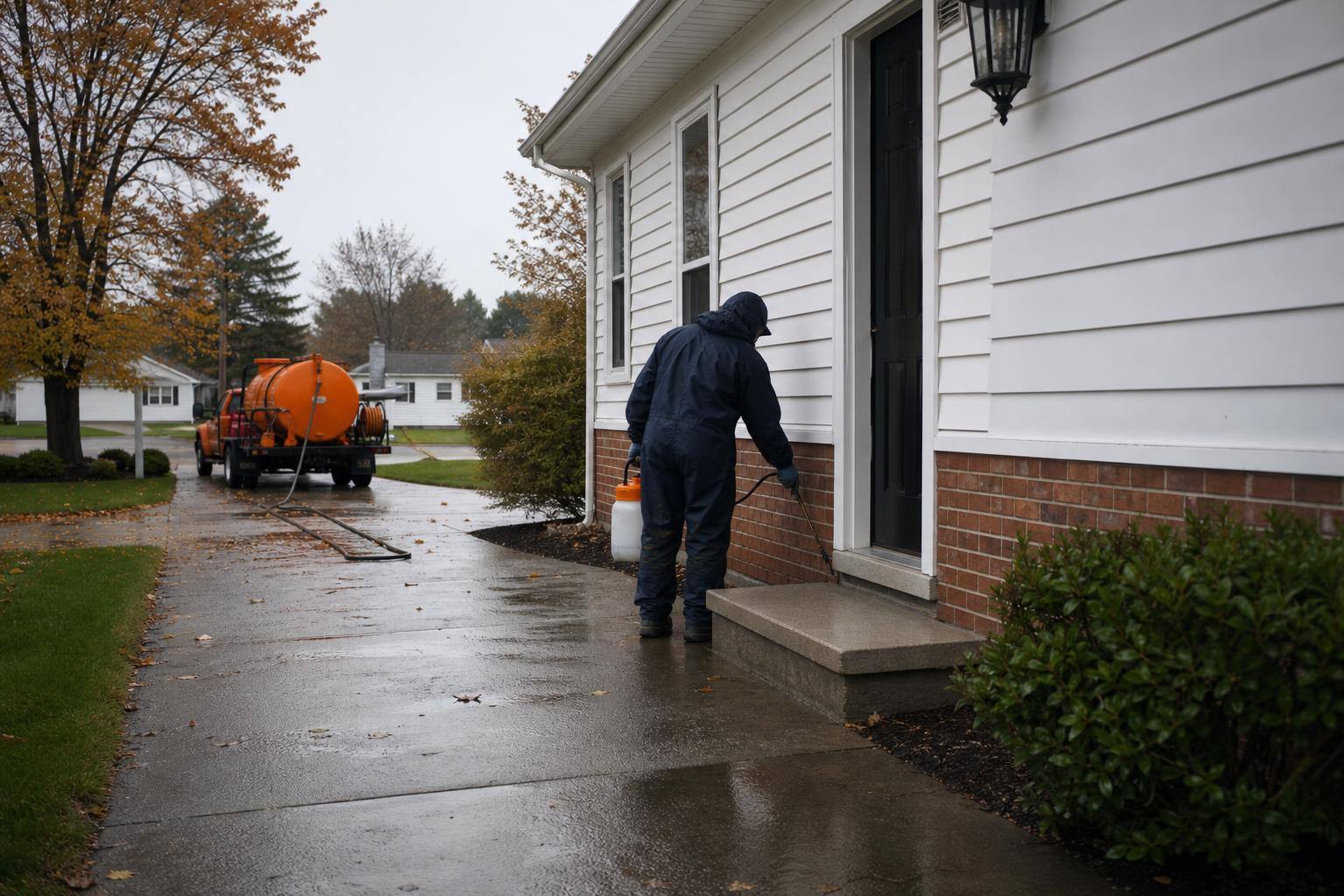
Cockroach control service · Abingdon, MD
Townhomes in Abingdon subdivisions often hide cockroaches behind kitchen appliances, under sinks, and near damp utility areas. One phone conversation sorts the inspection, treatment scope, and visit details.
A real person answers · No forms · No waiting on a quote email
Plan
For an Abingdon townhouse or older split-level with activity in more than one room, a whole-home treatment may fit better than treating one visible kitchen.
Quote
The quote is given on the call and changes with activity, rooms, access, materials, and travel from the Abingdon service area.
Time
The visit time is set on the call around access to the home, occupants, pets, and the affected rooms.
Cockroach work in Abingdon ranges from kitchens in Baltimore exurban subdivisions to basement utility areas near Winters Run and apartment units along the Route 24 corridor. Mixed housing ages can put activity behind newer cabinetry, around older plumbing, or near foundation moisture after heavy rain. The treatment plan follows the building, not just the sighting.
Services
Abingdon
Abingdon homes include newer subdivision construction, older houses, townhomes, and apartment buildings, so cockroach activity can travel through plumbing gaps, shared walls, utility spaces, and damp foundation areas. Humid summers and heavy rain can increase moisture around slabs and basements, while winter freezes push activity indoors. The service starts by matching the treatment to the building and affected rooms.
Treatment for Abingdon houses, townhomes, and split-levels, with attention to kitchens, bathrooms, basements, and utility penetrations.
Focused control for activity around sinks, dishwashers, refrigerators, cabinets, and pantry areas in Abingdon subdivision kitchens.
A room-specific plan for Abingdon apartment units, including access coordination and attention to shared walls and plumbing routes.
Scheduled inspections, follow-up treatments, and monitoring for properties near Abingdon corridors where activity keeps returning.
An inspection for Abingdon renters, buyers, and property managers before furniture, appliances, or stored items fill the rooms.
Coordinated treatment for Abingdon rental turnover, occupied units, access needs, and documentation requested by the property manager.
Control for Abingdon offices, restaurants, warehouses, and other occupied work areas with access and monitoring handled around operations.
The most common Abingdon jobs begin with an inspection or targeted treatment because activity is often reported in one kitchen or bathroom. Older housing, attached units, and moisture near foundations can justify moving to whole-home or recurring control.
A technician inspects kitchens, bathrooms, utility areas, and hiding places for cockroaches and signs of activity.
An inspection fits an Abingdon move-in, a first sighting, or unexplained droppings. Kitchens, bathrooms, utility areas, and hiding places are checked for activity and signs.
A targeted service treats identified rooms with methods such as approved baits, gels, dusts, or localized applications.
A targeted treatment suits identified rooms in an Abingdon townhouse or apartment when activity is localized. Approved baits, gels, dusts, or localized applications are selected for the area.
A whole-home treatment addresses active areas throughout the residence and includes practical sanitation and exclusion guidance.
A whole-home treatment fits an Abingdon split-level, older house, or townhouse with activity across rooms. Active areas are addressed along with sanitation and exclusion guidance.
A recurring plan combines scheduled inspections, follow-up treatments, and monitoring to manage ongoing cockroach pressure.
Recurring control is useful for Abingdon properties with repeated activity, shared-wall exposure, or ongoing moisture concerns. Scheduled inspections, follow-up treatments, and monitoring manage pressure over time.
A commercial service treats occupied business areas while coordinating access, monitoring, and documentation with site requirements.
Commercial control serves Abingdon restaurants, offices, and warehouses where occupied areas require coordinated access, monitoring, and documentation around site requirements.
Cost
The exact quote is given on the call after the treatment type and property conditions are discussed. Cost depends on the size and type of job, rooms affected, activity level, parts and materials, time on site, access, distance from Abingdon, and after-hours work.
A kitchen-only treatment differs from work across an Abingdon townhouse, basement, bathrooms, utility areas, or several apartment rooms.
Driveway layout, apartment access, parking, locked utility spaces, and travel from the Abingdon area can change time on site and scheduling.
Approved baits, gels, dusts, and localized applications vary with the rooms, surfaces, activity, and treatment method selected for the property.
After-hours commercial work, occupied buildings, difficult access, heavy rain, or moisture around the foundation can affect the work plan and cost.
To avoid surprise charges, describe every affected room, access issue, pet concern, and prior treatment on the call. The exact quote is given before the visit is set, based on the stated work.
What goes in
This covers activity around Abingdon sinks, dishwashers, refrigerators, cabinets, and food storage areas. Clean access helps the technician inspect hiding places and treatment surfaces.
Apartment treatment covers activity within the unit and coordinates access around shared walls, plumbing routes, residents, and property management requirements common in Abingdon buildings.
Commercial control covers occupied work areas such as an Abingdon restaurant kitchen, office, or warehouse, with site access, monitoring, and documentation discussed in advance.
Not accepted. The service does not cover unrelated pests, unsafe or inaccessible areas, hidden structural repairs, or removal of people, pets, food, appliances, or stored property.
Projects
Kitchen treatment in Abingdon focuses on sinks, appliances, cabinets, and plumbing gaps where food, warmth, and moisture support activity.
Bathroom work checks drains, vanity plumbing, baseboards, and utility routes, especially in older Abingdon homes with moisture near the foundation.
Apartment treatment in Abingdon accounts for shared walls, occupied rooms, building access, and activity that may follow plumbing connections.
Harford County property managers can arrange an inspection and treatment during Abingdon rental turnover before furniture and new occupants arrive.
Restaurant control in the Abingdon area requires careful access planning around food preparation, storage, staff movement, and operating requirements.
Office treatment covers break rooms, bathrooms, utility closets, and storage areas in Abingdon buildings without assuming a kitchen sighting is isolated.
Warehouse work in Abingdon examines receiving areas, stored goods, drains, break rooms, and wall edges while coordinating access with site operations.
A real person takes the booking by phone and records the Abingdon property type, affected rooms, and immediate concerns.
Explain sightings, droppings, odors, moisture, prior treatments, pets, occupants, and any rooms that are difficult to enter.
The treatment type, materials, access needs, and exact quote are reviewed before the visit is arranged.
The technician treats the agreed areas and explains practical sanitation, exclusion, follow-up, or monitoring steps for the selected service.
Weather
Abingdon's humid summers can support indoor activity around damp plumbing and foundation areas. Heavy rain can increase moisture near slabs, crawl spaces, and basements, while winter freezes drive pests toward heated interior spaces. Weather may affect access, exterior observations, and the visit setup.
Placement
Work may involve kitchens, bathrooms, basements, crawl spaces, slabs, utility rooms, cabinet voids, and limited yard areas around entry points. Stored items, tight crawl spaces, locked rooms, appliances, pets, standing water, and muddy ground can limit access or change the plan.
Permits
Routine indoor cockroach treatment usually does not involve a local government permit, but unusual exterior work, public access, or inspection requirements can change that. For an Abingdon property, the call covers whether Harford County or another local authority needs to be involved and who handles any required arrangement.
Harford County homeowners associations and covenant communities may have rules about exterior applications, entry access, notices, or vendor activity. Landlords and property managers may also require approval before treatment in an Abingdon rental.
Clear a path to affected rooms, under-sink cabinets, utility spaces, crawl-space entries, and relevant shutoffs. Provide parking for the work vehicle, keep people and pets away, and mention wet ground, heavy rain, frozen conditions, or standing water before the visit.
Service covers Abingdon neighborhoods and subdivision corridors around Route 24, including homes near Constant Friendship and the Winters Run area, along with apartments, rentals, offices, and commercial properties throughout the town. Nearby coverage can include Perryman, Parkville, Worton, Lutherville Timonium, and Rising Sun when arranged on the call.
Not sure about your street? Ask on the call and we will tell you which office handles it.
Timing
Cockroach reports in Abingdon commonly increase during humid summer weather and after heavy rain drives activity toward dry interior areas. Winter freezes can also expose activity in heated kitchens, bathrooms, basements, and utility rooms. Mixed-age housing means seasonal changes show up differently in newer townhomes, older houses, and apartments.
Humid summers and heavy rain can leave foundation edges, crawl spaces, and utility areas damp. In Abingdon subdivisions, that moisture can make kitchens, basements, and plumbing routes worth checking closely.
Winter freezes push cockroaches toward heated rooms, cabinet voids, bathrooms, and utility spaces. Older Abingdon homes may need attention around foundation penetrations and plumbing where indoor warmth meets damp conditions.
Service area
Abingdon is part of our Harford County coverage, and we also serve the neighboring communities below.
Why us
Abingdon's mix of newer subdivisions, attached townhomes, older houses, and apartments changes how cockroaches move through a property. A kitchen sighting may involve cabinet voids and plumbing, while basement activity can point toward foundation moisture after heavy rain.
Getcha Pest Control · Abingdon
Harford County weather brings humid summers, winter freezes, and wet ground, so treatment planning includes utility rooms, crawl spaces, slabs, basements, and access around the building. The control level is based on what is active, where it is active, and how the property is built.
Click Here to Call (888) 510-9023FAQs
Still have a question about Abingdon? Call (888) 510-9023 and ask a real person.
The exact quote is given on the call after the job size, affected rooms, activity, materials, access, distance, and timing are discussed. An Abingdon townhouse with kitchen activity may differ from a whole-home treatment, apartment work, or commercial control.
An inspection fits a first sighting or move-in concern, while targeted treatment suits identified rooms. Whole-home treatment fits activity across an Abingdon house, and recurring control suits repeated pressure or ongoing building exposure.
The visit time is set on the call after the property, affected rooms, access, and scheduling needs are reviewed. Same-day or after-hours availability can be discussed, but the visit is not promised until it is arranged.
Treatment can cover kitchens, bathrooms, utility areas, basements, crawl-space access points, apartment rooms, or commercial areas identified in the control plan. The work may use approved baits, gels, dusts, localized applications, sanitation guidance, exclusion guidance, or monitoring as appropriate.
It does not cover unrelated pests, unsafe or inaccessible areas, hidden structural repairs, or removal of stored property, appliances, food, people, or pets. Those conditions should be described during the Abingdon booking so the work area can be planned.
Routine indoor treatment usually does not need a local government permit or inspection. Unusual exterior work, public access, or a site requirement may change that, and the call covers whether Harford County or another authority needs to be involved.
Access depends on the treatment, materials, rooms, occupants, and pets. Keep people and animals away from work areas as directed, clear cabinets and utility spaces where requested, and discuss re-entry instructions before approving the plan.
Have the property type, affected rooms, recent sightings, droppings or odors, moisture concerns, prior treatment, pets, occupants, parking limits, and access restrictions ready. For an apartment or rental, have the manager or landlord requirements available.
Yes. Humid summers, heavy rain, damp foundation areas, and winter freezes can change where activity is found and how exterior access is handled. Wet ground, standing water, frozen surfaces, or storm conditions should be mentioned when setting the visit.
Basements can offer moisture, warmth, plumbing routes, cracks, and sheltered utility spaces, especially after heavy rain or around older foundations. In Abingdon's mixed-age housing, basement activity is checked alongside kitchens, bathrooms, slabs, and crawl-space access rather than treated as an isolated sighting.
A real person answers · No forms · Every quote given on the phone