Residential cockroach control
Residential treatment checks kitchens, bathrooms, utility areas, and hiding places in Fruitland homes, including properties with basements or detached storage.
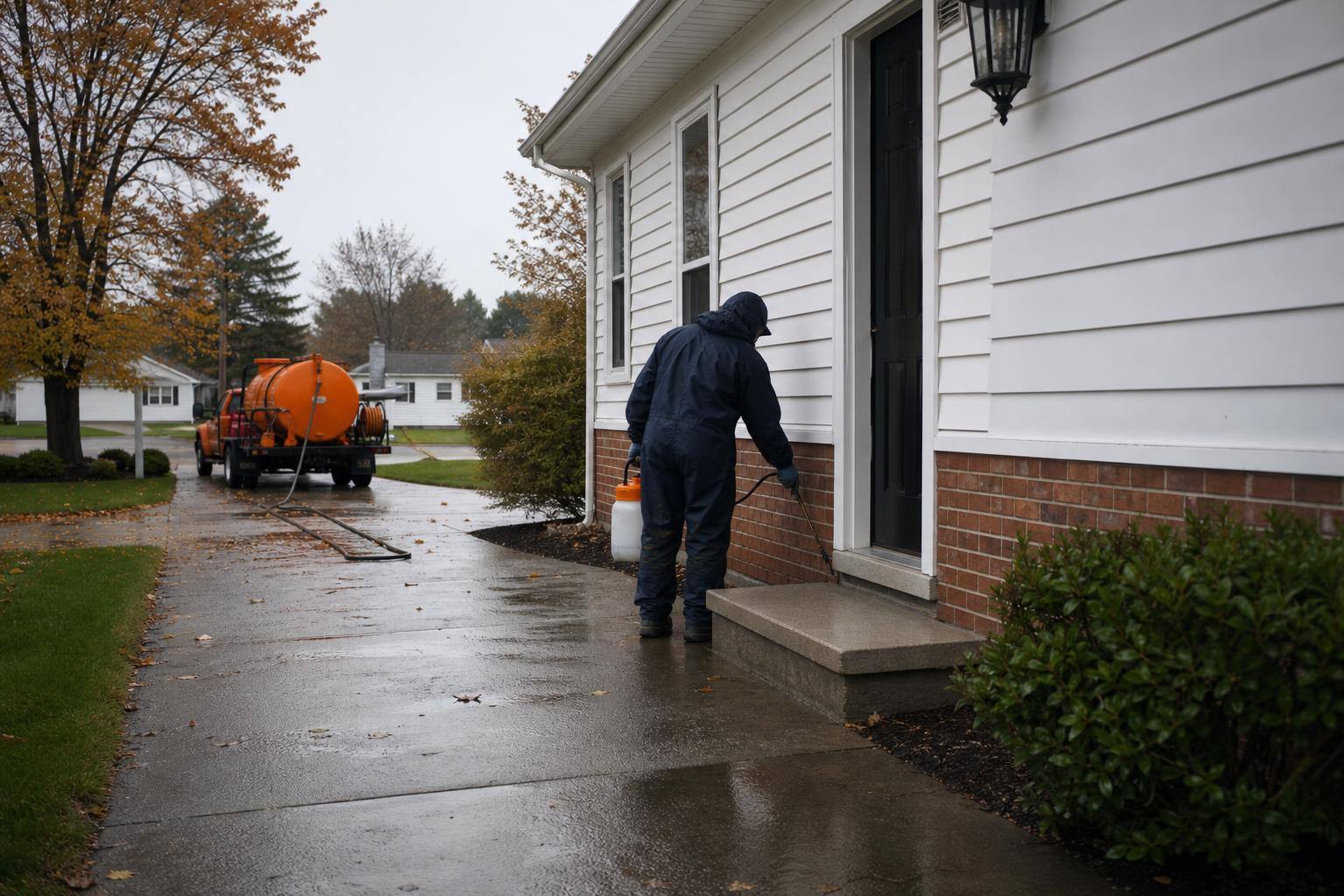
Cockroach control service · Fruitland, WA
A dry-acreage home near Fruitland can hide cockroaches in kitchens, utility rooms, and storage areas. One phone conversation sorts the inspection, treatment type, and site access before the visit is set.
A real person answers · No forms · No waiting on a quote email
Plan
Fruitland acreage homes commonly need an inspection first, while an active kitchen or rental turnover may fit a targeted treatment or whole-home treatment.
Quote
The exact quote is given on the call, based on treatment size, activity, access, materials, travel distance, and time on site.
Time
The visit time is set on the call around road conditions, property access, and the household’s schedule.
Fruitland kitchens, rural homes on dry acreage, rental units, farm outbuildings, and Stevens County properties each create different cockroach access points. Work may involve a basement, slab, utility room, pantry, or detached storage area, so the treatment starts with the rooms and signs described during the phone booking.
Services
Fruitland
Fruitland properties are spread across rural acreage rather than packed into a dense town grid. That means a cockroach treatment may involve a kitchen, basement, utility area, detached building, or rental turnover, with travel and access considered before the work is sized. Dry summers, cold winters, and smoky wildfire periods can also narrow outdoor inspection windows.
Residential treatment checks kitchens, bathrooms, utility areas, and hiding places in Fruitland homes, including properties with basements or detached storage.
Kitchen work focuses on food storage, plumbing penetrations, appliance gaps, and cabinet voids common in Fruitland homes on rural acreage.
Apartment treatment considers shared walls, plumbing routes, neighboring units, and access arrangements for Fruitland rental properties.
Recurring control combines scheduled inspections, follow-up treatments, and monitoring for ongoing activity in Fruitland residences or work areas.
A move-in inspection checks kitchens, bathrooms, utility rooms, and hiding places before a Fruitland rental or rural home changes occupants.
Property managers can coordinate occupied units, access, monitoring, and documentation for rental homes and apartments serving Fruitland tenants.
Commercial control treats occupied business areas while coordinating access and monitoring for Fruitland offices, restaurants, warehouses, and rural operations.
The most common Fruitland job starts with an inspection because acreage homes, rentals, and outbuildings can have different entry points. Active, localized kitchen activity may need a targeted treatment, while spread across rooms or repeated activity calls for broader control.
A technician inspects kitchens, bathrooms, utility areas, and hiding places for cockroaches and signs of activity.
An inspection fits a Fruitland homeowner who has seen droppings, shed skins, or live activity but does not know whether the source is the kitchen, bathroom, utility area, or storage space.
A targeted service treats identified rooms with methods such as approved baits, gels, dusts, or localized applications.
A targeted treatment suits identified activity in one Fruitland kitchen, bathroom, or utility room when the affected rooms and likely hiding places are reasonably clear.
A whole-home treatment addresses active areas throughout the residence and includes practical sanitation and exclusion guidance.
A whole-home treatment fits a rural Fruitland residence with activity across several rooms, especially where kitchens, basements, utility spaces, and storage areas connect.
A recurring plan combines scheduled inspections, follow-up treatments, and monitoring to manage ongoing cockroach pressure.
Recurring control suits a Fruitland property with repeated activity, occupied rental use, or conditions that require scheduled inspections, follow-up treatments, and monitoring.
A commercial service treats occupied business areas while coordinating access, monitoring, and documentation with site requirements.
Commercial control fits a Fruitland restaurant, office, warehouse, or other occupied business where access, monitoring, and documentation must match site requirements.
Cost
The quote is given on the call after the property and activity are described. Cost depends on the type and size of the job, rooms involved, severity, parts and materials, time on site, access, distance from Fruitland, and after-hours work.
The number of affected rooms, visible activity, hiding places, and whether treatment extends beyond a kitchen changes the work required at a Fruitland property.
Remote acreage, long driveways, snow or rocky approaches, locked areas, and distance from the service route can affect travel and time on site.
Approved baits, gels, dusts, localized applications, monitoring supplies, and other materials depend on the rooms, surfaces, activity, and treatment plan.
Occupied homes, rental turnovers, commercial operating hours, pets, tenant access, and after-hours work can change how the visit is organized.
To avoid surprise charges, describe the property, affected rooms, visible signs, access limits, and prior treatments during the call. The exact quote is given before the visit is set, with changes discussed if the work area differs.
What goes in
This covers cockroach signs around cabinets, appliances, sinks, plumbing openings, and food storage in Fruitland homes, including rural kitchens with connected utility areas.
This covers activity in apartments and rental units, with attention to shared walls, plumbing routes, neighboring spaces, tenant access, and Fruitland turnover work.
This covers occupied restaurants, offices, warehouses, and other business areas, including a typical Fruitland load of food supplies, packaging, equipment, and stored materials.
Not accepted. The service does not cover unapproved chemicals, unsafe work areas, inaccessible rooms, unrelated structural repairs, or treatment of people, pets, food, or personal belongings.
Projects
Kitchen treatment checks cabinets, appliances, plumbing gaps, and food storage in Fruitland homes where dry acreage and detached utilities can complicate access.
Bathroom work examines drains, pipe openings, vanity spaces, and nearby utility routes in Fruitland residences and rental properties.
Apartment treatment accounts for shared walls, tenant schedules, plumbing pathways, and neighboring-unit coordination in Fruitland rentals.
Turnover work inspects the Fruitland rental before belongings arrive, checking kitchens, bathrooms, storage, utility areas, and signs left by prior occupancy.
Restaurant control coordinates food areas, equipment, storage, staff access, and monitoring for Fruitland commercial kitchens.
Office treatment checks break areas, utility routes, storage, and occupied workspaces for Fruitland businesses with staff and records to coordinate.
Warehouse work considers stored goods, loading access, equipment, wall edges, and monitoring points for commercial properties in Stevens County.
A real person records the Fruitland property type, visible signs, affected rooms, access concerns, and the type of work needed.
Explain where activity appears, how often it is noticed, whether tenants or staff are present, and what products or treatments were tried.
The treatment approach and exact quote are discussed on the call, with the visit arranged after the property details are understood.
The technician treats identified areas, provides practical sanitation or exclusion guidance when appropriate, and sets follow-up monitoring when the service calls for it.
Weather
Fruitland’s cold snowy winters can affect road access and outdoor inspection areas, while dry summers and wildfire smoke can narrow time outside. Weather conditions are discussed when setting the visit, particularly for rural driveways, detached buildings, and exposed work areas.
Placement
Work may take place in kitchens, bathrooms, basements, crawl spaces, slabs, utility rooms, storage areas, or yards. Rocky soils, snow, long rural approaches, locked outbuildings, clutter, pets, and occupied rooms can limit access and need to be discussed before arrival.
Permits
A routine cockroach treatment inside a private Fruitland property generally does not involve a street permit or local inspection. If work affects a public area, building alteration, or another regulated situation, the City or County authority can confirm requirements. The booking discussion covers who should arrange any required approval.
Covenants, landlord rules, or property agreements in Stevens County may control chemical use, exterior activity, tenant notice, or access to shared areas. Property owners and managers should check those rules before the visit and provide any required instructions.
Keep the affected rooms, utility areas, crawl spaces, basements, and shutoffs reachable, with parking available for the work vehicle. Keep people and pets clear, unlock needed areas, and account for snow, mud, smoke, rocky ground, or long rural access routes.
Service coverage includes Fruitland homes, rural acreage, rental properties, apartments, kitchens, outbuildings, offices, restaurants, and warehouses across Stevens County. Nearby rural approaches are discussed by property location and access, including work connected with Plains, Marysville, and Bigfork when the service route and job details fit.
Not sure about your street? Ask on the call and we will tell you which office handles it.
Timing
Cockroach reports can increase when cold Fruitland weather pushes activity toward heated kitchens, bathrooms, utility rooms, and storage spaces. Summer heat may expose activity around food, water, and outbuildings, while wildfire smoke and dry conditions can limit outdoor inspection work. Rental turnovers and commercial changes create their own scheduling periods.
During cold, snowy Fruitland winters, treatment often centers on heated indoor rooms, plumbing routes, basements, and utility areas. Rural road access and snow around outbuildings should be described when the visit is arranged.
Dry summer conditions can shift attention toward kitchens, storage, detached structures, and entry points around acreage homes. Wildfire smoke may narrow outdoor work, while rental turnover can require a room-by-room inspection.
Service area
Fruitland is part of our Stevens County coverage, and we also serve the neighboring communities below.
Why us
Fruitland properties often sit on dry acreage with longer approaches, detached storage, utility areas, and rocky ground. Those details change where cockroaches may hide and how much access is available for inspection and treatment.
Getcha Pest Control · Fruitland
Cold snowy winters drive activity toward heated rooms, while dry summers and wildfire smoke limit outdoor work windows. A Fruitland treatment plan needs the affected rooms, road conditions, pets, tenants, and outbuildings described before the visit is set.
Click Here to Call (888) 510-9023FAQs
Still have a question about Fruitland? Call (888) 510-9023 and ask a real person.
The exact quote is given on the call. Cost depends on the property and job size, affected rooms, activity level, materials, time on site, access, distance from Fruitland, and any after-hours scheduling. Describe the home, rental, or business and the rooms where signs were found.
An inspection fits uncertain activity, a targeted treatment fits identified rooms, and a whole-home treatment fits activity across several areas. Recurring control suits repeated sightings, while commercial control fits occupied businesses. The property type and affected rooms determine the appropriate tier.
The visit time is set by phone after the property, road access, affected rooms, and service needs are reviewed. Same-day or next-day availability can be discussed, but arrival depends on the schedule, distance, weather, and access conditions.
The work covers the booked treatment type, such as inspection of kitchens and utility areas, localized applications in identified rooms, whole-home treatment, recurring monitoring, or commercial coordination. The exact work area is discussed from the property details before the visit.
It does not cover people, pets, food, personal belongings, unsafe or inaccessible areas, unapproved chemicals, unrelated structural repairs, or work outside the agreed treatment area. Preparation and access requirements are reviewed when the visit is arranged.
Routine treatment inside a private property generally does not need a street permit or local inspection. A public-area change, building alteration, or unusual regulated situation may require guidance from the City or County authority, and the booking discussion identifies who handles that approval.
Clear affected cabinets, shelves, utility areas, and floor edges, secure food, note recent sightings, and keep pets and people away as directed. Unlock kitchens, bathrooms, basements, crawl spaces, and storage areas that may contain activity.
Have the property address, building type, rooms affected, recent sightings, signs such as droppings or shed skins, access limits, pets, tenants, prior treatments, and preferred scheduling information ready. Rural driveway conditions and detached buildings are useful details.
Yes, cold snow can affect rural roads and outdoor access, while wildfire smoke and dry summer conditions can narrow outdoor inspection work. Indoor treatment may still center on kitchens, bathrooms, basements, and utility areas, with conditions discussed when setting the visit.
They can, because longer driveways, detached storage, utility spaces, basements, rocky ground, and separated buildings create different access and inspection needs. Describe every structure where activity was seen so the treatment type and work area match the property.
A real person answers · No forms · Every quote given on the phone