Residential cockroach control
Homes near Hartford’s village blocks and orchard roads receive room-by-room attention to kitchens, bathrooms, utility areas, and hiding places.
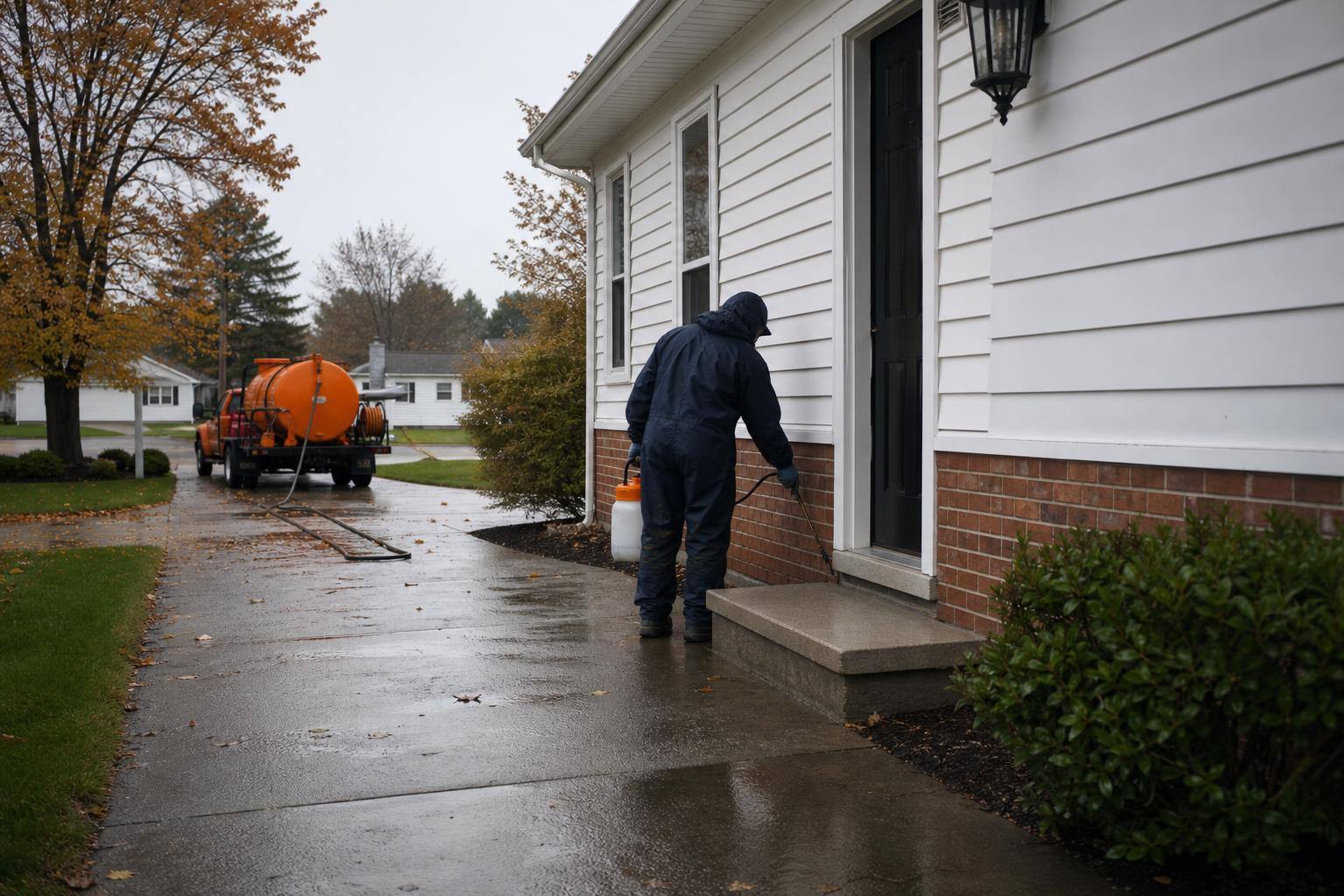
Cockroach control service · Hartford, MI
Around Hartford’s orchard roads and older village homes, a kitchen roach problem can spread through damp utility areas. One phone call gets the treatment plan sorted.
A real person answers · No forms · No waiting on a quote email
Plan
Hartford kitchens, apartments, and older homes commonly start with an inspection or targeted treatment, while active pressure across rooms may need whole-home treatment.
Quote
The exact quote is given on the call, based on treatment size, activity, access, materials, and time on site.
Time
The visit time is set on the call around property access, household needs, and work already planned nearby.
From Hartford’s village blocks to homes along County Road corridors, orchard properties, rental units, and small businesses see different entry points and hiding places. Kitchens need careful inspection around plumbing and appliances. Basements, utility rooms, and damp spring conditions can support activity, while commercial spaces need treatment coordinated around staff, customers, and stored goods.
Services
Hartford
Hartford’s mix of village housing, apartments, orchard-country homes, and small commercial spaces changes how cockroach work is scoped. Humid summers and wet springs can keep utility areas and lower levels damp, while older kitchens may have gaps around pipes, cabinets, and appliances. The treatment needs to match the rooms involved, the activity found, and how people use the property.
Homes near Hartford’s village blocks and orchard roads receive room-by-room attention to kitchens, bathrooms, utility areas, and hiding places.
A Hartford kitchen treatment focuses on food preparation areas, plumbing penetrations, appliance gaps, cabinets, and signs that activity is moving elsewhere.
Apartment treatment in Hartford considers shared walls, tenant access, kitchens, bathrooms, and nearby units that may affect where activity travels.
Recurring control helps Hartford properties with ongoing pressure through scheduled inspections, follow-up treatments, and monitoring around damp utility areas.
A move-in inspection checks Hartford rental kitchens, bathrooms, cabinets, and utility spaces before belongings make access and monitoring more difficult.
Hartford property managers can coordinate inspections, access, treatment areas, and monitoring for rental turnovers or occupied units.
Commercial control in Hartford addresses occupied work areas while coordinating access, monitoring, and documentation with the site’s operating requirements.
Targeted treatment fits many Hartford jobs when activity is limited to an identified kitchen, bathroom, or utility area. Older homes, apartments, and damp lower levels may need whole-home treatment when signs appear across connected rooms.
A technician inspects kitchens, bathrooms, utility areas, and hiding places for cockroaches and signs of activity.
An inspection fits a Hartford move-in, a first report from an orchard-country home, or uncertain activity. The technician checks kitchens, bathrooms, utility areas, hiding places, and signs.
A targeted service treats identified rooms with methods such as approved baits, gels, dusts, or localized applications.
Targeted treatment suits a Hartford kitchen, bathroom, or apartment room with identified activity. Approved baits, gels, dusts, or localized applications are directed to the affected areas.
A whole-home treatment addresses active areas throughout the residence and includes practical sanitation and exclusion guidance.
Whole-home treatment fits Hartford houses where activity appears in several rooms, including kitchens, basements, bathrooms, and utility spaces connected by plumbing or wall openings.
A recurring plan combines scheduled inspections, follow-up treatments, and monitoring to manage ongoing cockroach pressure.
Recurring control suits Hartford rentals, food-related workplaces, or homes with ongoing pressure. Scheduled inspections, follow-up treatments, and monitoring address activity that returns after initial work.
A commercial service treats occupied business areas while coordinating access, monitoring, and documentation with site requirements.
Commercial control fits Hartford restaurants, offices, warehouses, and other occupied sites needing treatment coordinated with staff access, monitoring, and documentation.
Cost
The exact quote is given on the call after the infestation is described. Cost depends on the type and size of the job, rooms involved, activity level, parts and materials, time on site, access, distance from Hartford, and after-hours work.
The number of rooms, visible signs, nesting locations, and whether activity is limited or established across the Hartford property change the work required.
Distance from Hartford, orchard-road access, parking, stairs, crawl spaces, and occupied rooms can affect travel and time on site.
Approved baits, gels, dusts, localized applications, monitoring materials, and other parts or materials depend on the areas and conditions found.
After-hours work, tenant scheduling, commercial access, food-service operations, and the time needed to protect work areas can change the quote.
To avoid surprise charges, describe every affected room, recent treatments, access limits, pets, tenants, and any commercial requirements on the call. The exact quote is given before the visit is set.
What goes in
Kitchen activity includes sightings, droppings, egg cases, or movement around Hartford cabinets, appliances, sinks, and food storage areas. Clear those areas enough for inspection.
Apartment infestations are handled with attention to kitchens, bathrooms, shared walls, and tenant access. Hartford rental turnover can create a larger inspection load when several units need coordination.
Commercial problems include activity in restaurants, offices, warehouses, and other occupied spaces. Hartford food-service areas require careful coordination around staff, customers, stored goods, and operating hours.
Not accepted. Treatment does not cover unrelated pests, unsafe access, concealed structural repairs, or areas that cannot be entered or prepared for the work.
Projects
Hartford kitchen treatment checks cabinets, appliances, plumbing openings, and food storage areas, then matches localized control to the activity found.
Bathroom work in Hartford follows signs around sinks, pipe penetrations, drains, storage, and adjacent utility spaces where moisture can support activity.
Hartford apartment control accounts for shared walls, tenant schedules, kitchens, bathrooms, and pathways that may connect neighboring units.
Rental turnover service helps Van Buren County landlords inspect kitchens, bathrooms, cabinets, and utility areas before the next occupant arrives.
Restaurant treatment in Hartford coordinates food preparation areas, storage, staff access, monitoring, and documentation without ignoring connected utility spaces.
Hartford office treatment checks break rooms, restrooms, storage, utility areas, and wall openings while keeping occupied work areas organized for access.
Warehouse control around Hartford examines receiving areas, stored materials, break rooms, drains, and sheltered edges where activity can remain hidden.
A real person answers by phone. Have the Hartford property address, affected rooms, building type, and preferred access details ready.
Explain what was seen, where it appeared, how often it occurs, and whether wet springs, humid rooms, tenants, or stored goods affect access.
The technician explains the recommended inspection or treatment type, materials, preparation, access needs, and exact quote for the work.
The work addresses identified areas, then monitoring and follow-up guidance help track activity in the Hartford property.
Weather
Hartford’s humid summers and wet springs can keep basements, crawl spaces, and utility areas damp. Lake-effect snow can complicate outdoor access and parking, while sandy orchard soils may affect exterior movement and where moisture collects around foundations.
Placement
Work may occur in kitchens, bathrooms, basements, crawl spaces, slabs, utility rooms, and limited yard areas around Hartford properties. Cabinets, appliances, stored goods, narrow entries, snow, mud, and parked vehicles can limit access to the problem area.
Permits
Cockroach treatment usually takes place on private property, but a local government inspection or approval may apply if the work affects a public area, shared building requirement, or another regulated condition. The City of Hartford or relevant Van Buren County office can clarify local requirements, and the call covers who arranges any needed approval.
Van Buren County landlords, associations, and covenants may set rules for entry, notices, chemical use, pets, or shared areas. Have those requirements ready so the treatment plan fits the Hartford property’s rules.
Clear a path to kitchens, bathrooms, basements, crawl spaces, utility rooms, and shutoffs. Provide parking for the work vehicle, keep people and pets away, and mention snow, mud, wet ground, or orchard access conditions before the visit.
Service covers Hartford village blocks, residential streets, apartment properties, orchard-country homes, commercial corridors, and properties near local roads throughout the Hartford area. Nearby Paw Paw, Stevensville, Niles, Galien, and Kalamazoo can also be discussed when the property lies outside Hartford.
Not sure about your street? Ask on the call and we will tell you which office handles it.
Timing
Cockroach reports in Hartford can rise when humid summer conditions keep indoor areas warm and damp, and when wet spring weather drives attention toward basements and utility rooms. Rental turnovers, food-service activity, and move-ins can create separate scheduling pressure. Winter heating may push hidden activity toward kitchens, bathrooms, and other warmer areas.
Humid Hartford summers can make kitchens, bathrooms, crawl spaces, and lower levels more favorable to activity. Check for leaks, condensation, and clutter near plumbing before the technician arrives.
Wet springs can leave orchard roads, yards, and foundation edges muddy around Hartford properties. Snow and thaw conditions may also limit parking or exterior access, so mention those conditions on the call.
Service area
Hartford is part of our Van Buren County coverage, and we also serve the neighboring communities below.
Why us
Hartford’s fruit-growing countryside brings homes and work areas close to damp soil, orchards, utility buildings, and seasonal moisture. Treatment planning has to account for the actual rooms, foundation access, and outdoor conditions rather than assume every roach report is a kitchen-only problem.
Getcha Pest Control · Hartford
Older village homes, apartments, rental turnovers, and small commercial sites create different access and monitoring needs in Hartford. The right starting point may be an inspection, targeted treatment, whole-home treatment, recurring control, or commercial control, depending on where activity is found.
Click Here to Call (888) 510-9023FAQs
Still have a question about Hartford? Call (888) 510-9023 and ask a real person.
The exact quote is given on the call. Cost changes with the job size, rooms involved, activity level, materials, time on site, access, distance from Hartford, and after-hours coordination. Describe every affected area, including basements, utility rooms, and connected apartments.
An inspection fits uncertain activity, targeted treatment fits an identified room, and whole-home treatment fits signs across connected rooms. Recurring control may suit ongoing pressure. The technician matches the visit to the rooms, building type, and activity described for the Hartford property.
The visit time is set on the phone after the property and infestation are discussed. Availability depends on the schedule, access, travel from Hartford, after-hours needs, and whether the property is residential or commercial. Same-day or next-day availability can be discussed, not assumed.
Treatment can cover identified kitchens, bathrooms, utility areas, hiding places, and other rooms included in the selected service. Methods may include approved baits, gels, dusts, or localized applications. Whole-home and recurring work address broader activity and monitoring needs.
It does not cover unrelated pests, inaccessible areas, unsafe conditions, or concealed structural repairs. It also does not include rooms or buildings that were not described or made available. Explain connected units, crawl spaces, and prior treatments when booking.
Most private-property treatment does not require a local permit, but a public area, shared building rule, or regulated condition may require local guidance. The City of Hartford or relevant Van Buren County office can clarify the requirement, and the call covers who arranges it.
Clear counters, cabinet floors, bathroom storage, utility areas, and paths to suspected hiding places. Secure food, mention pets, and keep people away from the work area as directed. Have the address, affected rooms, sightings, prior treatments, and access limits ready.
Access is possible when the area is safe, reachable, and clear enough to inspect or treat. Hartford homes may have narrow entries, stored belongings, damp ground, snow, or mud near exterior access. Mention stairs, locked areas, low clearance, and shutoff locations on the call.
Hartford’s humid summers and wet springs can keep lower levels and utility areas damp, while lake-effect snow and thaw can limit outdoor access. Indoor treatment planning still depends mainly on room access, moisture conditions, and activity found at the property.
Orchard properties may have detached buildings, sandy soils, seasonal moisture, stored materials, and longer outdoor access routes. The treatment still focuses on identified indoor activity, but the call should cover outbuildings, utility spaces, parking, and conditions around the foundation.
A real person answers · No forms · Every quote given on the phone