Residential cockroach control
Milwaukee homes with basements, shared walls, or older kitchen plumbing can receive treatment focused on active rooms and hiding places.
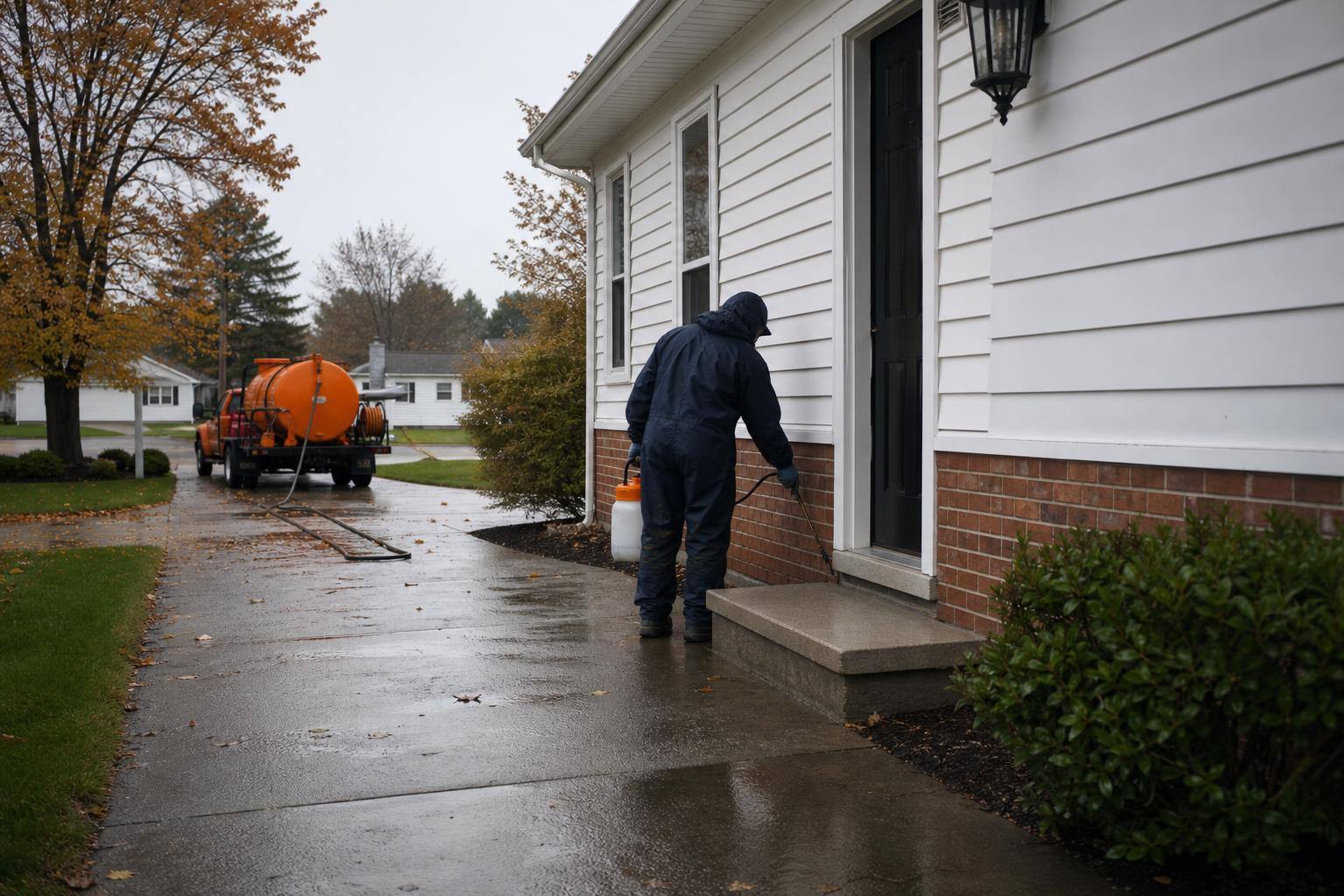
Cockroach control service · Milwaukee, WI
A duplex in Riverwest can hide cockroaches behind kitchen cabinets, around plumbing, and along an alley side wall. One call gets the inspection or treatment plan sorted for the property.
A real person answers · No forms · No waiting on a quote email
Plan
Older Milwaukee duplexes, apartment units, and basement utility areas often fit an inspection first, with targeted treatment or whole-home treatment chosen after activity is mapped.
Quote
The exact quote is given on the call and changes with the treatment type, rooms involved, materials, access, and time on site.
Time
The visit time is set on the call around access to the home, tenants, pets, and any required preparation.
From Bay View kitchens to duplexes in Riverwest and Walker’s Point, Milwaukee cockroach work often follows shared walls, plumbing runs, basements, and tight alley access. Homes near the Menomonee Valley and apartment buildings on the East Side may need room by room inspection, targeted treatment, or ongoing monitoring.
Services
Milwaukee
Milwaukee’s dense older housing puts kitchens, bathrooms, basements, and shared utility routes close together. A cockroach treatment may need careful inspection behind appliances, under sinks, near floor drains, and around wall penetrations. Alley access can affect where equipment is staged, while apartment and commercial work may require coordination with occupants, managers, or operating staff.
Milwaukee homes with basements, shared walls, or older kitchen plumbing can receive treatment focused on active rooms and hiding places.
Kitchen treatment in Milwaukee checks cabinet voids, appliance edges, plumbing openings, and moisture areas before localized applications are selected.
Milwaukee apartment work accounts for connected units, tenant access, shared walls, and activity around kitchens, bathrooms, and utility lines.
Recurring control helps Milwaukee properties track activity through scheduled inspections, follow up treatments, and monitoring in problem areas.
A Milwaukee move in inspection checks an empty unit before furnishings conceal activity around cabinets, appliances, bathrooms, and basement storage.
Property managers in Milwaukee can coordinate occupied units, access notes, treatment areas, and monitoring across older multifamily buildings.
Milwaukee restaurants, offices, and warehouses need treatment planned around work hours, occupied areas, access routes, and site documentation.
For common Milwaukee kitchen and apartment complaints, an inspection is the sensible starting point. It shows whether activity is limited to one room or moving through shared walls, plumbing routes, basements, and connected units before a larger treatment is selected.
A technician inspects kitchens, bathrooms, utility areas, and hiding places for cockroaches and signs of activity.
A technician inspects kitchens, bathrooms, utility areas, and hiding places for cockroaches and signs of activity in a Milwaukee duplex, apartment, or single family home.
A targeted service treats identified rooms with methods such as approved baits, gels, dusts, or localized applications.
A targeted treatment suits an identified kitchen, bathroom, or utility area in Milwaukee when activity is localized and nearby rooms do not show the same pressure.
A whole-home treatment addresses active areas throughout the residence and includes practical sanitation and exclusion guidance.
A whole-home treatment fits Milwaukee houses and duplexes where activity appears across kitchens, bathrooms, basements, or several connected living areas.
A recurring plan combines scheduled inspections, follow-up treatments, and monitoring to manage ongoing cockroach pressure.
Recurring control suits Milwaukee multifamily properties, food businesses, and homes with continuing pressure, combining scheduled inspections, follow up treatments, and monitoring.
A commercial service treats occupied business areas while coordinating access, monitoring, and documentation with site requirements.
Commercial control fits Milwaukee restaurants, offices, and warehouses that need occupied area treatment coordinated with access, monitoring, and site requirements.
Cost
The exact quote is given on the call after the job is described. Cost depends on the treatment type, property size, rooms involved, activity level, parts and materials, time on site, access from Milwaukee streets or alleys, distance, and after hours work.
Inspection, targeted treatment, whole-home treatment, recurring control, and commercial control involve different work areas, preparation, materials, and time on site.
Older Milwaukee duplexes, apartments, basements, shared walls, and connected utility routes can require more inspection and treatment access than a single room.
Tight alleys, limited parking, locked entries, tenant coordination, and travel across Milwaukee County can change the time and logistics of the visit.
Approved baits, gels, dusts, and localized applications are selected for the site, with the needed materials depending on activity, surfaces, and treatment areas.
To avoid surprise charges, describe every affected room, tenant or business access issue, parking limitation, prior treatment, and after hours requirement before the quote is prepared on the call.
What goes in
Kitchen activity includes sightings near cabinets, appliances, sinks, drains, and food storage. In Milwaukee homes, a typical load may involve an older duplex kitchen with activity extending toward the basement.
Apartment infestations include activity in occupied units, shared utility areas, bathrooms, and kitchens. Milwaukee managers should identify connected units, tenant access limits, and any recent turnover work.
Commercial problems include restaurants, offices, warehouses, and other occupied work areas. A Milwaukee restaurant may need treatment coordinated around food handling, staff movement, storage, and monitoring records.
Not accepted. The service does not cover unrelated pests, unsafe access, sealed or inaccessible areas, hazardous conditions, or materials and spaces outside the agreed cockroach treatment.
Projects
Milwaukee kitchen treatment checks appliance gaps, cabinet joints, sink plumbing, and moisture areas where older housing can support hidden activity.
Bathroom work in Milwaukee examines plumbing openings, floor edges, utility routes, and nearby basement connections before treatment areas are selected.
Apartment treatment across Milwaukee considers shared walls, connected units, tenant schedules, kitchens, bathrooms, and utility spaces.
Milwaukee County rental turnover work uses the vacant period to inspect cabinets, closets, appliances, bathrooms, and accessible utility areas.
Restaurant control in Milwaukee is coordinated around food areas, storage, staff movement, operating requirements, and monitoring documentation.
Office treatment in Milwaukee checks break rooms, plumbing points, storage, utility rooms, and concealed spaces without ignoring occupied work areas.
Milwaukee warehouse control examines receiving areas, storage zones, wall edges, drains, and access routes while coordinating with site requirements.
A real person answers by phone and records the Milwaukee property type, affected rooms, access details, and service concerns.
Share where sightings occur, how activity was noticed, whether units or businesses connect, and what treatment has already been attempted.
The treatment type, work areas, preparation needs, materials, and visit details are reviewed before the plan is approved.
The technician treats identified areas and provides practical sanitation or exclusion guidance, with monitoring and follow up based on the selected service.
Weather
Milwaukee’s cold winters can drive cockroaches toward heated indoor utility areas, while spring moisture and humid summers can support activity near plumbing, basements, and damp exterior edges. Weather can affect outdoor access and seasonal scheduling, but indoor inspection areas still need to be ready.
Placement
Work may occur in kitchens, bathrooms, basements, crawl spaces, utility rooms, slabs, and nearby yards where access supports the plan. Milwaukee alleys, narrow side entries, locked basements, parked vehicles, snow, standing water, and stored belongings can limit movement and staging.
Permits
A cockroach treatment at a private Milwaukee property generally does not require a street permit. If equipment, access, or work affects a public way, the City of Milwaukee or another local government may need to review it. The call covers who needs to arrange any required approval or inspection.
Milwaukee County condos, HOAs, covenants, and landlords may set rules for entry, treatment notices, exterior applications, pets, or shared utility areas. Have those requirements ready so the work plan fits the property’s management rules.
Clear a path to kitchens, bathrooms, basements, crawl spaces, utility rooms, and shutoffs. Provide legal parking for the work vehicle, keep pets and people out of the work area, and mention snow, ice, standing water, or wet ground affecting Milwaukee access.
Service covers Milwaukee neighborhoods and settings including Bay View, Riverwest, Walker’s Point, the East Side, the South Side, the North Side, the Menomonee Valley, and apartment corridors near downtown. Nearby coverage can include Cudahy and other Milwaukee County properties, with broader Wisconsin service discussed on the call.
Not sure about your street? Ask on the call and we will tell you which office handles it.
Timing
Cockroach work in Milwaukee often becomes more noticeable when cold weather pushes activity into heated buildings, especially basements, kitchens, and utility spaces. Spring moisture and humid summer conditions can add pressure near plumbing, floor drains, and damp edges. Apartment turnovers, restaurant schedules, and building access can affect when treatment is arranged.
Cold Milwaukee weather keeps more pest activity inside heated homes, apartments, and businesses. Basements, utility rooms, kitchens, and shared wall routes deserve careful inspection when outdoor conditions are unfavorable.
Spring moisture and humid Milwaukee summers can support activity near sinks, drains, slabs, and damp storage areas. Report leaks, condensation, and standing water before treatment planning.
Service area
Milwaukee is part of our Milwaukee County coverage, and we also serve the neighboring communities below.
Why us
Milwaukee’s older duplexes, apartment buildings, and dense blocks create connected kitchens, basements, plumbing routes, and shared walls that can spread activity beyond the room where it was first seen.
Getcha Pest Control · Milwaukee
Alley access, limited parking, cold winters, spring moisture, and humid summers all change how a technician reaches and stages work at Milwaukee properties, especially in occupied multifamily and commercial buildings.
Click Here to Call (888) 510-9023FAQs
Still have a question about Milwaukee? Call (888) 510-9023 and ask a real person.
The exact quote is given on the call. Cost depends on the service type, property and room layout, activity level, parts and materials, time on site, access, distance, and any after hours work. Describe every affected area and access limitation before the quote is prepared.
An inspection is usually the right starting point when the extent is unclear. A targeted treatment may fit one confirmed room, while whole-home treatment suits activity across a house or duplex. Recurring control can fit continuing pressure in a Milwaukee multifamily property or business.
The visit time is set on the call because access, occupants, pets, property type, and the selected treatment all affect scheduling. Same-day or next-day availability can be discussed, but it is not promised. Have the address, affected rooms, and access restrictions ready.
The work covers the selected inspection or treatment areas, such as kitchens, bathrooms, utility areas, hiding places, and active rooms. Depending on the service, it may use approved baits, gels, dusts, localized applications, monitoring, and practical sanitation or exclusion guidance.
It does not cover unrelated pests, hazardous conditions, sealed or inaccessible areas, or spaces outside the agreed treatment. It also does not replace repairs for leaks, damaged walls, failed seals, or other building conditions that support activity.
Private indoor cockroach treatment generally does not require a street permit. If work affects a public way or a special property condition, the City of Milwaukee or another local government may need to review it. The call covers who is responsible for any required approval or inspection.
Clear loose items from cabinet edges, sinks, appliances, bathrooms, utility rooms, and floor edges. Secure food, arrange entry to every affected unit or room, keep pets and people clear, and report prior products, leaks, locked areas, or basement access problems.
Access depends on clear paths, unlocked doors, safe stairs, parking, and space around stored belongings. Milwaukee alleys and narrow side entries can limit staging, so explain the route, snow or ice, locked gates, and any tenant coordination issue on the call.
Cold winters can push activity into heated indoor areas, while spring moisture and humid summers can support activity near plumbing, drains, basements, and damp edges. Outdoor conditions may affect access, but indoor rooms still need to be prepared and reachable.
They may, because shared walls, plumbing routes, utility spaces, and connected kitchens can allow activity to extend beyond the first unit. A technician can inspect the reported unit and discuss access, monitoring, and treatment coordination with the property manager.
A real person answers · No forms · Every quote given on the phone