Residential cockroach control
Treatment for Piscataway houses checks kitchens, bathrooms, basements, and utility areas where moisture and foundation access can matter.
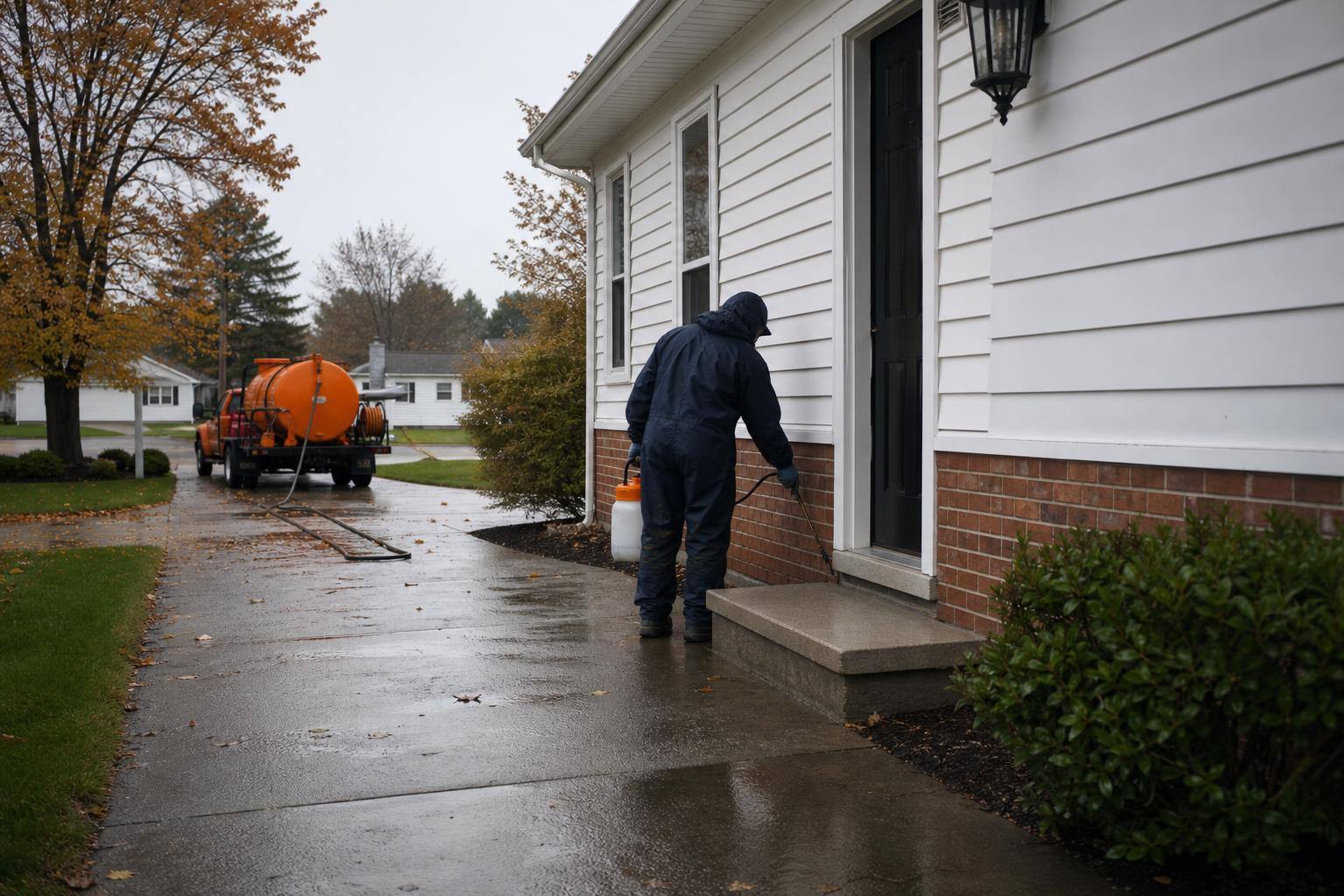
Cockroach control service · Piscataway, NJ
In Piscataway’s Possumtown homes, a kitchen sighting can trace back to damp utility areas, slab edges, or shared walls near the research campuses. One call gets the right cockroach treatment sorted.
A real person answers · No forms · No waiting on a quote email
Plan
For a single kitchen or bathroom sighting in Piscataway’s suburban homes, an inspection or targeted treatment usually fits; larger activity across rooms may need whole-home treatment.
Quote
The exact quote is given on the call, based on rooms affected, activity level, access, materials, and time on site.
Time
The visit time is set on the call around access to the home, tenants, pets, and work areas.
From Possumtown and New Market to homes along River Road, Piscataway work ranges from kitchen treatments to basement and utility-room inspections. Apartment buildings near Rutgers campuses can require coordinated access, while larger suburban houses near research campuses may need whole-home treatment and exclusion guidance.
Services
Piscataway
Piscataway has large suburban neighborhoods, apartment properties, and busy research-campus surroundings. Humid summers can support activity around kitchens, bathrooms, basements, and utility penetrations, while heavy rain can push pests toward foundations. Treatments are matched to the rooms involved, how the building is occupied, and whether activity is isolated or spread through connected spaces.
Treatment for Piscataway houses checks kitchens, bathrooms, basements, and utility areas where moisture and foundation access can matter.
A focused service addresses activity around cabinets, appliances, plumbing openings, and food storage in Possumtown and New Market kitchens.
Apartment work in Piscataway coordinates occupied rooms, shared walls, tenant access, and activity that may move between connected units.
Recurring control helps manage ongoing pressure in Piscataway properties with scheduled inspections, follow-up treatments, and monitoring.
An inspection checks kitchens, bathrooms, utility spaces, and hiding places before a Piscataway rental turnover or move-in.
Property managers near Rutgers and Middlesex County receive treatment planning that accounts for access, occupied units, monitoring, and documentation.
Commercial treatment suits offices, restaurants, and work areas near Piscataway research campuses where access and operating requirements must be coordinated.
Most Piscataway jobs begin with an inspection or targeted treatment because activity often starts in one kitchen, bathroom, or utility area. Whole-home treatment fits spread activity in larger suburban houses, while apartments and businesses may need recurring or commercial control.
A technician inspects kitchens, bathrooms, utility areas, and hiding places for cockroaches and signs of activity.
A technician inspects kitchens, bathrooms, utility areas, and hiding places for cockroaches and signs of activity. This fits a first sighting in a Piscataway house or apartment.
A targeted service treats identified rooms with methods such as approved baits, gels, dusts, or localized applications.
A targeted service treats identified rooms with approved baits, gels, dusts, or localized applications. It suits isolated kitchen activity in New Market or Possumtown.
A whole-home treatment addresses active areas throughout the residence and includes practical sanitation and exclusion guidance.
A whole-home treatment addresses active areas throughout the residence and includes practical sanitation and exclusion guidance. Larger Piscataway homes with basement and utility-room activity may fit.
A recurring plan combines scheduled inspections, follow-up treatments, and monitoring to manage ongoing cockroach pressure.
A recurring plan combines scheduled inspections, follow-up treatments, and monitoring to manage ongoing cockroach pressure. It can suit connected apartments or properties with repeated activity.
A commercial service treats occupied business areas while coordinating access, monitoring, and documentation with site requirements.
A commercial service treats occupied business areas while coordinating access, monitoring, and documentation with site requirements. Research-campus offices, restaurants, and warehouses in Piscataway may need this scope.
Cost
The exact quote is given on the call after the job is described. Cost depends on the type and size of the property, rooms affected, activity level, access, time on site, distance, and the parts or materials needed for the treatment.
Prices change with the building size, number of active rooms, and whether kitchens, bathrooms, basements, or utility areas all require attention.
The treatment plan depends on signs, hiding places, and the parts or materials needed, such as approved baits, gels, dusts, or localized applications.
Distance and access from Piscataway’s suburban neighborhoods, apartment properties, or research-campus settings can affect the visit, especially where parking or entry coordination is involved.
Time on site changes with inspection depth, preparation, occupied areas, follow-up needs, and the amount of monitoring or guidance required.
To avoid surprise charges, describe every affected room, recent treatments, building type, access limits, and any tenant or business requirements on the call. The exact quote is given before the visit is set.
What goes in
Kitchen activity includes sightings, droppings, egg cases, or insects around cabinets, appliances, sinks, and plumbing openings. Piscataway suburban kitchens often need access behind or beside appliances.
Apartment infestations include activity in occupied units, kitchens, bathrooms, and shared-wall areas. In Piscataway buildings, treatment planning may require tenant coordination and checking connected spaces.
Commercial problems include activity in restaurants, offices, warehouses, and research-campus work areas. The service accounts for operating requirements, access, monitoring, and documentation.
Not accepted. The service does not cover unrelated pests, hazardous materials, inaccessible areas, or repairs to plumbing, walls, cabinets, appliances, or structural damage.
Projects
Kitchen treatment checks cabinets, appliances, sinks, and plumbing openings in Piscataway homes where humid conditions can support hidden activity.
Bathroom work examines moisture points, pipe openings, utility gaps, and nearby hiding places in New Market and Possumtown properties.
Apartment treatment in Piscataway considers occupied rooms, shared walls, tenant access, and activity that may extend beyond one unit.
A turnover inspection helps property managers check kitchens, bathrooms, and utility areas before a Piscataway rental is occupied again.
Restaurant control coordinates active food-service areas, access, monitoring, and documentation for businesses serving Piscataway neighborhoods and campus workers.
Office treatment suits research-campus surroundings and checks kitchens, break areas, utility spaces, and other occupied work zones.
Warehouse control addresses receiving, storage, utility, and employee areas in Piscataway and Middlesex County commercial properties.
A real person answers around the clock and records the Piscataway property type, affected rooms, recent sightings, and access concerns.
Explain where activity appears, how often it is seen, any signs found, and whether tenants, pets, or business operations affect entry.
The technician matches the inspection, targeted, whole-home, recurring, or commercial scope to the building and explains the quoted work.
Treatment addresses identified areas, followed by practical guidance and monitoring suited to the property’s activity and access conditions.
Weather
Piscataway’s humid summers can increase activity around kitchens, bathrooms, basements, and foundation edges. Heavy rain may change where pests move, while winter freezes can shift activity toward heated interior spaces. Clay soils and wet ground can also affect perimeter access, so the visit plan accounts for current conditions.
Placement
Work may involve kitchens, bathrooms, utility rooms, basements, crawl spaces, slabs, foundation edges, and yards. Access can be limited by stored belongings, tight appliance gaps, wet clay soil, heavy rain, parked vehicles, tenants, pets, or shared apartment entry arrangements.
Permits
Cockroach treatment at a private property generally does not require a street permit, but unusual work affecting public space, exterior placement, or a local inspection should be checked with the Township of Piscataway. The call covers what the site requires and who arranges any needed approval or inspection.
Middlesex County landlords, HOAs, and covenants may set rules for entry, notice, exterior work, products, or vendor records. Have those instructions ready so treatment can be coordinated with the property’s requirements.
Clear a path to kitchens, bathrooms, utility rooms, basements, crawl spaces, and exterior foundation areas. Provide vehicle parking, identify shutoffs and access points, keep people and pets clear, and mention wet ground, heavy rain, or frozen conditions.
Service covers Piscataway neighborhoods and settings including Possumtown, New Market, Stelton, homes along River Road, apartment areas near Rutgers campuses, and research-campus surroundings. Nearby Middlesex County properties can be discussed on the call, including work close to Dunellen, South Plainfield, and Edison.
Not sure about your street? Ask on the call and we will tell you which office handles it.
Timing
Cockroach activity can appear year-round in Piscataway because heated interiors provide shelter through winter. Humid summer weather and heavy rain can increase movement near foundations, kitchens, basements, and utility spaces. Apartment turnover and occupied commercial buildings add scheduling and access considerations throughout the year.
Humid summers can make kitchens, bathrooms, basements, and foundation edges more active. Heavy rain may alter exterior access and drive movement toward dry interior hiding places.
Winter freezes can push activity toward heated kitchens, bathrooms, utility rooms, and wall penetrations. Clear indoor access helps the technician inspect areas that are less accessible around frozen or wet ground.
Service area
Piscataway is part of our Middlesex County coverage, and we also serve the neighboring communities below.
Why us
Piscataway’s large suburban houses often combine kitchens, basements, utility rooms, and foundation access points. Humid summers, heavy rain, clay soil, and winter freezes change where activity is found and how perimeter work is reached.
Getcha Pest Control · Piscataway
Apartments and research-campus properties bring shared walls, occupied rooms, parking limits, and operating schedules into the job. Treatment is planned around those practical details instead of assuming one room explains every sighting.
Click Here to Call (888) 510-9023FAQs
Still have a question about Piscataway? Call (888) 510-9023 and ask a real person.
The exact quote is given on the call and depends on property size, rooms affected, activity level, access, time on site, distance, and parts or materials such as approved baits, gels, dusts, or localized applications. Describe the full problem so the scope is not understated.
An inspection fits a first report or uncertain source, while targeted treatment suits isolated room activity. Whole-home treatment fits spread activity across a house, and recurring control fits repeated sightings or ongoing pressure. Apartment and commercial properties may need broader coordination.
The visit time is set on the call after the property, access, and affected areas are reviewed. Emergency scheduling can be discussed, but availability depends on the route, work scope, tenants, pets, and whether a business needs coordinated entry.
The service can cover inspection of kitchens, bathrooms, utility areas, and hiding places, or treatment of identified rooms with approved baits, gels, dusts, or localized applications. Whole-home and commercial scopes address broader active areas with practical guidance, monitoring, or documentation as applicable.
It does not cover unrelated pests, hazardous materials, inaccessible areas, or repairs to plumbing, cabinets, appliances, walls, or structural damage. Those conditions may need another trade or property professional before treatment can reach the affected area.
Private-property cockroach treatment generally does not need a street permit, but exterior placement, public-space work, or a local inspection can change that. The call covers whether the Township of Piscataway should be consulted and who arranges any required approval.
Clear access to kitchens, bathrooms, utility rooms, basements, crawl spaces, and foundation areas, then secure food and keep people and pets away as directed. Have recent sightings, photographs, prior products, landlord rules, and parking or entry details ready.
Access to the affected rooms is needed, and occupied apartments or managed properties may require a tenant, landlord, or property manager to coordinate entry. Explain keys, shared spaces, pets, alarms, and restricted areas when setting the Piscataway visit.
Weather can affect exterior access and movement patterns. Heavy rain and wet clay soil may limit perimeter work, while winter freezes can shift activity indoors toward heated rooms. The work area and visit plan are reviewed around current conditions on the call.
Apartments near Rutgers campuses may need coordinated access, shared-wall awareness, and monitoring beyond one kitchen or bathroom. The technician reviews whether activity appears isolated or connected, then matches the scope to the occupied units and property requirements.
A real person answers · No forms · Every quote given on the phone