Home flea treatment
A home treatment follows inspection findings in bedrooms, living spaces, basements, and pet areas at Tiltonsville terrace properties.
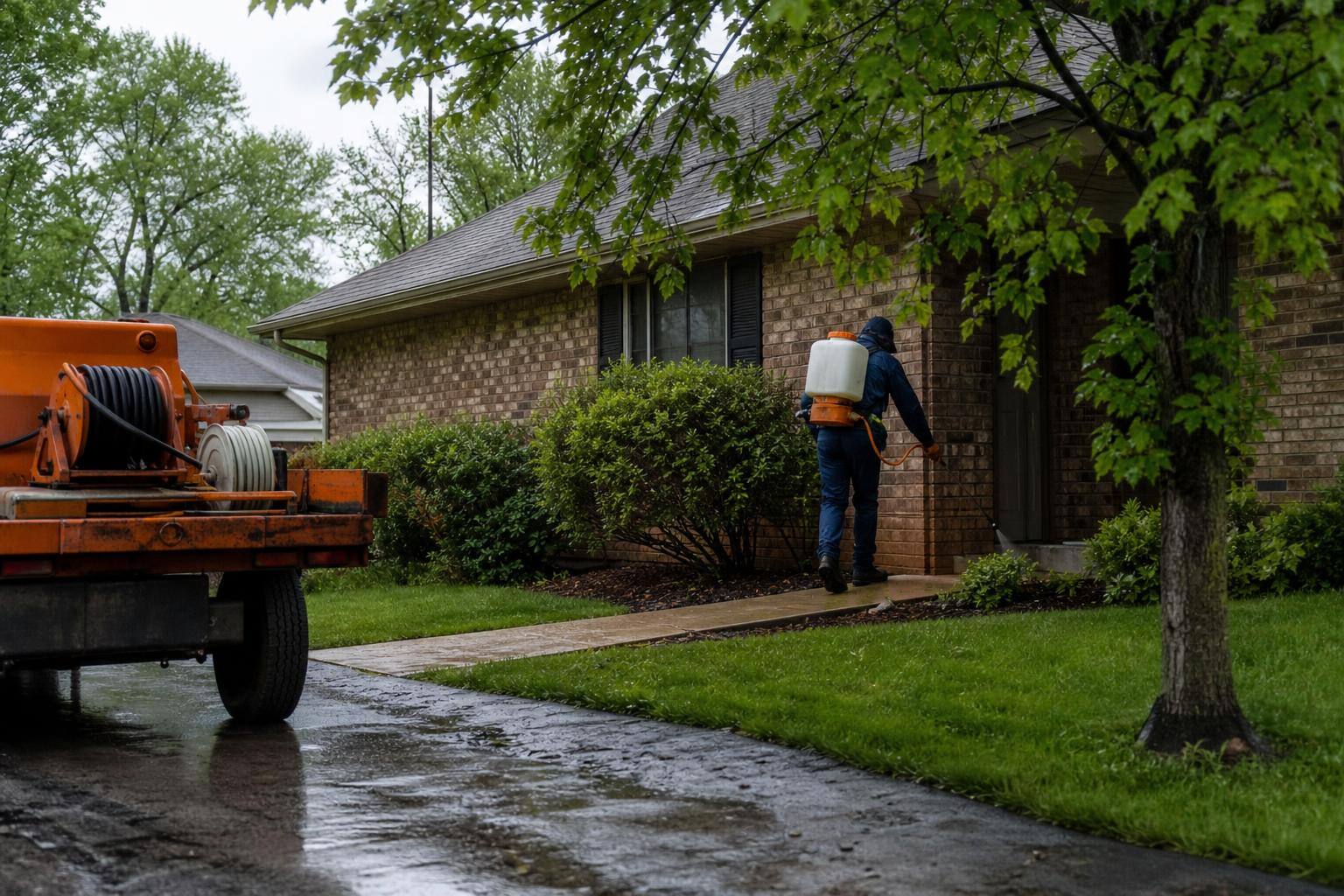
Flea treatment service · Tiltonsville, OH
A riverfront home on Tiltonsville’s narrow terrace can keep flea activity going between pet bedding, basement edges, and damp shaded ground. One phone conversation sorts the inspection and treatment type.
A real person answers · No forms · No waiting on a quote email
Plan
For Tiltonsville homes with pets, basements, or tight terrace lots, the call usually determines whether an inspection, whole-home treatment, or home and yard treatment fits.
Quote
The exact quote is given on the call, based on treatment size, preparation, access, materials, time on site, and distance.
Time
The visit time is set on the call around access, household needs, weather, and the work area.
Flea work changes between riverfront houses, older homes near the Tiltonsville business corridor, properties below the valley slopes, and homes reached by steep approaches. Damp basements, pet resting areas, crawl spaces, and shaded yards each need different inspection and treatment decisions.
Services
Tiltonsville
Tiltonsville housing often sits on narrow Ohio River valley terraces, with basements, crawl spaces, pet areas, and yards compressed between roads and steep slopes. Wet humid weather can keep shaded harborages active, while river flooding may change where outdoor activity is found. The inspection connects indoor findings with the parts of the property pets and people actually use.
A home treatment follows inspection findings in bedrooms, living spaces, basements, and pet areas at Tiltonsville terrace properties.
Apartment work focuses on affected rooms, flooring, and pet resting areas, with access planned around shared entrances and nearby Tiltonsville housing.
Bedroom treatment targets flooring and common harborages after preparation, useful for a single affected room in a Tiltonsville home.
Pet-area work examines bedding, resting spots, nearby flooring, and connected spaces in Tiltonsville homes along the river valley.
Outdoor treatment examines shaded harborages, pet paths, and damp ground around narrow Tiltonsville lots and steep valley-side properties.
A move-in inspection checks rooms, flooring, pet areas, and outdoor locations before belongings settle into a Tiltonsville rental or home.
Commercial service suits buildings in Tiltonsville where visitors, staff, animals, flooring, and storage areas require a defined inspection.
Most Tiltonsville flea jobs begin with an inspection because narrow terraces can connect indoor rooms, basements, crawl spaces, and shaded yards. The findings determine whether one room, the whole home, or the home and yard needs treatment.
A pest professional checks indoor rooms, pet resting areas, flooring, and outdoor locations for flea activity.
This fits a Tiltonsville move-in, a first report from a pet owner, or a riverfront home where the source is unclear between indoor rooms and shaded outdoor areas.
Treatment targets one affected room and its common flea harborages after the area is prepared.
This suits one bedroom or pet-used room in Tiltonsville when inspection findings stay localized and the area can be prepared without treating the entire home.
The service treats affected indoor areas throughout the home based on inspection findings and preparation needs.
This fits an older Tiltonsville house where activity reaches several rooms, basement edges, flooring, or pet resting areas throughout the occupied space.
Indoor and outdoor treatment addresses pet areas, shaded harborages, and other locations supporting flea activity.
This is appropriate when Tiltonsville activity involves indoor rooms plus shaded pet areas, damp ground, or other outdoor harborages on a tight terrace lot.
Cost
The quote is given on the call after discussing the property and flea conditions. Cost depends on the type and size of the job, affected rooms, preparation, materials, time on site, access, distance, and any after-hours work.
The number of affected rooms, pet areas, basement spaces, and outdoor locations changes the work required at a Tiltonsville property.
Narrow terraces, steep approaches, tight parking, crawl spaces, and river valley access can change time on site and distance considerations.
Treatment materials and preparation needs depend on inspection findings, flooring, harborages, pet areas, and whether outdoor locations also require work.
The requested visit time and any after-hours work can affect the rate, especially when household access must fit a narrow Tiltonsville property.
To avoid surprise charges, describe the rooms, pets, basement or crawl space, yard conditions, and access limits before the quote is prepared. The exact quote is given on the call.
What goes in
This covers flea activity found in bedrooms, living areas, flooring, basements, and other indoor rooms. A typical Tiltonsville load may include an older terrace home with connected rooms.
This covers activity around bedding, resting places, and pet-used flooring. In Tiltonsville, the inspection may connect an indoor pet area with a shaded side yard.
This covers outdoor harborages near pets, shade, and damp ground. A Tiltonsville river valley lot may need attention where the yard is tight against a slope or basement wall.
Not accepted. The service does not cover unrelated pests, unsafe access areas, untreated neighboring property, or items and materials that are not part of flea treatment.
Projects
Bedroom work targets flooring and nearby harborages after preparation, useful for a single affected room in a Tiltonsville terrace home.
Apartment treatment examines rooms, flooring, and pet areas while accounting for shared access and neighboring units in Tiltonsville housing.
Whole-home work suits Tiltonsville properties where activity reaches bedrooms, living areas, basements, and several pet resting locations.
Pet-area service follows activity around bedding and resting spots, including homes near the Ohio River where indoor and outdoor use overlap.
Yard work addresses shaded harborages and damp ground around narrow Tiltonsville lots, including areas below steep valley slopes.
A move-in inspection checks rooms, flooring, pet areas, and outdoor locations before a new occupant settles into a Tiltonsville property.
Commercial service maps affected rooms, flooring, storage, and animal contact areas for businesses in Tiltonsville and Jefferson County.
A real person records the Tiltonsville property type, rooms involved, pet conditions, outdoor areas, and access details.
Explain pet resting places, flooring, basement or crawl space conditions, recent flooding, and where activity was noticed.
Clear loose items, open the affected work areas, secure pets and people, and follow the preparation directions provided on the call.
The professional treats the selected areas based on findings, then explains practical steps for reducing recurring flea harborages.
Weather
Wet humid weather can keep shaded outdoor harborages active around Tiltonsville homes. Freeze-thaw winters affect ground and access, while river flooding can leave damp areas that need discussion during inspection. The visit is set with current conditions and property access in mind.
Placement
Work may involve bedrooms, flooring, basements, crawl spaces, slabs, utility rooms, pet areas, and yards. Narrow Ohio River valley terraces, steep drives, flood-affected ground, locked rooms, and limited parking can restrict access and should be described before the visit.
Permits
A routine flea treatment inside a Tiltonsville property generally is not a street construction project. If access, placement, or another site condition raises a local approval question, the City of Tiltonsville or Jefferson County can identify the responsible office. The call covers who needs to arrange any required inspection or approval.
Landlords, HOAs, and covenant rules in Jefferson County may control entry, notice, treatment of shared areas, pets, or outdoor work. Have those rules ready so the treatment plan fits the property requirements.
Keep a clear route to the affected rooms, pet areas, basement, crawl space, utility room, and yard. Provide vehicle parking where possible, secure pets and people, identify shutoffs if needed, and mention wet ground, flooding, ice, or steep access.
Coverage includes riverfront and terrace properties throughout Tiltonsville, homes along the main town corridors, lower valley locations, and properties rising toward the steep slopes. Service can also be discussed for nearby Saint Clairsville, Richmond, Carmichaels, Beaver Falls, and Wexford.
Not sure about your street? Ask on the call and we will tell you which office handles it.
Timing
Flea activity can become more noticeable in Tiltonsville during humid periods when pets move between homes and shaded yards. Indoor activity may continue through colder months because rooms, basements, and pet bedding remain usable. Spring thaw, river flooding, and wet ground can change outdoor harborages and vehicle access.
Warm, humid conditions can support activity around pet resting areas and shaded yards on Tiltonsville’s narrow terraces. Indoor inspection should include flooring and rooms connected to those outdoor locations.
Freeze-thaw conditions can affect steep approaches and ground access, while spring flooding may leave damp areas near river valley homes. Describe these conditions when setting the visit.
Service area
Tiltonsville is part of our Jefferson County coverage, and we also serve the neighboring communities below.
Why us
Tiltonsville’s Ohio River valley layout puts homes, basements, narrow yards, and steep slopes close together. Flea work has to account for the path between pet bedding, indoor flooring, shaded ground, and damp exterior areas.
Getcha Pest Control · Tiltonsville
A flood-prone lower property may need a different inspection emphasis than a home higher on the valley slope. Describing the building, access, pets, and recent wet conditions helps match the treatment to the actual Tiltonsville site.
Click Here to Call (888) 510-9023FAQs
Still have a question about Tiltonsville? Call (888) 510-9023 and ask a real person.
The exact quote is given on the call. Cost changes with the job type and size, affected rooms, pet areas, preparation, materials, time on site, access, distance, and after-hours work. Describe the property and any narrow terrace or steep approach before the quote is prepared.
An inspection determines whether a single-room treatment, whole-home treatment, or home and yard treatment fits. Tiltonsville homes may connect basement edges, pet areas, and shaded yards, so the visible room is not always the full treatment area.
The visit time is set on the call after the property, access, household conditions, and requested work are discussed. Ask about available timing and explain if river flooding, ice, steep access, or a move-in date affects scheduling.
It can cover inspected indoor rooms, flooring, pet resting areas, basements, crawl spaces, and outdoor harborages according to the selected service. The professional uses inspection findings to define the affected areas and preparation needed.
It does not cover unrelated pests, unsafe access areas, untreated neighboring property, or items outside the flea treatment work. Shared spaces, landlord requirements, and outdoor areas beyond the property should be explained during the call.
Routine flea treatment generally does not require a street construction permit. If a local approval question arises, the City of Tiltonsville or Jefferson County can identify the responsible office, and the call covers who needs to arrange any required inspection.
Clear loose items and provide access to affected flooring, rooms, pet areas, basements, crawl spaces, and yards. Secure pets and people, unlock needed areas, and describe steep drives, shared entrances, limited parking, or wet ground before the visit.
Have the property type, affected rooms, pet details, pet resting locations, flooring, basement or crawl space information, outdoor conditions, access limits, and any recent flooding ready. These details help determine the inspection or treatment type.
Wet humid weather can support activity in shaded outdoor areas, while freeze-thaw conditions and river flooding can affect ground access. Explain current damp areas, flooding, ice, steep approaches, and yard conditions when the visit is arranged.
Yes, a riverfront home may need home and yard treatment when indoor activity connects with shaded pet areas or damp outdoor harborages. Inspection findings determine whether the yard is part of the treatment and how access should be prepared.
A real person answers · No forms · Every quote given on the phone