Residential spider control
Residential service covers Alton houses, garages, basements, and exterior foundations where moisture and shelter support spider activity.
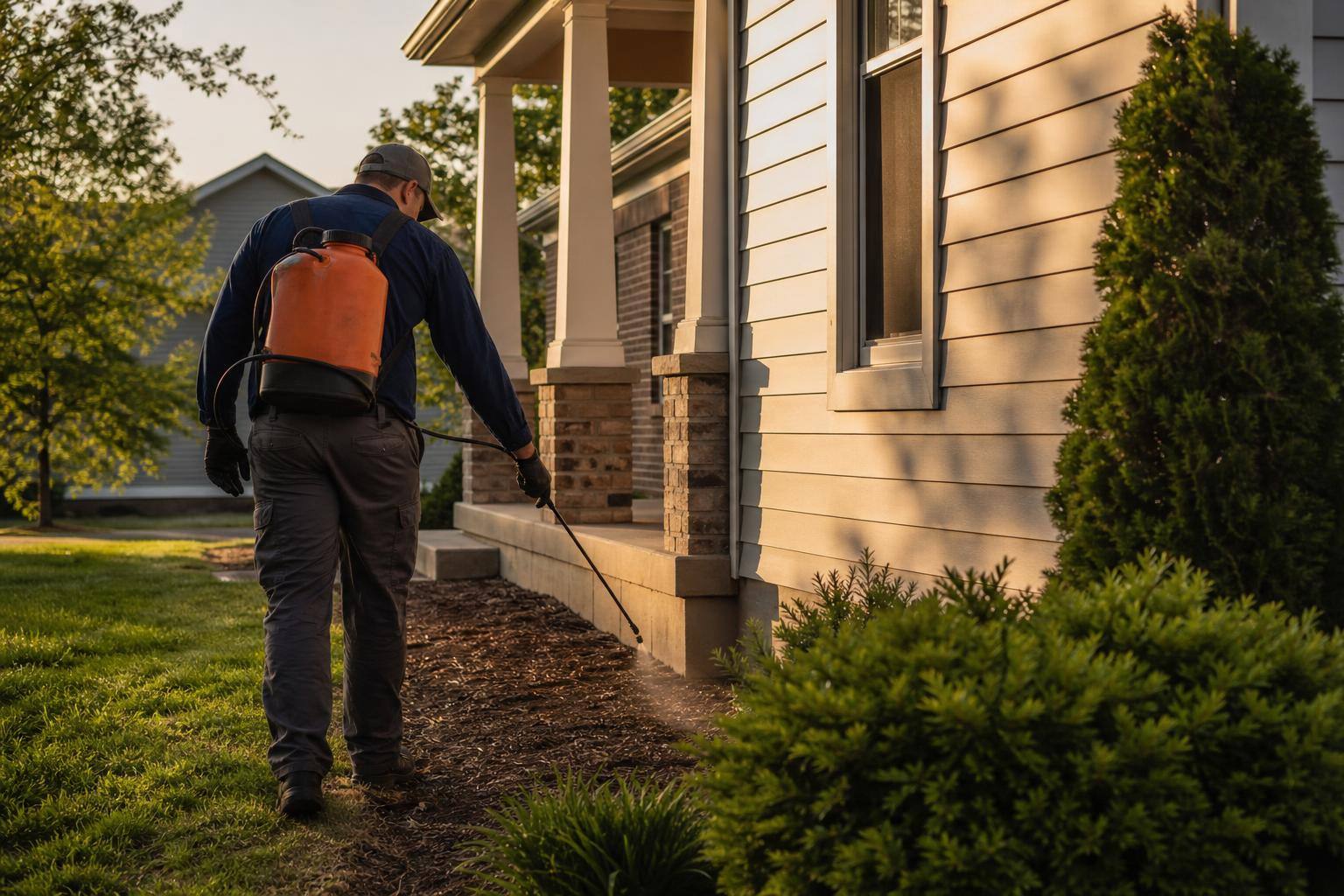
Spider control service · Alton, IL
Along the Upper Alton bluff, spiders use damp basement walls, stone foundations, and sheltered porches. One call sorts out the activity and matches the treatment to the property.
A real person answers · No forms · No waiting on a quote email
Plan
For older Upper Alton homes, river-flat houses, and garages with recurring webs, the technician may recommend a targeted treatment or whole-home treatment after checking the activity.
Quote
The quote is given on the call, based on treatment size, access, activity, materials, and any repeat visits needed.
Time
The visit time is set on the call around property access, occupants, pets, and current conditions.
Spider work changes across Downtown Alton, Upper Alton, the West End, and homes near the Mississippi River. Bluff properties can have basements and stonework that hold moisture, while river-flat properties may need attention around slabs, utility rooms, porches, and exterior webs.
Services
Alton
Alton homes range from older bluff-side properties to houses and apartments on flatter ground near the river. That changes where spiders shelter and how a technician reaches them. Basement walls, crawl spaces, garages, porches, utility rooms, landscaping, and exterior foundations all get considered before treatment is selected.
Residential service covers Alton houses, garages, basements, and exterior foundations where moisture and shelter support spider activity.
Indoor treatment addresses webs and spider activity in Alton basements, attics, utility rooms, closets, and other selected areas.
Outdoor treatment focuses on Alton porches, eaves, foundation lines, sheds, and shaded areas along river-flat or bluff properties.
Web removal clears selected visible webs around Alton entries, windows, porches, garages, and exterior lighting before treatment work.
Recurring prevention uses scheduled inspections and perimeter treatments for Alton properties that repeatedly develop webs after humid weather.
Property managers in Downtown Alton and the West End can arrange consistent treatment for apartments, shared areas, and exterior walkways.
Commercial service covers Alton storefronts, offices, warehouses, and service buildings where loading areas, lights, and doors attract spider activity.
The most common Alton job is a targeted treatment for visible webs or activity in a few rooms, porches, or foundation areas. Whole-home treatment fits larger properties, repeated indoor findings, or activity spanning the structure and exterior.
A technician checks common hiding areas, identifies spider activity, and looks for conditions attracting spiders.
An inspection fits a new report in an Upper Alton basement, attic, or river-side garage when the activity and conditions need to be identified before treatment.
A targeted treatment addresses visible activity in selected indoor or outdoor areas and may include web removal.
A targeted treatment suits visible webs around a Downtown Alton porch, selected basement rooms, garage corners, or exterior foundation sections.
A whole-home service treats interior and exterior areas where spiders commonly travel, shelter, or build webs.
A whole-home treatment fits an Alton house with activity across interior rooms, crawl spaces, eaves, porches, and foundation lines rather than one isolated area.
A recurring plan uses scheduled inspections and perimeter treatments to help reduce repeat spider activity.
Recurring prevention is useful for Madison County rentals, river-flat homes, and commercial properties where humid conditions and exterior lighting keep bringing activity back.
Cost
The exact quote is given on the call after the job is described. Cost depends on the type and size of treatment, activity level, indoor and outdoor access, time on site, distance from the work area, parts or materials, and after-hours work.
A single room or porch differs from a whole Alton structure with basements, attic areas, crawl spaces, exterior walls, and multiple web locations.
Bluff slopes, narrow drives, river-flat lots, locked gates, stairs, and distance between parking and the work area can change time on site.
Materials used for the selected spider treatment depend on the activity, surfaces, treatment areas, and conditions found at the Alton property.
After-hours work, wet ground, freezing conditions, flooding concerns, and difficult access can affect the work plan and service cost.
A clear description of the property, problem areas, access, and timing helps avoid surprise charges. The exact quote is reviewed on the call before the treatment plan is approved.
What goes in
This includes spiders or webs in basements, attics, closets, utility rooms, and living areas, including the damp lower levels common in some Alton bluff homes.
This includes webs on porches, eaves, windows, lights, garages, sheds, and foundation lines, including river-flat exterior areas around Alton homes.
This covers repeated activity after cleaning or isolated treatment, especially around Alton rentals, shaded yards, exterior lights, and humid building edges.
Not accepted. The service does not cover unrelated pests, hazardous materials, inaccessible areas, unsafe work conditions, or repairs to damaged structures, screens, masonry, or plumbing.
Projects
Attic treatment in Alton homes checks rafters, vents, stored materials, and roof edges where spiders can remain undisturbed.
Basement service suits Upper Alton and bluff-side homes with damp walls, window wells, utility spaces, and webs near stored items.
Garage treatment covers door tracks, corners, lights, shelving, and foundation edges at Alton houses and detached garages.
Exterior service treats selected eaves, porches, windows, lights, and foundation lines around Alton homes near the river or bluff.
Web removal addresses visible buildup around entries, porches, windows, and outdoor fixtures in Alton before the selected treatment.
Apartment service can address units, shared entries, basements, and exterior walkways in Downtown Alton and the West End.
Commercial treatment fits Madison County buildings with loading doors, bright exterior lights, storage areas, and recurring web activity.
A real person answers by phone. Describe the Alton property, the activity, and the areas where spiders or webs are appearing.
Share the spider locations, moisture concerns, recent cleaning or treatment, access limits, pets, and whether activity is indoors or outside.
The technician explains the recommended inspection or treatment, the work areas, and the exact quote for approval before service.
The technician treats the selected areas and discusses practical prevention around entry points, moisture, lighting, storage, and exterior shelter.
Weather
Humid Alton summers can increase web activity around shaded foundations, porches, and exterior lights. Winter freezes slow activity but can push spiders into protected indoor spaces. River flooding and wet ground may affect exterior access, while bluff slopes can make movement and equipment placement more difficult.
Placement
Work may take place in crawl spaces, basements, slabs, utility rooms, attics, garages, yards, porches, eaves, and foundation lines. Flooded ground, steep bluff drives, narrow side yards, locked rooms, stored belongings, and limited parking can restrict access.
Permits
A spider treatment on private property normally does not require a local construction permit or inspection. Street-side equipment, blocked sidewalks, or unusual placement may involve the City of Alton, and the booking call covers who needs to arrange any local approval.
Madison County landlords, covenants, and neighborhood associations may set rules for exterior work, chemical notices, access, or treatment scheduling. Tenants and property managers should check those rules before the visit.
Clear a path to the problem areas, crawl-space openings, utility rooms, and exterior foundation. Provide access to relevant shutoffs, keep pets and people away, and reserve safe parking. Wet ground, flooding, ice, steep slopes, and poor drainage may limit placement.
Service covers Downtown Alton, Upper Alton, the West End, Milton, river-flat neighborhoods, bluff-side homes, and commercial corridors across Alton and Madison County. Nearby service areas may include Edwardsville, Chatham, Cape Girardeau, Grayville, and Moline when arranged through the booking line.
Not sure about your street? Ask on the call and we will tell you which office handles it.
Timing
Spider activity in Alton commonly becomes more noticeable during humid summer weather, especially around porches, lights, garages, and shaded foundation lines. Late summer and early fall can bring more indoor sightings as conditions change. Winter freezes reduce outdoor movement but do not eliminate sheltered activity in basements, attics, and utility rooms.
Warm, humid weather can increase webs around Alton porches, eaves, river-flat yards, and exterior lights. Keeping access clear and reporting the areas that return first helps shape a targeted treatment.
Winter freezes can move activity toward protected indoor spaces, while river flooding and saturated ground can restrict exterior work. The visit plan accounts for safe access to basements, yards, and foundation lines.
Service area
Alton is part of our Madison County coverage, and we also serve the neighboring communities below.
Why us
Alton's Mississippi bluffs and river flats create different spider conditions within a short drive. A basement on sloped ground may stay damp, while a flat property may need attention around slabs, drainage, porches, and flood-exposed exterior areas.
Getcha Pest Control · Alton
Older homes in Upper Alton, apartments in the West End, and commercial spaces near busy corridors do not present the same access or treatment pattern. The work is planned around the actual rooms, foundation lines, storage areas, and exterior shelter present at the property.
Click Here to Call (888) 510-9023FAQs
Still have a question about Alton? Call (888) 510-9023 and ask a real person.
The exact quote is given on the call and depends on the treatment type and size, activity, access, time on site, distance, materials, and after-hours work. Mention whether the property is on a bluff, near river flats, or difficult to reach so the estimate reflects the job.
A targeted treatment fits visible activity in selected rooms or exterior areas, while a whole-home treatment fits activity across the structure and outside. An inspection helps when the source is unclear, and recurring prevention fits repeated activity at homes, rentals, or businesses.
The visit time is set on the call after the property, activity, access, and scheduling needs are reviewed. Same-day or after-hours availability can be discussed, but the arrival time is not promised until the appointment is arranged.
The approved treatment covers the selected indoor and outdoor areas where spiders travel, shelter, or build webs. Depending on the service, that can include basements, attics, garages, utility rooms, porches, eaves, foundation lines, and web removal in the agreed work areas.
It does not cover unrelated pests, hazardous materials, unsafe or inaccessible spaces, or repairs to damaged structures, screens, masonry, and plumbing. Describe those conditions on the call so the work plan does not assume repairs or pest services that were not booked.
Treatment on private property normally does not need a construction permit or inspection. Street-side equipment, sidewalk obstruction, or unusual placement may require City of Alton approval, and the booking call covers who needs to arrange any local requirement.
Clear access to basements, crawl spaces, attics, utility rooms, garages, porches, and exterior foundation lines. Secure pets and people, unlock needed areas, identify shutoffs, and mention steep drives, flooding, ice, stored belongings, or limited parking.
Have the property address, rooms or exterior areas involved, recent photos or observations, moisture or flooding details, access restrictions, pets, recent pest treatment, and preferred scheduling information ready for the phone discussion.
Yes, humid summers can increase exterior webs, winter freezes can shift activity indoors, and wet or flooded ground can restrict exterior access. Bluff slopes, icy drives, and saturated river-flat yards may change where the technician can safely work.
Moisture, sheltered foundation edges, vegetation, exterior lighting, and openings around doors or windows can support repeated activity near river properties. A recurring prevention plan may fit when webs return after isolated cleaning or treatment, especially around porches, garages, and utility areas.
A real person answers · No forms · Every quote given on the phone