Residential spider control
Residential spider control in Howell can cover foundation edges, garages, basements, porches, and detached structures around older and newer homes.
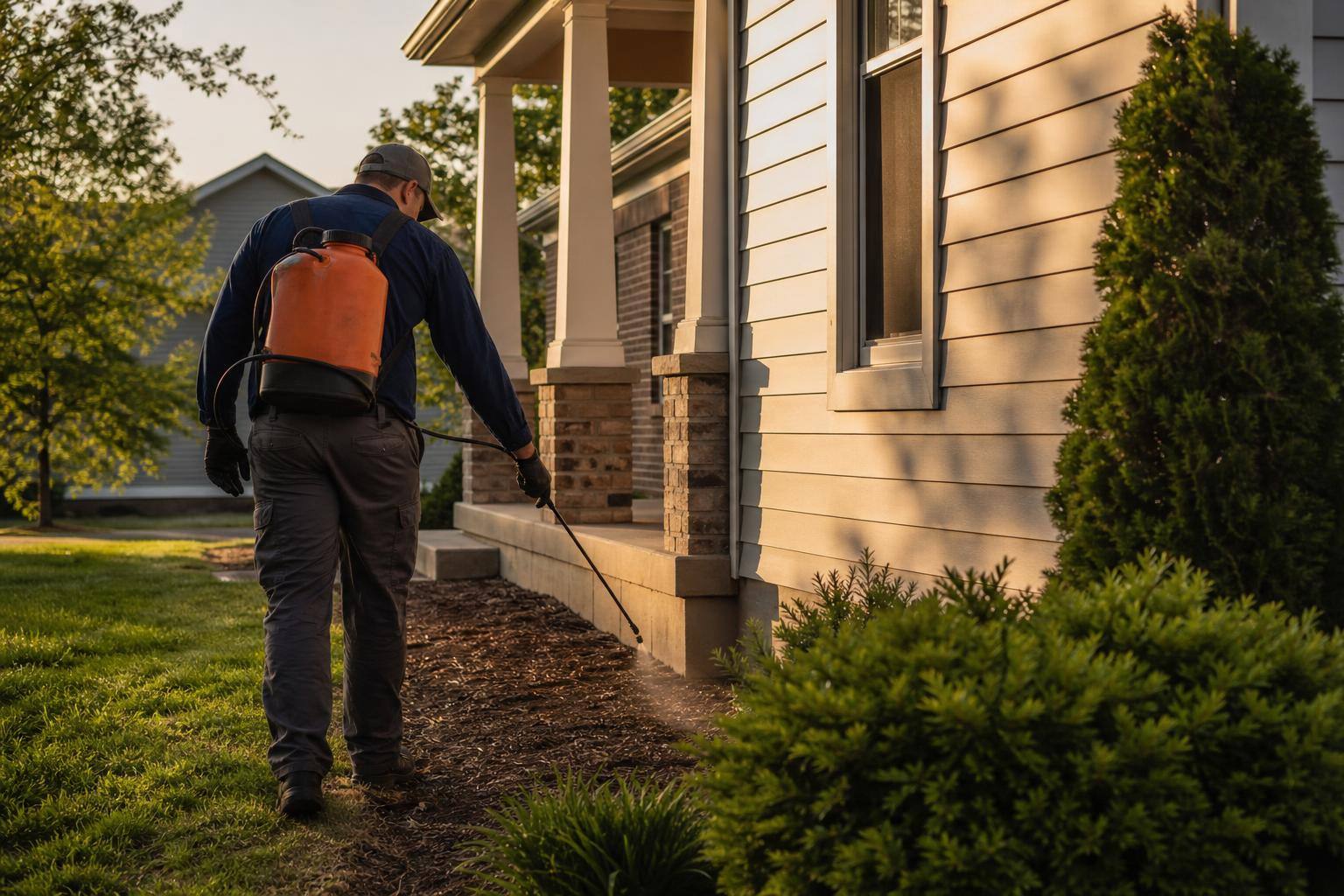
Spider control service · Howell, MI
Along Howell’s older rural edges near Peavy Road, spiders often find shelter where newer subdivisions meet barns, sheds, and wooded lots. One call gets the right spider treatment sorted for the property.
A real person answers · No forms · No waiting on a quote email
Plan
For a Howell home with activity in a basement, garage, or several exterior areas, a targeted treatment or whole-home treatment is usually the practical starting point.
Quote
The exact quote is given on the call, based on treatment size, access, activity, materials, and time on site.
Time
The visit time is set on the call around access to the property and the work areas needing treatment.
Homes near downtown Howell, the Grand River corridor, and the newer subdivisions west of town can have very different spider conditions. Older rural properties may have barns, crawl spaces, and deep foundation edges, while newer homes often concentrate activity around garages, utility rooms, and landscaped exteriors.
Services
Howell
Howell’s suburban growth has filled in around older rural properties, so spider work may involve a finished basement beside a detached outbuilding or a newer garage beside wooded ground. Humid summers increase exterior web activity, while freeze thaw movement can open small foundation gaps. The treatment is sized around where spiders travel, shelter, and build webs.
Residential spider control in Howell can cover foundation edges, garages, basements, porches, and detached structures around older and newer homes.
Indoor spider treatment checks Howell basements, attics, utility rooms, and garages for activity, hiding areas, and conditions drawing spiders inside.
Outdoor spider treatment addresses webs and travel routes around Howell siding, entryways, porch lights, sheds, and foundation edges.
Web removal service clears visible webs around Howell homes and selected outdoor areas while the treatment plan addresses where spiders are sheltering.
Recurring spider prevention suits Howell properties with repeat summer activity, especially homes near wooded lots, older outbuildings, or open rural ground.
Property manager spider control helps coordinate treatment across Howell apartments and rentals where garages, basements, and shared entries need consistent attention.
Commercial spider control covers Howell storefronts, offices, storage areas, and service buildings where exterior lighting and access points attract activity.
Most Howell jobs begin with a targeted treatment because activity is often concentrated in a garage, basement, entry, or exterior section. Larger rural properties, repeated activity, and several affected rooms may call for whole-home treatment or recurring prevention.
A technician checks common hiding areas, identifies spider activity, and looks for conditions attracting spiders.
An inspection fits a Howell property where the activity is uncertain, especially after finding spiders in a basement, attic, garage, or older outbuilding.
A targeted treatment addresses visible activity in selected indoor or outdoor areas and may include web removal.
A targeted treatment suits visible activity around a Howell entry, garage, porch, foundation section, or selected indoor rooms, with web removal where appropriate.
A whole-home service treats interior and exterior areas where spiders commonly travel, shelter, or build webs.
A whole-home treatment fits Howell homes with activity across interior and exterior areas, including properties combining newer living space with older sheds or barns.
A recurring plan uses scheduled inspections and perimeter treatments to help reduce repeat spider activity.
Recurring prevention is useful for Howell properties with repeat seasonal activity, wooded boundaries, rural outbuildings, or several access points that need scheduled attention.
Cost
The quote is given on the call after the work area is described. Cost depends on the type and size of the job, interior and exterior access, activity level, parts or materials used, distance from the Howell service area, and time on site.
A basement corner, detached garage, or whole Howell property requires different preparation and treatment coverage, so the affected areas are discussed before quoting.
Tight crawl spaces, stored garages, rural driveways, and difficult foundation access around Howell can change the time needed to inspect and treat.
Parts and materials depend on the treatment areas, web removal needs, and conditions found around the home, outbuilding, or commercial property.
Distance from Howell, after-hours work, and the time required on site can affect the quote, especially for properties beyond the central neighborhoods.
To avoid surprise charges, describe every affected area, detached structure, access limitation, and prior treatment on the call. The exact quote is reviewed before the treatment plan is approved.
What goes in
This covers spiders or webs in Howell basements, attics, garages, utility rooms, and living areas, including a typical load involving an older home with a damp foundation.
This covers webs around Howell porches, siding, doors, lights, sheds, and foundation edges, including exterior activity at a rural property with detached structures.
This covers repeat activity requiring scheduled attention at Howell homes, apartments, and businesses, particularly properties beside wooded ground or older outbuildings.
Not accepted. The service does not cover unrelated wildlife removal, structural repairs, hazardous materials, or items that cannot be safely accessed or treated.
Projects
Attic treatment checks roofline access, insulation edges, stored items, and entry conditions on Howell homes where warm upper spaces shelter spiders.
Basement service addresses webs and hiding areas near foundation walls, utility penetrations, and damp corners common in Livingston County homes.
Garage treatment suits Howell properties with webs near overhead doors, lights, stored equipment, and foundation joints.
Exterior service treats selected siding, porch, entry, and foundation areas around Howell homes, including newer subdivisions and older rural lots.
Web removal clears visible buildup around Howell doors, eaves, porches, sheds, and commercial entrances while the underlying activity is assessed.
Apartment service helps Howell property managers address shared entries, storage areas, basements, and affected units with a coordinated treatment plan.
Commercial treatment covers Livingston County offices, storefronts, storage buildings, and exterior lighting areas where spiders can gather.
A real person answers by phone and records the Howell property type, affected areas, access conditions, and concerns.
Explain where spiders or webs appear, how often they return, and whether the property includes a basement, garage, crawl space, or outbuilding.
The treatment size, work areas, access needs, and exact quote are reviewed before you approve the plan.
The technician treats the agreed areas, removes webs where included in the plan, and explains practical steps for reducing repeat activity.
Weather
Howell’s humid summers can increase web building around doors, lights, porches, and foundation edges. Snowy winters drive spiders toward sheltered spaces, while freeze thaw cycles can change small foundation gaps and access conditions. Wet or frozen ground may affect exterior placement and the work areas that can be safely reached.
Placement
Work may take place in crawl spaces, basement corners, garage edges, utility rooms, porches, yards, and foundation lines. Stored belongings, narrow access, locked rooms, snow, standing water, and soft glacial soil can limit inspection or exterior treatment until the area is reachable.
Permits
A spider treatment at a private Howell property generally does not require a street permit or government inspection. If equipment or access affects public space, approval comes from the City of Howell or Livingston County authority with jurisdiction. The situation is discussed on the call, including who arranges any required approval.
Some Livingston County subdivisions and Howell rental properties have HOA, covenant, or landlord rules about exterior treatment, entry access, and scheduling. Check those rules before the visit and have the property contact available on the call.
Clear access to the affected rooms, crawl spaces, basement walls, garage edges, and exterior foundation. Provide a place for the work vehicle, secure pets and people, and remove obstacles. Snow, wet ground, freeze thaw damage, and soft glacial soil may limit outdoor access.
Service covers central Howell, neighborhoods near downtown, the Grand River corridor, west and east Howell subdivisions, and older rural properties around the city edges. Nearby Livingston County properties can be discussed on the call, including routes toward Grass Lake and other surrounding communities.
Not sure about your street? Ask on the call and we will tell you which office handles it.
Timing
Spider activity in Howell often becomes more noticeable during humid summer weather, when webs appear around exterior lights, porches, siding, and detached structures. As temperatures fall, spiders may move toward garages, basements, attics, and utility rooms. Snow, frozen ground, and thawing conditions can affect exterior access and treatment placement.
Humid Howell summers can increase visible webs around porches, lights, entries, sheds, and foundation edges. Outdoor treatment should account for the property layout, nearby vegetation, and access around older rural structures.
Snow and freezing conditions push activity toward protected interior areas, while spring thaw exposes foundation edges and damp spaces. Howell properties may need indoor inspection first, followed by exterior work when ground conditions allow.
Service area
Howell is part of our Livingston County coverage, and we also serve the neighboring communities below.
Why us
Howell’s mix of new subdivisions and older rural properties changes the inspection. A technician may need to compare a finished basement and attached garage with a detached shed, barn edge, or wooded foundation line on the same job.
Getcha Pest Control · Howell
Snowy winters, humid summers, and freeze thaw cycles affect where spiders shelter and how exterior areas are reached. Treatment planning accounts for basement access, garage storage, soil conditions, porches, siding, and seasonal foundation gaps.
Click Here to Call (888) 510-9023FAQs
Still have a question about Howell? Call (888) 510-9023 and ask a real person.
The exact quote is given on the call and depends on the job type and size, activity level, interior or exterior access, parts and materials, distance, after-hours work, and time on site. Describe every affected area around the Howell property so the quote matches the actual work.
A targeted treatment often fits activity limited to a basement, garage, entry, or exterior section. An inspection suits uncertain sightings, while a whole-home treatment or recurring prevention fits broader or repeat activity. The property layout and affected areas determine the recommendation.
The visit time is set by phone after the property and affected areas are described. Same-day or next-day availability can be discussed, but arrival depends on the schedule, access, distance, and the type of treatment needed.
Treatment can cover agreed indoor and outdoor areas where spiders travel, shelter, or build webs, such as basements, attics, garages, porches, foundation edges, yards, and detached structures. The exact areas are reviewed before the plan is approved.
It does not cover unrelated wildlife removal, structural repairs, hazardous materials, or areas that cannot be safely accessed or treated. A separate concern at a Howell property should be described on the call so its scope is clear.
Private spider treatment generally does not need a street permit or government inspection. If work affects public space, the City of Howell or Livingston County authority with jurisdiction may need to approve it, and the call covers who handles that question.
Access is needed to every agreed indoor area, including basements, attics, garages, utility rooms, and crawl spaces. If no one will be home, arrange entry in advance and secure pets, people, locked rooms, and stored items around the work area.
Have the property address, room or exterior locations, photos if available, the type of building, access limits, detached structures, prior treatments, pets, and any landlord or HOA requirements ready. This helps match the job to the right treatment size.
Yes. Humid summers can increase exterior webs, while snow and freezing weather push activity into garages, basements, and other sheltered areas. Freeze thaw cycles and wet glacial soil can also limit exterior access, so the visit plan accounts for current conditions.
Yes, the plan can account for older homes, barns, sheds, crawl spaces, garages, and wooded foundation edges around Howell. Rural properties often need a broader inspection because activity may move between the house and detached structures.
A real person answers · No forms · Every quote given on the phone