Residential spider control
Spider control for Palmyra homes covers living areas, basements, garages, eaves, and other places where open-lot exposure brings activity close to the house.
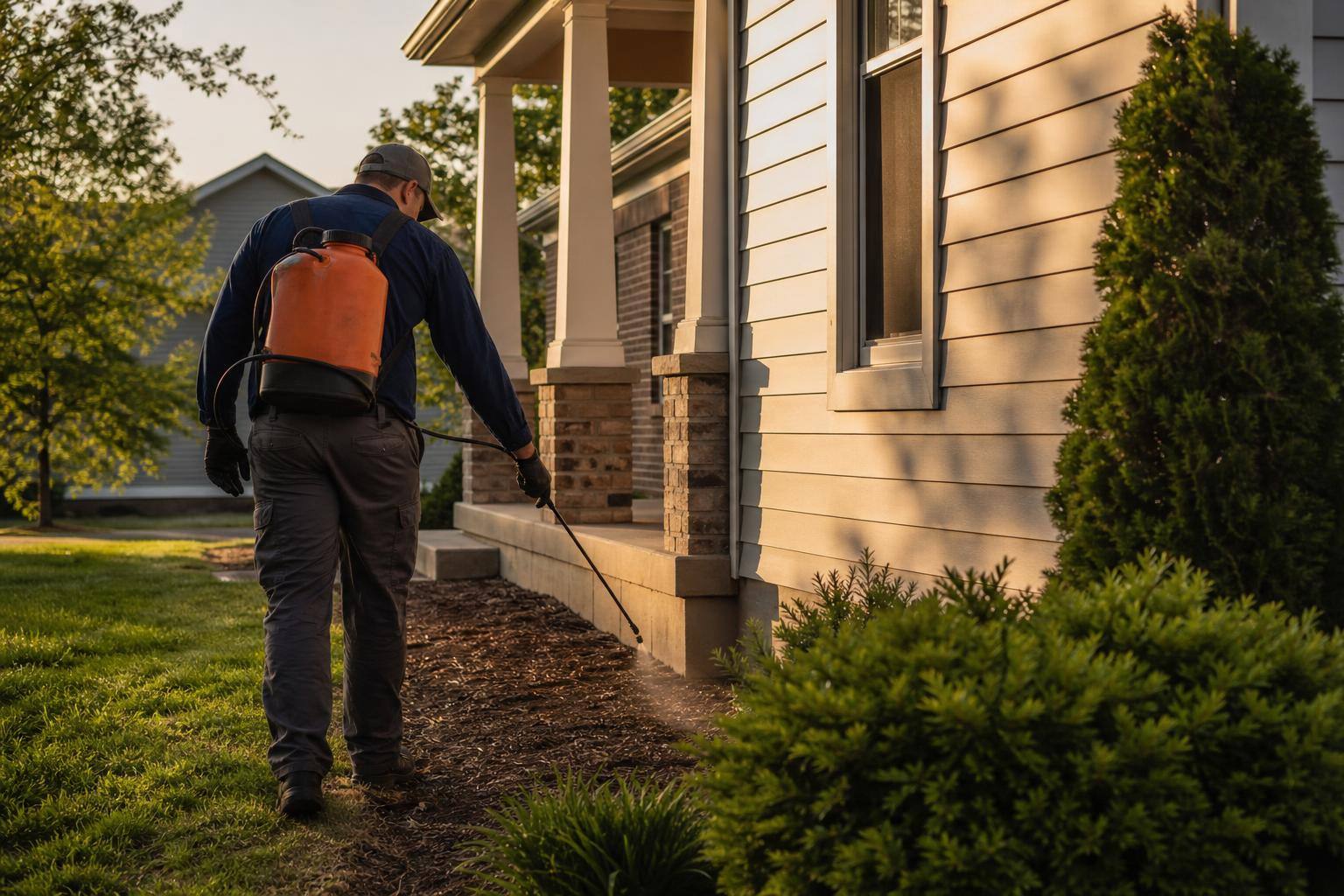
Spider control service · Palmyra, NE
Homes along Palmyra’s open prairie lots often collect webs around eaves, porches, garages, and basement windows. One call gets the spider treatment sized to the activity and the property.
A real person answers · No forms · No waiting on a quote email
Plan
For a Palmyra house with webs around the exterior and activity indoors, a targeted treatment often fits; larger homes, detached garages, and repeat problems may need whole-home treatment.
Quote
The quote is given on the call and changes with treatment size, access, activity, materials, and distance.
Time
The visit time is set on the call around access, weather, and the property’s location near Palmyra.
From older homes near Palmyra’s village center to open-lot houses along the town edges, spider work changes with crawl spaces, basements, detached garages, and exposed eaves. Properties near Highway 2, farms outside town, and the Cass County countryside can also need different access planning. The treatment focuses on where spiders travel, shelter, and build webs.
Services
Palmyra
Palmyra’s small-town homes sit on open prairie lots, so wind can carry debris toward siding, porches, soffits, and detached garages. Older basements and crawl spaces give spiders sheltered routes indoors, while farm and residential properties may have broad exterior edges to inspect. The right service depends on whether the activity is inside, outside, limited to webs, or returning after treatment.
Spider control for Palmyra homes covers living areas, basements, garages, eaves, and other places where open-lot exposure brings activity close to the house.
Indoor treatment focuses on Palmyra attics, basements, utility rooms, closets, and other sheltered spaces where spiders can travel or build webs.
Outdoor treatment addresses webs and travel areas around Palmyra porches, siding, windows, detached garages, and exposed prairie-facing sides.
Web removal clears visible buildup from Palmyra eaves, door frames, porch ceilings, sheds, and other reachable areas before treatment decisions are made.
Recurring prevention suits Palmyra properties that repeatedly collect webs around broad foundations, outbuildings, exterior lights, and open-lot entry points.
Property managers in Palmyra can arrange treatment for apartments, rentals, and shared exterior areas where activity returns across more than one unit.
Commercial spider control covers Palmyra storefronts, offices, storage buildings, and service areas where exterior lighting and open surroundings attract activity.
Most Palmyra jobs begin with an inspection or targeted treatment because activity is often concentrated around one foundation, garage, attic, or porch. Whole-home treatment fits broader indoor and outdoor activity, while recurring prevention addresses repeated webs across open lots.
A technician checks common hiding areas, identifies spider activity, and looks for conditions attracting spiders.
An inspection fits a Palmyra homeowner who sees occasional spiders but cannot locate the source. The technician checks hiding areas, identifies activity, and looks for conditions attracting spiders.
A targeted treatment addresses visible activity in selected indoor or outdoor areas and may include web removal.
A targeted treatment suits visible webs around a Palmyra porch, garage, basement entry, or selected rooms. It addresses chosen indoor or outdoor areas and may include web removal.
A whole-home service treats interior and exterior areas where spiders commonly travel, shelter, or build webs.
Whole-home treatment fits a Palmyra property with activity moving between basement, living spaces, garage, eaves, and foundation edges. Interior and exterior travel and shelter areas are treated.
A recurring plan uses scheduled inspections and perimeter treatments to help reduce repeat spider activity.
Recurring prevention works for Palmyra homes, rentals, or commercial sites where webs return along wide exterior walls, outbuildings, entry points, or other repeat activity areas.
Cost
The exact quote is given on the call. Spider treatment cost depends on the type and size of the job, indoor or outdoor areas, parts and materials, time on site, access, distance from the Palmyra setting, and any after-hours work.
A small web area differs from a whole-home visit covering basements, attics, garages, eaves, foundations, and broad exterior edges around a Palmyra property.
Long drives from the Palmyra area, open-lot approaches, locked outbuildings, crawl spaces, and difficult exterior access can change the time and work involved.
Parts and materials depend on the treatment plan, the surfaces involved, and whether selected indoor areas, exterior travel routes, or repeat prevention work is required.
Heavy rain, expansive soils, dense webs, stored items, pets, and after-hours work can affect preparation, time on site, and the final service cost.
To avoid surprise charges, describe every affected area on the call, including detached buildings, attic or basement access, repeat activity, and distance outside the Palmyra village area. The exact quote is given before the visit is arranged.
What goes in
This covers spiders or webs in Palmyra basements, attics, utility rooms, garages, closets, and living areas. Mention stored items or a typical basement load so access can be planned.
This covers webs around Palmyra porches, soffits, windows, siding, sheds, lights, and detached garages. Open prairie lots can leave more exterior edge exposed to wind and debris.
This covers repeat activity at Palmyra homes, rentals, and commercial buildings where webs return around foundations, outbuildings, eaves, or entry points after earlier cleaning.
Not accepted. The service does not cover unrelated pest species, unsafe areas, inaccessible spaces, hazardous materials, or items that cannot be safely reached or treated.
Projects
Palmyra attics can hold spiders where roof edges, insulation, stored items, and ventilation openings create sheltered routes. Access and stored belongings affect the inspection.
Basement treatment in Palmyra homes checks corners, window wells, utility areas, and foundation edges where moisture and shelter can support spider activity.
Detached garages on Palmyra’s open lots often collect webs around doors, lights, rafters, and stored equipment. The selected treatment depends on access and activity.
Exterior work around Palmyra houses focuses on eaves, porches, siding, windows, lights, and foundation lines exposed to prairie wind and seasonal storms.
Web removal suits Palmyra porches, sheds, garages, and entryways with visible buildup. Reachable surfaces are cleared while the broader source of activity is assessed.
Apartment treatment in Palmyra may involve individual units, shared entries, stair areas, and exterior walls. Access rules and nearby residents need to be coordinated.
Commercial buildings in Palmyra may need work around loading areas, doors, exterior lights, storage rooms, and roof edges where open surroundings support repeat webs.
A real person answers by phone. Have the Palmyra property location, affected areas, building type, and any access limits ready.
Explain where spiders or webs appear, how often they return, whether activity is indoors or outside, and whether detached buildings are involved.
The treatment plan is matched to the observed activity, property layout, access, materials, and requested areas before the visit is set.
The technician treats the agreed areas, may remove reachable webs, and explains practical steps for reducing repeat activity around the property.
Weather
Palmyra’s hot, windy summers can move debris toward eaves and siding, while spring storms and heavy rain can complicate exterior access. Cold winters may shift activity into basements, attics, garages, and utility rooms. Weather conditions are reviewed when setting the visit.
Placement
Work may occur in crawl spaces, slabs, basements, utility rooms, attics, garages, yards, eaves, and foundation edges. Stored belongings, locked outbuildings, narrow crawl-space access, wet ground, expansive soils, pets, and parked vehicles can limit the work area.
Permits
Spider treatment on private property generally does not involve a local permit, but street-side access, equipment placement, or unusual public-area work can raise questions. The City of Palmyra is the place to ask about approval for street placement. The call covers who needs to arrange any required permission or inspection.
Cass County properties may have HOA, covenant, landlord, or rental rules covering exterior treatment, access, notices, and contractor parking. Check those rules before arranging work, especially for apartments or managed homes in Palmyra.
Clear a path to the affected room, crawl space, attic, garage, yard edge, or eaves, and identify utility shutoffs or locked gates. Keep a work-vehicle parking area available, secure pets and people, and account for wet ground, wind, storms, or winter conditions.
Service covers Palmyra’s village center, residential edges, homes near Highway 2, open prairie lots, detached garages, farms and acreage in the surrounding Cass County area, and commercial properties in town. Nearby service planning can also include Union, Holton, Tecumseh, Lawrence, and Indianola.
Not sure about your street? Ask on the call and we will tell you which office handles it.
Timing
Spider activity in Palmyra commonly becomes more noticeable during warm weather, when outdoor webs spread across porches, eaves, lights, garages, and siding. Spring storms and heavy rain can change exterior conditions, while colder weather drives activity toward protected indoor spaces. Repeat problems may justify recurring prevention rather than occasional web removal.
Hot, windy summers can increase visible webs around Palmyra porches, exterior lights, detached garages, and broad prairie-facing walls. Treatment areas may need to be checked after wind and rain change access.
Cold winters often make basements, attics, utility rooms, garages, and crawl spaces more noticeable as spider shelter. Indoor access, stored belongings, and safe movement matter more than exterior reach.
Service area
Palmyra is part of our Cass County coverage, and we also serve the neighboring communities below.
Why us
Palmyra’s open prairie lots expose house edges, porches, garages, and sheds to windblown debris and changing weather. That makes the location of webs, exterior lights, foundation lines, and detached buildings useful when sizing the treatment.
Getcha Pest Control · Palmyra
Local homes can combine older basements, crawl spaces, utility rooms, broad yards, and outbuildings on one property. The treatment needs to account for those separate routes instead of assuming a single indoor room explains all the activity.
Click Here to Call (888) 510-9023FAQs
Still have a question about Palmyra? Call (888) 510-9023 and ask a real person.
The exact quote is given on the call. Cost depends on the job type and size, indoor and outdoor areas, parts and materials, time on site, access, distance from the Palmyra setting, and after-hours work. Describe detached buildings and repeat activity so the scope is accurate.
An inspection fits uncertain activity, a targeted treatment fits selected rooms or exterior areas, and a whole-home treatment fits activity across indoor and outdoor routes. Recurring prevention suits repeat webs around broad foundations, garages, eaves, and open-lot entry points.
The visit time is set on the call after the activity, property location, access, and weather are reviewed. Same-day or after-hours availability can be discussed, but the arrival time is not promised until the visit is arranged.
Treatment covers the agreed indoor or outdoor areas where spiders travel, shelter, or build webs, and selected plans may include web removal. The scope can include basements, attics, garages, porches, eaves, siding, foundation edges, yards, or commercial areas.
It does not cover unrelated pest species, hazardous materials, unsafe areas, inaccessible spaces, or items that cannot be safely reached or treated. Describe other pest activity separately so the service is not sized around the wrong problem.
Spider treatment on private property generally does not require a local permit or inspection. Street-side placement or unusual public-area work may involve the City of Palmyra, and the call covers who must arrange any required approval.
Whether people can remain depends on the treatment plan, the areas being treated, and product directions discussed during scheduling. Provide clear access to rooms, basements, garages, crawl spaces, gates, and exterior edges, and keep pets away from the work area.
Have the property location, building type, affected rooms or exterior areas, detached buildings, recent web locations, repeat history, access limits, pets, and weather concerns ready. Mention whether the property sits on an open lot or includes acreage.
Yes. Hot wind, spring storms, heavy rain, expansive soils, and cold winter conditions can change exterior access and move activity toward sheltered spaces. The visit is set around the property condition, with indoor areas considered when outdoor work is limited.
Yes, a detached garage can be included in an inspection, targeted treatment, whole-home treatment, or recurring prevention plan. Describe its distance from the house, door and light locations, stored equipment, and whether webs also appear along the main building.
A real person answers · No forms · Every quote given on the phone