Bedroom bed bug treatment
A focused treatment for one sleeping area, including likely hiding places around furniture, cracks, and furnishings in Bluefield homes.
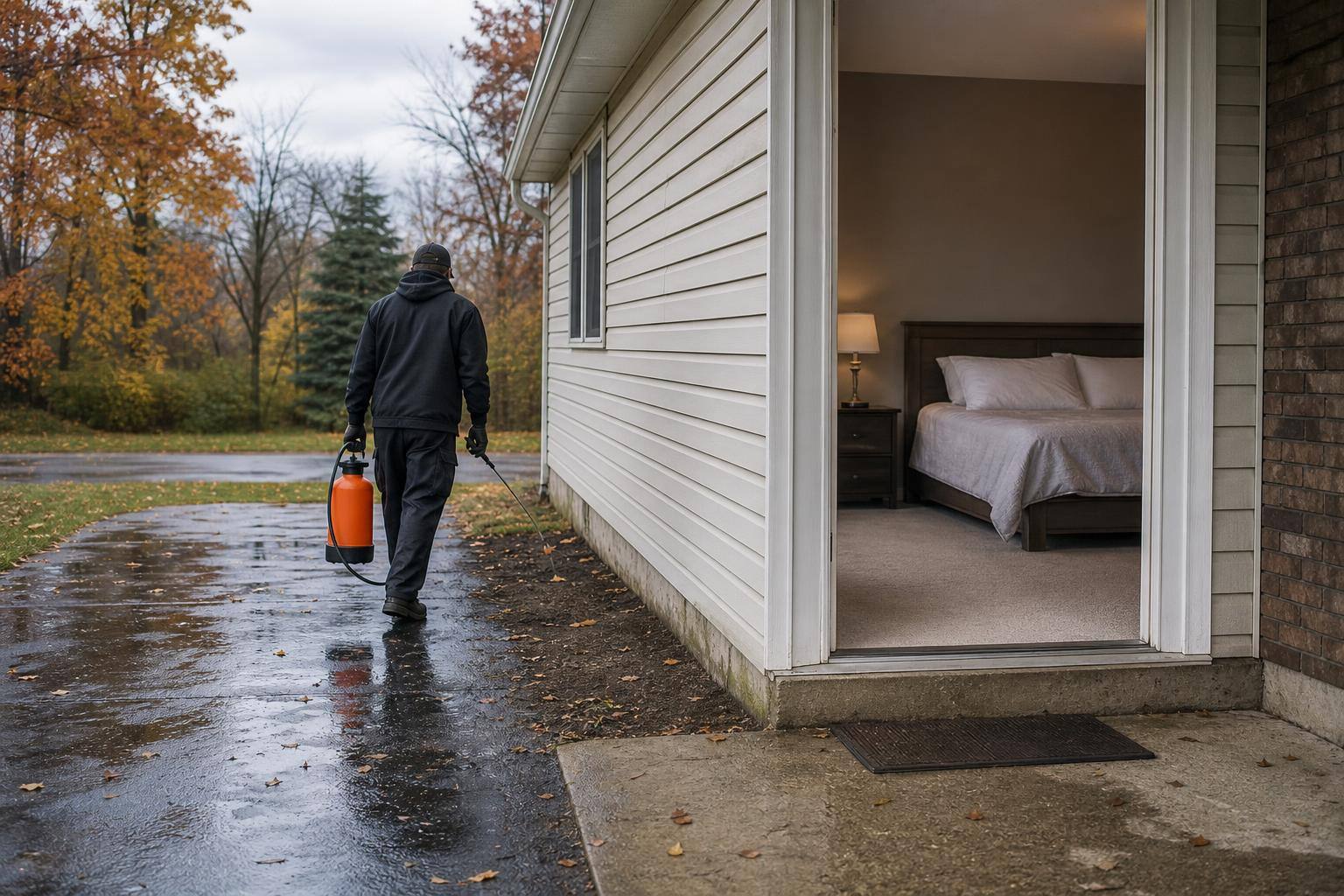
Bed bug treatment · Bluefield, VA
On steep streets above downtown Bluefield, a bed bug job may involve tight rooms, basement steps, and limited parking. One call sorts the inspection or treatment that fits the property.
A real person answers · No forms · No waiting on a quote email
Plan
For a bedroom in Bluefield’s older hillside housing, the inspection usually comes first; connected rooms, apartments, or shared walls may call for a larger tier.
Quote
The quote is given on the call and changes with room count, evidence found, access, materials, and time on site.
Time
The visit time is set on the call around access, occupants, pets, and the property’s location on Bluefield’s slopes.
From downtown Bluefield and College Avenue to hillside homes near the Virginia coalfield streets, bed bug work changes with stairs, basements, tight rooms, and parking. Apartment units, furnished rooms, and move-in properties need different inspection and preparation plans than a single bedroom.
Services
Bluefield
Bluefield’s steep residential streets can make carrying equipment and reaching basements more involved than work on a level lot. Older homes near downtown and College Avenue may have connected rooms, furnishings, and wall gaps worth checking. Apartment buildings and lodging properties need attention to adjoining spaces, while wet summers and snowy winters can limit exterior access without changing the need to inspect indoors.
A focused treatment for one sleeping area, including likely hiding places around furniture, cracks, and furnishings in Bluefield homes.
Apartment work considers the affected unit and nearby conditions, useful in Bluefield buildings where shared walls and tight access matter.
Rooms and connected areas are treated according to findings and preparation, including basement or upper-floor spaces in hillside Bluefield homes.
Beds, couches, and other furnishings receive focused attention when a Bluefield move or room inspection points to furniture harborage.
An inspection helps check a vacant or furnished property before moving belongings into Bluefield housing, apartments, or student rooms.
Lodging rooms and nearby areas are assessed with a coordinated plan suited to Bluefield guest spaces and operational access.
A broader program can inspect affected units, shared areas, and nearby units in Bluefield apartment or lodging properties.
Many Bluefield jobs begin with an inspection because steep homes, basement rooms, and connected living areas can hide the extent of activity. A single-room treatment fits confirmed, contained evidence, while apartments and lodging properties may need broader coordination.
A pest professional examines sleeping areas, furniture, cracks, and other likely harborage sites for evidence.
This fits a suspected bedroom in downtown Bluefield, a move-in property near College Avenue, or a home where signs need checking before treatment is chosen.
Treatment focuses on one affected room and commonly includes targeted application to hiding places and furnishings.
Use this for confirmed activity limited to one bedroom or furnished room, when the Bluefield inspection finds no connected areas requiring the larger plan.
The service treats affected rooms and connected areas according to the inspection findings and preparation plan.
This suits a hillside Bluefield house where occupants sleep in more than one room, or where basements, stairs, and connected spaces need treatment.
A coordinated program inspects and treats affected units, shared areas, and nearby units when appropriate.
Apartment buildings, lodging properties, and nearby units in Tazewell County may need coordinated inspection and treatment when activity can move between spaces.
Cost
The exact quote is given on the call after the job is described. Cost depends on the treatment tier, affected room count, evidence, furniture and materials involved, time on site, access, distance from the Bluefield area, and any after-hours work.
Room count, connected areas, unit count, and the difference between an inspection and treatment change the work involved at Bluefield homes and buildings.
Steep streets, basement steps, limited parking, and travel from the Bluefield service area can affect time on site and access planning.
The condition and amount of furniture, bedding, cracks, and other materials needing targeted application can change the treatment work.
Occupancy, pets, preparation needs, and after-hours work can affect the visit plan, especially in apartments or lodging properties.
To avoid surprise charges, describe every affected room, unit, furnishing, access restriction, and prior treatment during the call. The exact quote is given before the visit is set.
What goes in
Visible bugs, shed skins, or dark marks should be described by room and location. A typical Bluefield load may include bedroom furniture reached by stairs or a narrow entry.
Bites and droppings can guide the inspection but do not identify every case alone. Note sleeping locations, dates noticed, and any basement or adjoining room involved.
Mattresses, bed frames, couches, and chairs can hold evidence. In a Bluefield move or rental turnover, identify which furnishings remain and which will be removed.
Not accepted. The service does not cover unrelated pests, unsafe access, undisclosed occupied areas, or treatment of belongings that cannot be inspected or safely reached.
Projects
Bedroom treatment focuses on sleeping areas and nearby furnishings, with access planning for stairs and tight rooms in Bluefield’s older hillside homes.
Apartment work follows the evidence in the unit and considers shared-wall conditions common in Bluefield buildings near the central streets.
A whole-home plan addresses affected rooms and connected areas, including basement and upper-floor spaces in Tazewell County houses.
Furniture treatment targets beds, couches, and other furnishings when inspection findings connect activity to items in a Bluefield residence.
Hotel service coordinates room inspection and treatment with nearby areas when needed, while working around guest and staff access in Bluefield.
A move-in inspection checks vacant or furnished rooms before belongings arrive, useful for Bluefield rentals and property turnovers.
Multi-unit work coordinates affected units, shared spaces, and nearby units where activity may extend through a Bluefield apartment or lodging property.
Give the property location, room count, occupancy, and signs found so the appropriate Bluefield visit can be discussed.
Explain where bites, bugs, droppings, skins, or furniture evidence appeared, including bedrooms, couches, basements, and adjoining rooms.
Follow the preparation plan for access to beds, furniture, cracks, closets, and connected areas, while keeping people and pets clear.
The treatment addresses findings and the agreed areas; follow-up needs are discussed based on inspection results and remaining evidence.
Weather
Bluefield’s cool wet summers and snowy winters can make steep drives, exterior steps, and parking difficult. Most bed bug work is indoors, but weather can affect carrying equipment, access to entrances, and the visit arrangement on sloped residential streets.
Placement
Work happens around sleeping areas, furniture, cracks, basements, slabs, utility rooms, and connected rooms as findings require. Steep coalfield lots, narrow drives, wet ground, snow, basement steps, and limited parking can restrict how equipment reaches the work area.
Permits
A bed bug treatment inside a private Bluefield property generally is not a street construction job. If equipment, access, or a temporary public placement raises a local question, approval comes from the City of Bluefield or the relevant local government. The call covers who needs to arrange any required inspection or approval.
Tazewell County landlords, HOAs, and covenants may set rules for entry, treatment notices, pets, furniture movement, or shared areas. Tenants should have the owner or property manager confirm those rules before the visit is arranged.
Clear a path to the affected bedroom, furniture, basement, utility room, or other agreed area. Provide safe access to shutoffs when relevant, parking for the work vehicle, and room for equipment. Keep people and pets clear, especially during wet or snowy conditions on steep lots.
Service covers Bluefield’s downtown streets, homes near College Avenue, hillside residential areas, apartment properties, lodging spaces, and other parts of the city in Tazewell County. Nearby service discussions may also include surrounding coalfield communities, with the exact location and access reviewed on the call.
Not sure about your street? Ask on the call and we will tell you which office handles it.
Timing
Bed bug work can arise any time in Bluefield, but moving periods, rental turnovers, travel, and increased indoor living during snowy winters often bring more inspection requests. Cool wet summers can complicate entrances and exterior carrying, while apartment and lodging work may need coordination around occupants.
Snow and wet conditions can limit parking, steps, and carrying equipment to Bluefield homes. Describe the driveway, entrance, basement access, and any seasonal obstruction when setting the visit.
Vacant rooms are easier to inspect before furniture arrives, but apartment and lodging schedules still require access to connected areas and nearby units when findings warrant it.
Service area
Bluefield is part of our Tazewell County coverage, and we also serve the neighboring communities below.
Why us
Bluefield’s steep residential streets, basement entries, and coalfield terrain affect how a technician reaches rooms and furniture. The job is planned around parking, stairs, connected rooms, and the evidence found inside the property.
Getcha Pest Control · Bluefield
Older homes near downtown and College Avenue can have several living levels, while apartments and lodging properties may share walls or nearby rooms. Inspection findings determine whether a single room or broader program makes sense.
Click Here to Call (888) 510-9023FAQs
Still have a question about Bluefield? Call (888) 510-9023 and ask a real person.
The exact quote is given on the call. Cost depends on the inspection or treatment tier, affected rooms, furnishings and materials, time on site, access, distance, and after-hours work. Steep drives, basement stairs, and limited parking should be described because they can change the work plan.
An inspection is the starting point when signs are uncertain. A single-room treatment fits contained activity, while a whole-home treatment suits connected rooms or multiple sleeping areas. Apartments, hotels, and nearby units may need a multi-unit program after the findings are reviewed.
The visit time is set on the call after the property and signs are reviewed. Availability depends on the work needed, access, occupants, and location on Bluefield’s steep streets. Ask about same-day or next-day availability if that matters.
The work covers the areas identified in the selected treatment plan, such as sleeping areas, furniture, cracks, affected rooms, connected spaces, shared areas, or nearby units. The inspection findings and preparation plan determine the areas addressed.
It does not cover unrelated pests, unsafe or unreachable areas, undisclosed occupied rooms, or belongings that cannot be inspected or safely reached. Describe other pest activity separately so the work is scoped correctly.
A private indoor bed bug treatment generally does not involve a street construction permit. If a local approval or inspection question arises, the City of Bluefield or another responsible local government can identify it, and the call covers who arranges it.
Clear access is needed to affected beds, furniture, cracks, closets, basements, utility rooms, and connected areas included in the plan. Provide safe parking and keep people and pets clear. Mention steep driveways, narrow entries, locked rooms, and snow or wet ground.
Have the property address, room and unit count, occupancy status, sleeping locations, signs found, furniture involved, prior treatment details, pets, and access limits ready. Photos or notes about where evidence appeared can help describe the job.
Weather mainly affects carrying equipment, parking, steps, and exterior access because Bluefield has wet summers, snowy winters, and steep residential streets. The treatment areas are generally indoors, but seasonal conditions should be explained when the visit is arranged.
Yes, an apartment may need broader inspection when signs, shared walls, adjoining rooms, or nearby units suggest activity could extend beyond the first report. The inspection findings determine whether a single-room treatment or multi-unit program fits.
A real person answers · No forms · Every quote given on the phone