Bedroom bed bug treatment
A focused treatment for sleeping areas in Chicago apartments, including mattresses, bed frames, nearby furniture, cracks, and likely hiding places.
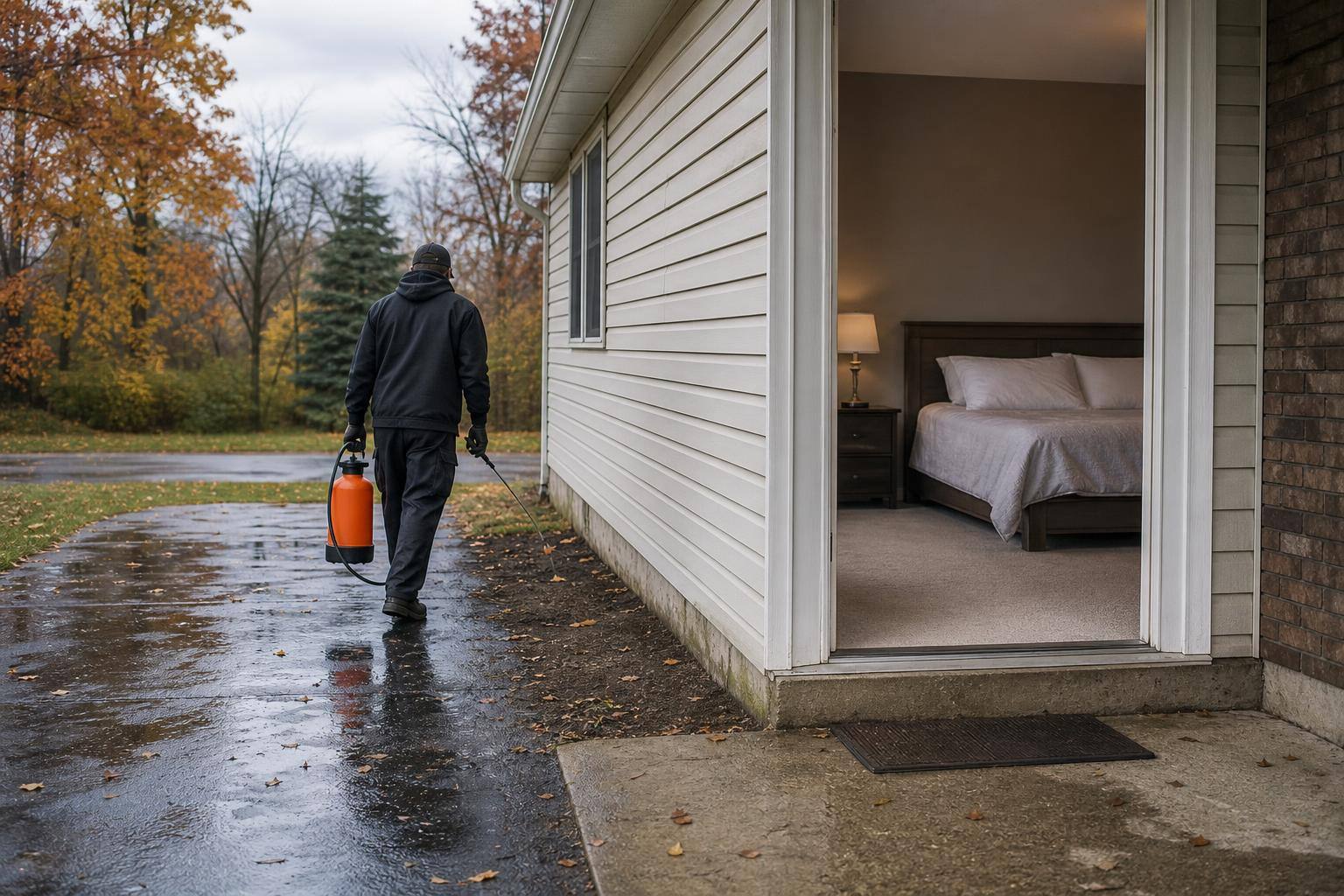
Bed bug treatment · Chicago, IL
In a Rogers Park apartment, bed bugs can move through connected units, furniture, and wall gaps. One call gets the inspection or treatment plan sorted for Chicago high-rise and multifamily work.
A real person answers · No forms · No waiting on a quote email
Plan
For a Chicago apartment, condo, or high-rise room, the inspection or single-room treatment is often the sensible starting point, with a multi-unit program considered when adjoining units show signs.
Quote
The quote is given on the call, based on affected rooms, furnishings, access, preparation, materials, and time on site.
Time
The visit time is set on the call around building access, resident schedules, parking, and treatment preparation.
From Rogers Park and Uptown to the Loop, Hyde Park, and Pilsen, Chicago bed bug work often means elevators, shared corridors, tight rooms, and connected apartments. The inspection checks sleeping areas, furniture, cracks, and other harborage sites before a treatment is matched to the property.
Services
Chicago
Chicago housing changes how a bed bug treatment is organized. High-rise cores, older courtyard buildings, basement apartments, student rentals, and dense multifamily properties can limit parking, elevator access, and room preparation. The work may involve one bedroom, connected living areas, furniture, or several units, so the inspection needs clear information about where signs were found and which rooms share walls or corridors.
A focused treatment for sleeping areas in Chicago apartments, including mattresses, bed frames, nearby furniture, cracks, and likely hiding places.
Treatment for an affected Chicago apartment, with attention to shared walls, closets, furnishings, and access through busy multifamily corridors.
Affected rooms and connected areas are treated according to inspection findings and the preparation plan, useful for Chicago homes with spread beyond one bedroom.
Furniture is examined and treated where appropriate, including pieces moving through Chicago condos, apartments, alleys, storage areas, or loading docks.
An inspection before moving into a Chicago apartment checks sleeping areas, furniture, cracks, and other likely harborage sites for evidence.
Hotel service in Chicago considers guest rooms, furnishings, adjacent rooms, housekeeping access, and the connected layout of the property.
A coordinated Chicago program can inspect and treat affected units, shared areas, and nearby units when the findings support broader work.
The most common Chicago jobs begin with an inspection or single-room treatment, especially in apartments and condo units. Larger connected homes and multifamily buildings need more planning because shared walls, hallways, elevators, and nearby units can affect the treatment area.
A pest professional examines sleeping areas, furniture, cracks, and other likely harborage sites for evidence.
A professional examines sleeping areas, furniture, cracks, and likely harborage sites. This fits a Chicago move-in check, a single-room concern, or uncertain signs in a high-rise unit.
Treatment focuses on one affected room and commonly includes targeted application to hiding places and furnishings.
Treatment focuses on one affected room, including hiding places and furnishings. It can fit a bedroom in a Chicago apartment when the inspection does not point to connected rooms.
The service treats affected rooms and connected areas according to the inspection findings and preparation plan.
Affected rooms and connected areas are treated according to inspection findings and preparation needs. This suits Chicago homes where signs extend from a bedroom into living spaces.
A coordinated program inspects and treats affected units, shared areas, and nearby units when appropriate.
A coordinated program inspects and treats affected units, shared areas, and nearby units when appropriate. It fits Chicago apartment buildings, hotels, and other dense multifamily properties.
Cost
The exact quote is given on the call. Cost depends on the type and size of the bed bug treatment, affected rooms, furnishings, preparation, access, time on site, distance, after-hours work, and the parts or materials needed.
The number of affected rooms, connected areas, furnishings, and units changes the work. A bedroom differs from a whole home or Chicago multi-unit program.
High-rise elevators, loading areas, locked corridors, limited parking, basement entries, and dense paved streets can change access time and job planning.
The inspection findings and preparation plan determine which treatment materials or related parts are needed for hiding places, furniture, cracks, and surrounding areas.
Distance across Chicago or Cook County, after-hours work, occupant schedules, pets, and the time needed on site can affect the quote.
Before work is scheduled, describe the rooms, signs, furnishings, building access, and any nearby units involved. The quote on the call is based on those details, reducing surprises caused by an unexpectedly larger treatment area.
What goes in
Report live insects, shed skins, dark spotting, or suspected activity around beds and furniture. In a Chicago high-rise, note the unit, floor, and any adjoining rooms involved.
Bites and droppings can support an inspection but do not identify every cause by themselves. Describe where marks or spotting appear and whether a Chicago bedroom or shared wall is involved.
Mattresses, bed frames, couches, dressers, and other furnishings can hide bed bugs. Mention items moved through a Chicago alley, elevator, storage room, or apartment hallway.
Not accepted. The service does not cover unrelated pests, unsafe treatment areas, inaccessible rooms, or items and conditions outside the agreed bed bug treatment scope.
Projects
Bedroom treatment in Chicago homes and apartments focuses on sleeping areas, bed frames, nearby furniture, cracks, and other likely hiding places.
Apartment work in Rogers Park, Uptown, or the Loop accounts for shared walls, elevators, corridors, furnishings, and access rules.
Whole-home treatment addresses affected rooms and connected areas in Chicago houses, townhomes, and larger residential layouts according to inspection findings.
Furniture treatment helps examine beds, couches, dressers, and other pieces moving through Chicago apartments, storage areas, alleys, and loading docks.
Chicago hotel service considers guest rooms, furnishings, adjacent rooms, housekeeping access, and the property layout around the reported signs.
A move-in inspection helps check a Chicago apartment before boxes, mattresses, and furniture make cracks, frames, and room edges harder to examine.
Cook County multifamily work coordinates affected units, shared areas, and nearby units when inspection findings show a broader building concern.
Have the property address, unit details, rooms involved, building access rules, and the signs noticed ready for the real person answering.
Explain bites, droppings, live insects, shed skins, furniture activity, recent moves, and any adjoining Chicago units with reports.
Follow the preparation plan for beds, furniture, clothing, rooms, pets, and occupants so the affected areas can be examined and treated.
The professional completes the agreed treatment and explains follow-up needs based on inspection findings, access, preparation, and conditions at the property.
Weather
Chicago winters bring cold and snow that can affect parking, building entries, and movement through exposed loading areas. Humid summers and lake-effect storms can complicate access and scheduling, especially at high-rise properties with crowded paved approaches. The visit time is set with those conditions in mind.
Placement
Work takes place around sleeping areas, furniture, cracks, closets, and connected rooms rather than in a yard alone. Chicago basements, utility rooms, slab-level apartments, narrow hallways, elevators, locked doors, and dense paved access can limit movement and require building coordination.
Permits
A bed bug treatment inside a Chicago property generally does not involve placing equipment in the public street, but unusual exterior staging or blocked access may bring local questions. Approval comes from the City of Chicago when city property is affected. The call covers who needs to arrange any required local approval or inspection.
Condo associations, HOAs, landlords, and Cook County property managers may require notice, entry coordination, preparation rules, or treatment records. Check the building policy before scheduling access to a unit or shared area.
Clear a path to the affected bedroom, furniture, closets, cracks, and any connected areas identified for treatment. Provide entry, elevator, and parking information, keep people and pets clear, and account for snow, ice, humidity, or storm conditions around Chicago access points.
Work covers Chicago neighborhoods and corridors including Rogers Park, Uptown, Lakeview, Lincoln Park, the Loop, West Loop, Pilsen, Hyde Park, South Shore, and the Far South Side. Nearby service areas can include River Forest, Skokie, Lake Zurich, Joliet, and Island Lake.
Not sure about your street? Ask on the call and we will tell you which office handles it.
Timing
Bed bug work in Chicago can increase when people move between apartments, travel, return to school, or bring used furniture indoors. Summer humidity and busy building turnover can complicate preparation, while winter snow and cold affect parking, loading areas, and access through high-rise entrances. The treatment plan follows the inspection, not the calendar alone.
Summer apartment turnover, travel, and furniture movement can introduce new reports across Chicago buildings. Share recent moves, visitors, used furnishings, and any connected units when arranging the inspection.
Cold, snow, and lake-effect storms can restrict curb access, loading areas, and building entrances. Have the property entry process and parking instructions ready when setting the visit.
Service area
Chicago is part of our Cook County coverage, and we also serve the neighboring communities below.
Why us
Chicago high-rises and courtyard buildings can connect rooms through shared walls, corridors, utility paths, and resident movement. The job is sized around the actual findings, not just the room where a bite was noticed.
Getcha Pest Control · Chicago
Dense paved ground, limited parking, elevators, and winter access can affect how a professional reaches the work area. Clear building instructions and a careful room list help keep the inspection focused in Cook County properties.
Click Here to Call (888) 510-9023FAQs
Still have a question about Chicago? Call (888) 510-9023 and ask a real person.
The exact quote is given on the call and depends on the treatment type, affected rooms, furnishings, preparation, access, time on site, distance, after-hours work, and materials or parts needed. A high-rise unit with elevator restrictions can require different planning from a single bedroom in a detached Chicago home.
An inspection fits uncertain signs, move-ins, and single-room concerns. A single-room treatment may fit one affected bedroom, while a whole-home treatment suits spread through connected rooms. A multi-unit program fits apartment buildings or hotels where nearby units or shared areas may be involved.
The visit time is set on the call after the property, access, rooms, and signs are discussed. Ask about the available schedule and explain if the building has elevator hours, resident restrictions, a move-in date, or an after-hours access need.
The work covers the affected areas identified by inspection, such as sleeping areas, furniture, cracks, connected rooms, shared areas, or nearby units when the selected treatment requires them. The preparation plan is based on the property layout and findings.
It does not cover unrelated pests, unsafe treatment areas, inaccessible rooms, or conditions outside the agreed bed bug treatment scope. Tell the operator about other pest activity so the work is not described more broadly than the inspection supports.
Treatment inside a private Chicago property generally does not require a routine street permit, but exterior staging or affected public space can raise local approval questions. The call covers whether the City of Chicago or a property manager needs to arrange anything.
Prepare the rooms, beds, furniture, closets, and connected areas according to the instructions given for the treatment. Clear access, identify locked rooms, arrange elevator entry, keep people and pets away, and explain building rules before the visit.
Have the property address, unit and floor, rooms involved, signs found, dates noticed, furniture moved in, adjoining unit reports, pets, access rules, parking information, and any landlord or association instructions ready for the discussion.
Chicago snow, cold, humidity, and lake-effect storms can affect parking, loading areas, exposed entrances, and movement through dense paved access routes. The treatment area still depends on the inspection, while the visit time is set around practical building and weather conditions.
Bed bugs can be found in connected apartments, shared areas, furniture, and nearby rooms, so one unit may not describe the whole building concern. Report shared walls, corridors, laundry areas, recent furniture movement, and any neighboring reports during the inspection discussion.
A real person answers · No forms · Every quote given on the phone