Bedroom bed bug treatment
A focused bedroom treatment addresses sleeping areas, furniture, cracks, and likely harborages in Duluth homes and apartments.
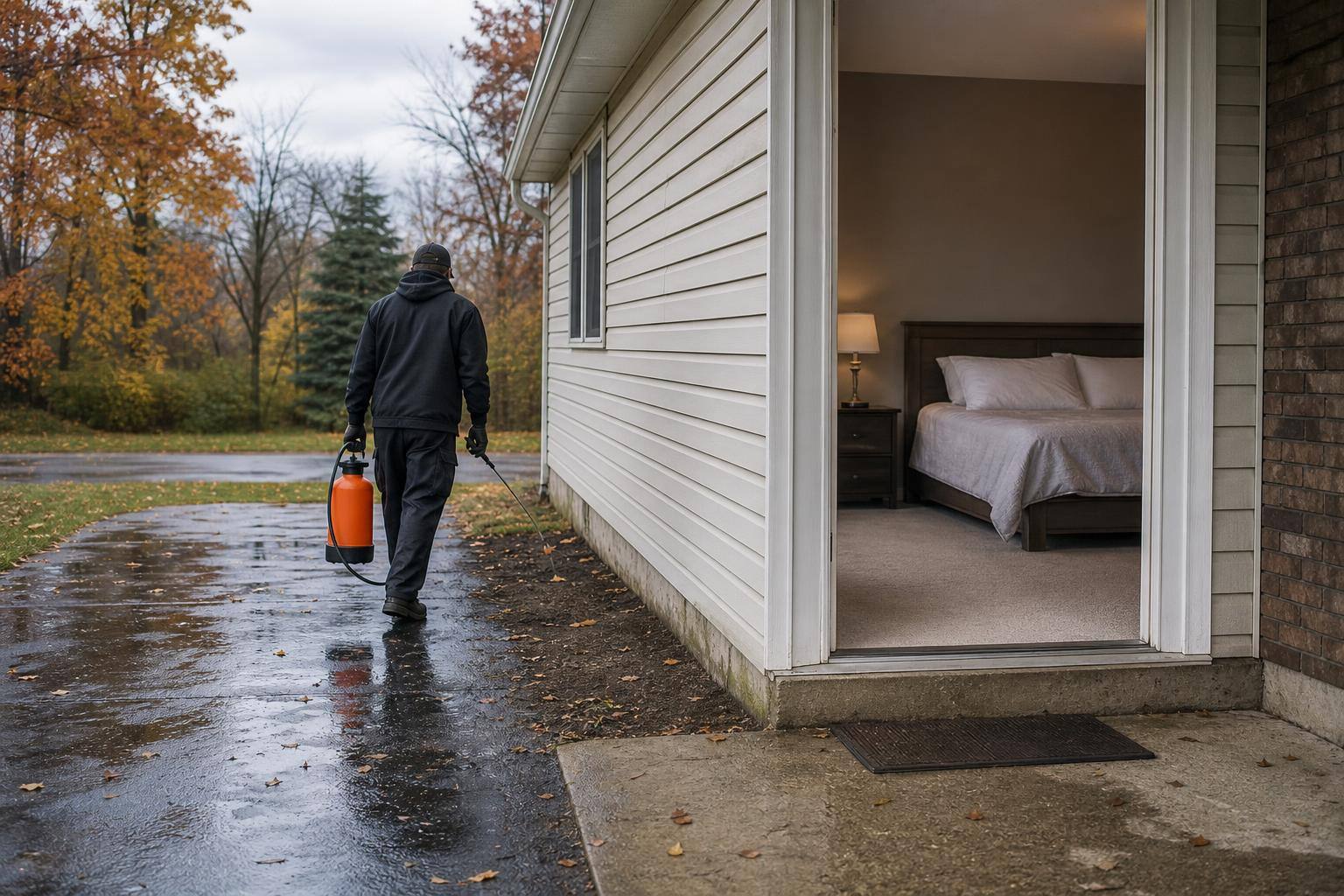
Bed bug treatment · Duluth, MN
A hillside apartment near Park Point can hide bed bugs in furniture and wall cracks, especially after winter moves. One phone conversation sorts the inspection and treatment path.
A real person answers · No forms · No waiting on a quote email
Plan
Duluth apartments, student rentals, and older hillside homes usually begin with an inspection, then move to a single-room treatment or whole-home treatment based on findings.
Quote
The exact quote is given on the call, based on affected rooms, furniture, preparation, access, materials, and time on site.
Time
The visit time is set on the call around building access, parking, household schedules, and Duluth weather.
From Lincoln Park apartments to Lakeside homes, Woodland houses, and Park Point lodging, Duluth properties present different hiding places and access problems. We inspect sleeping areas, furniture, cracks, and connected spaces, then match the treatment to what is actually found rather than treating every property the same.
Services
Duluth
Duluth housing ranges from older wood-frame properties on steep slopes to apartments, student rentals, hotels, and compact homes near the lake. Snow, narrow drives, stairs, and limited parking can affect how equipment and materials reach the work area. The treatment plan accounts for sleeping rooms, furniture, adjoining rooms, and shared spaces where bed bugs may travel.
A focused bedroom treatment addresses sleeping areas, furniture, cracks, and likely harborages in Duluth homes and apartments.
Apartment work considers the affected unit, connected spaces, tenant preparation, and nearby units in Duluth buildings.
Whole-home treatment follows inspection findings across bedrooms, living areas, basements, and connected rooms in Duluth houses.
Furniture treatment examines seams, joints, drawers, and undersides on beds, couches, and chairs brought through Duluth properties.
A move-in inspection checks sleeping areas and furnishings before occupancy in Duluth rentals, student housing, and older homes.
Hotel service examines guest rooms, furnishings, cracks, and nearby areas while considering Duluth lodging turnover and access.
A coordinated program covers affected units, shared areas, and nearby units when appropriate in Duluth apartment buildings.
Many Duluth jobs start with an inspection because steep-site homes, apartments, and older buildings can spread signs beyond the first room noticed. The findings determine whether a single-room treatment, whole-home treatment, or multi-unit program fits.
A pest professional examines sleeping areas, furniture, cracks, and other likely harborage sites for evidence.
This fits a Duluth move-in, bite report, or suspected bedroom issue. The professional examines sleeping areas, furniture, cracks, and likely harborage sites for evidence.
Treatment focuses on one affected room and commonly includes targeted application to hiding places and furnishings.
This suits a confirmed bedroom or isolated apartment-room problem in Duluth when inspection findings support focused application to hiding places and furnishings.
The service treats affected rooms and connected areas according to the inspection findings and preparation plan.
This fits Duluth houses where signs involve multiple rooms or connected areas. Treatment follows the inspection findings and preparation plan.
A coordinated program inspects and treats affected units, shared areas, and nearby units when appropriate.
This suits Duluth apartment buildings, lodging, or connected units where inspection and treatment must include affected units, shared areas, and nearby units when appropriate.
Cost
The exact quote is given on the call after the job is described. Cost depends on the type and size of the treatment, affected rooms, furniture, preparation, materials, time on site, distance, access, and after-hours work.
The number of affected rooms, connected areas, furniture pieces, and units changes the work required for a Duluth treatment.
Steep rocky slopes, stairs, narrow drives, deep snow, and parking distance can change time on site and equipment handling.
Treatment materials and preparation needs depend on inspection findings, furnishings, hiding places, and the selected service.
After-hours work, household readiness, building coordination, and time needed in each area can affect the quoted cost.
To avoid surprise charges, describe every affected room, unit, furnishing, access problem, and scheduling constraint before the quote is prepared. The exact quote is given on the call, with changes discussed if the inspection reveals a different scope.
What goes in
Visible insects, shed skins, or dark spotting can justify an inspection. In Duluth apartments and hillside homes, describe where each sign appeared and whether nearby rooms connect.
Bites and droppings can support an inspection but do not identify the source by themselves. Mention sleeping locations, furniture, and any move through a Duluth rental.
Signs in mattress seams, bed frames, couches, or chairs fit this service. A Duluth move or winter storage load should include every affected furnishing when describing the job.
Not accepted. The service does not cover unrelated pests, unsafe work areas, inaccessible rooms, or items and conditions outside the agreed bed bug treatment scope.
Projects
Bedroom treatment examines sleeping areas, furniture, cracks, and hiding places in Duluth homes, apartments, and student rentals.
Apartment service considers the affected unit, connected spaces, and nearby units in Duluth buildings with shared walls and corridors.
Whole-home work follows inspection findings through bedrooms, living areas, basements, and connected rooms in Duluth houses.
Furniture service focuses on seams, joints, drawers, undersides, and surrounding areas for Duluth beds, couches, and chairs.
Hotel service examines guest rooms, furnishings, cracks, and nearby areas while coordinating access around Duluth lodging operations.
Move-in service gives Duluth renters and property managers an inspection before new furniture, clothing, and household items enter.
Multi-unit work coordinates affected units, shared areas, and nearby units for apartment properties in Duluth and St. Louis County.
A real person records the Duluth property type, suspected rooms, furnishings, access conditions, and the signs already observed.
Explain bites, droppings, insects, shed skins, prior treatment, and where each sign appeared in the home or building.
Follow the preparation plan for sleeping areas, furniture, floors, pets, people, and connected rooms before the visit.
The professional treats the agreed areas and explains follow-up needs based on inspection findings and the treatment plan.
Weather
Duluth's severe winters, deep snow, and spring runoff can affect parking, stairs, exterior approaches, and the movement of equipment. Cool summers do not remove indoor bed bug concerns, so the visit is planned around safe access and usable work areas.
Placement
Work usually happens around beds, furniture, cracks, basements, utility rooms, and connected living areas rather than in the yard. Steep rocky slopes, narrow drives, snowbanks, locked entries, and long stairways can limit access at Duluth properties.
Permits
A bed bug treatment inside a Duluth property generally does not require a street permit, but building work, exterior placement, or a separate inspection may involve the City of Duluth. The call covers what local approval may apply and who arranges it when needed.
St. Louis County landlords, HOAs, and covenants may require notice before treatment, access to connected units, or rules for moving furniture. Check the property agreement and share those requirements on the call.
Clear a path to affected bedrooms, furniture, basements, utility rooms, and shutoffs where relevant. Provide safe parking for the work vehicle, keep people and pets clear, and account for snow, runoff, steep approaches, and icy steps.
Service covers Duluth neighborhoods and corridors including Lincoln Park, Downtown, Canal Park, Park Point, Lakeside, Congdon, Woodland, West Duluth, and hillside properties across St. Louis County. Nearby service areas may include Lindstrom, Saint Cloud, Saint Joseph, Merrill, and Ottertail.
Not sure about your street? Ask on the call and we will tell you which office handles it.
Timing
Bed bug work in Duluth can increase around summer moves, student housing turnover, travel, and apartment changes. Reports also arise during winter when people spend more time indoors and move furnishings through protected interior routes. Snow and spring runoff affect access, so the visit plan should include parking and entry conditions.
Deep snow and icy steps can restrict the route to a Duluth home or apartment. Indoor sleeping areas, furniture, and connected rooms remain the focus while exterior access is arranged safely.
Spring runoff can make steep drives, yards, and walkways difficult to use. Moving season also shifts furniture between Duluth rentals, making inspection before occupancy a practical step.
Service area
Duluth is part of our St. Louis County coverage, and we also serve the neighboring communities below.
Why us
Duluth's steep Lake Superior hills change how a technician reaches bedrooms, basements, and apartment entries. Snowbanks, rocky approaches, stairs, and limited parking are considered before the treatment plan is set.
Getcha Pest Control · Duluth
Older houses, apartments, student rentals, hotels, and lake-side lodging do not share the same layout. Inspection findings determine whether one room, connected rooms, furnishings, or multiple units need attention.
Click Here to Call (888) 510-9023FAQs
Still have a question about Duluth? Call (888) 510-9023 and ask a real person.
The exact quote is given on the call. Cost depends on the treatment type and size, affected rooms, furnishings, materials, time on site, access from Duluth streets and slopes, distance, and after-hours work. Describe every known area before the quote is prepared.
An inspection is the starting point when signs are uncertain. A single-room treatment may fit a contained bedroom, while a whole-home treatment or multi-unit program fits broader findings. The property type, connected rooms, and inspection information determine the recommendation.
The visit time is set on the call. Availability depends on the work required, household access, building coordination, parking, and current scheduling. Ask about same-day or next-day availability if those options matter for the Duluth job.
Treatment covers the agreed affected areas identified through inspection, such as sleeping rooms, furniture, cracks, connected rooms, shared areas, or nearby units when appropriate. The scope follows the preparation plan and the findings at the property.
It does not cover unrelated pests, unsafe areas, inaccessible rooms, or conditions outside the agreed bed bug scope. Describe other pest concerns separately so the work is not mistaken for treatment of a different problem.
Indoor bed bug treatment generally does not require a street permit, but property changes, exterior placement, or a separate local inspection may involve the City of Duluth. The call covers what approval may apply and who arranges it.
Clear access is needed to affected bedrooms, furniture, cracks, basements, utility rooms, and connected areas included in the plan. Snow, steep slopes, locked entries, stairs, and limited parking can change how the work area is reached.
Have the property type, affected rooms, sleeping locations, furniture involved, signs observed, prior treatment, pets, building rules, and access problems ready. Photos and a simple room list can make the inspection discussion more accurate.
Duluth winter weather can affect parking, stairs, snow-covered approaches, and equipment movement, but the main work occurs inside sleeping areas, furniture, and connected rooms. Share snow, ice, runoff, or access concerns when setting the visit.
Yes, inspection may show that shared areas or nearby units need attention along with the affected apartment. A multi-unit program is considered when building layout, reports, or findings indicate bed bugs may have moved beyond one unit.
A real person answers · No forms · Every quote given on the phone