Bedroom bed bug treatment
A focused treatment addresses sleeping areas, nearby furniture, cracks, and likely harborages in Richmond bedrooms and older detached homes.
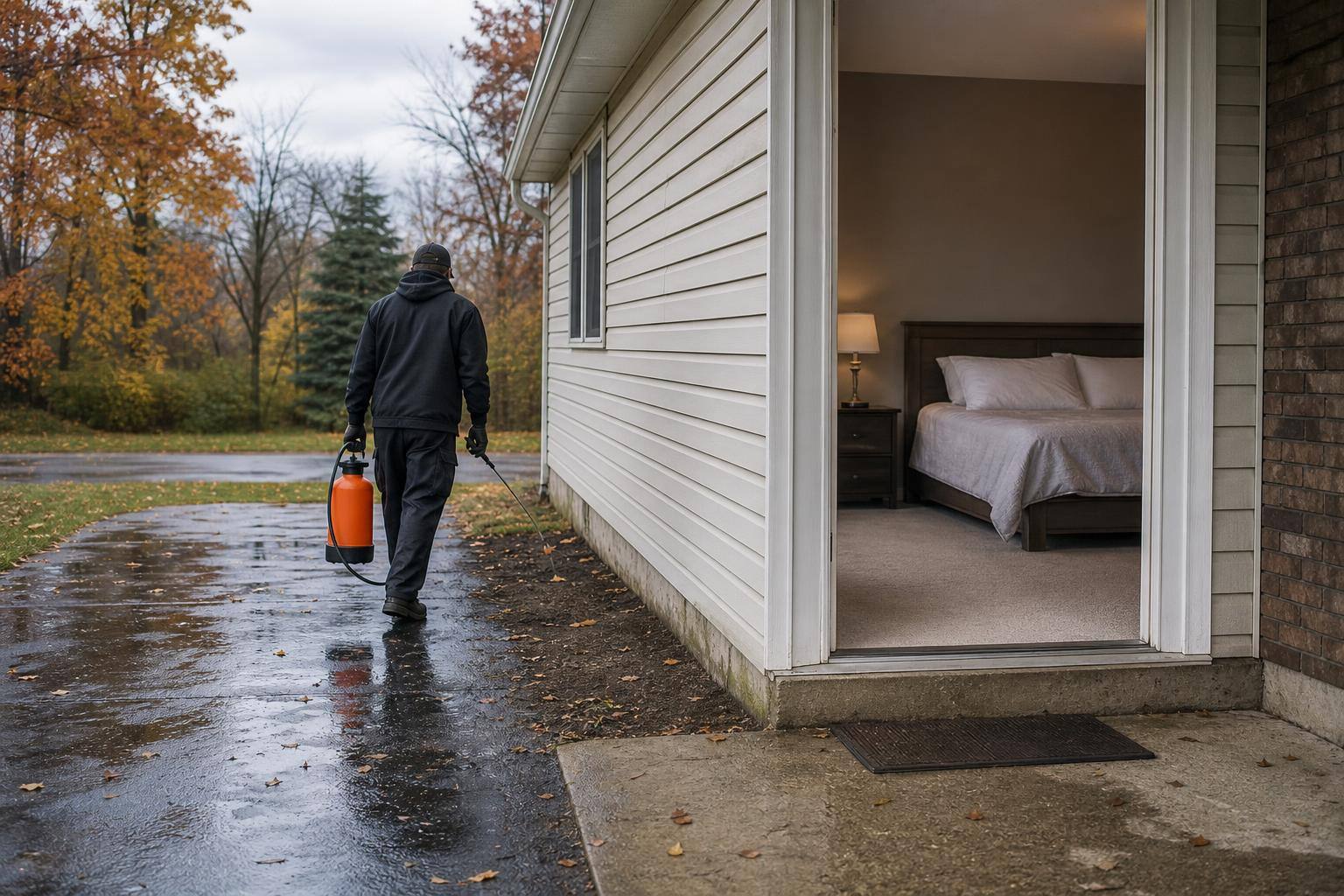
Bed bug treatment · Richmond, OH
Older detached homes around Richmond village center often hide bed bugs in furniture seams and wall cracks. One phone conversation sorts the inspection or treatment that fits the property.
A real person answers · No forms · No waiting on a quote email
Plan
For Richmond’s older detached houses and hillside rentals, the call usually determines whether an inspection, single-room treatment, or whole-home treatment fits.
Quote
The exact quote is given on the call, based on rooms, infestation extent, access, materials, and time on site.
Time
The visit time is set on the call around household access, road conditions, and treatment preparation.
Work in Richmond village center, hillside homes, rural edges, and Jefferson County rentals varies by room layout and access. An inspection checks sleeping areas, furniture, cracks, and likely hiding places before treatment is planned.
Services
Richmond
Richmond’s older detached housing can have settled trim, furniture, and wall gaps that give bed bugs hiding places. Hillside access and rural spacing can affect how equipment reaches the home. Apartment rooms, move-in checks, hotel rooms, and multi-unit properties in Jefferson County need different inspection boundaries and treatment plans.
A focused treatment addresses sleeping areas, nearby furniture, cracks, and likely harborages in Richmond bedrooms and older detached homes.
Apartment work considers the affected room, connected areas, and nearby units where Richmond rental layouts allow movement between spaces.
Whole-home treatment follows inspection findings through Richmond houses, including bedrooms, common rooms, furniture, and connected areas.
Furniture treatment examines seams, joints, undersides, and nearby floor areas before targeted work in Richmond homes or rentals.
A move-in inspection checks sleeping areas, furnishings, cracks, and other hiding places before occupancy in Richmond apartments or houses.
Hotel service examines guest sleeping areas, furniture, and surrounding harborages while keeping the inspection boundary clear for Richmond lodging rooms.
A multi-unit program coordinates affected units, shared areas, and nearby units when appropriate across Richmond apartment properties.
Most Richmond jobs begin with an inspection because older detached houses, hillside rooms, and rental furnishings can spread signs beyond the first bedroom. The inspection findings determine whether one room, the whole home, or several units need treatment.
A pest professional examines sleeping areas, furniture, cracks, and other likely harborage sites for evidence.
This fits a Richmond move-in check, a reported bite pattern, or uncertain signs in an older village home. The professional examines sleeping areas, furniture, cracks, and likely harborages.
Treatment focuses on one affected room and commonly includes targeted application to hiding places and furnishings.
A single-room treatment suits a confirmed bedroom problem with no related signs elsewhere. In Richmond rentals, surrounding furniture and connected areas still need inspection before focused application.
The service treats affected rooms and connected areas according to the inspection findings and preparation plan.
Whole-home treatment fits a Richmond detached house when signs appear in more than one room or connected areas. The work follows inspection findings and the preparation plan.
A coordinated program inspects and treats affected units, shared areas, and nearby units when appropriate.
A multi-unit program fits Richmond apartment properties where affected units, shared areas, or nearby units may be connected. Coordination keeps the inspection boundary wider than one bedroom.
Cost
The exact quote is given on the call after the work area is described. Cost depends on the type and size of the job, rooms affected, parts and materials, time on site, distance and access from Richmond, and any after-hours work.
The number of affected rooms, furniture pieces, connected areas, and nearby units changes the inspection boundary and treatment time for a Richmond property.
Rolling ground, rural driveways, stairs, tight entrances, and distance from the Richmond service area can change setup and time on site.
Parts and materials depend on the treatment plan, hiding places, furnishings, cracks, and surfaces identified during the inspection.
After-hours work, household access, preparation needs, and the condition of rooms can affect the visit length and overall service cost.
To avoid surprise charges, describe every affected room, furnishing, nearby unit, access issue, and sign before the visit. The exact quote is given on the call after those details are reviewed.
What goes in
Report live bugs, shed skins, dark spotting, or suspected harborages. In Richmond, an older bedroom dresser or upholstered chair may hold signs away from the bed.
Bites and dark droppings can support an inspection, though they do not identify the source alone. Mention when signs began and which Richmond rooms are involved.
Mattress seams, box areas, sofas, and chairs can be inspected for evidence. A Richmond move-in load that includes used furniture should be described before treatment planning.
Not accepted. The service does not cover unrelated pests, unsafe access, hidden structural conditions, or belongings and areas that cannot be inspected or prepared safely.
Projects
Bedroom treatment examines sleeping areas, furnishings, cracks, and likely harborages in Richmond’s older detached homes and rental bedrooms.
Apartment work in Richmond considers the affected room, connected areas, and nearby units when the building layout supports movement.
A whole-home job follows findings through bedrooms, common rooms, furniture, and connected areas in Richmond houses.
Furniture treatment targets seams, joints, undersides, and surrounding harborages for Richmond sofas, chairs, beds, and dressers.
Hotel service examines guest rooms, sleeping areas, furnishings, and nearby harborages while keeping Richmond lodging operations organized.
A Richmond move-in inspection checks rooms and furnishings before occupancy, helping identify evidence in an older house or apartment.
Multi-unit service coordinates affected apartments, shared areas, and nearby units for Richmond properties with connected occupancy.
A real person records the Richmond property type, suspected rooms, signs, access concerns, and whether nearby units may be involved.
Explain bites, droppings, live bugs, furniture sources, and where evidence appeared so the inspection boundary can be planned.
Follow the preparation plan for sleeping areas, furniture, cracks, and connected rooms before the Richmond visit.
The professional completes the planned work and explains follow-up needs based on inspection findings and the property’s treatment scope.
Weather
Richmond’s cold snowy winters can complicate travel and exterior access, while wet springs soften rural approaches and rolling ground. Summer storms can limit exterior treatment access, so the visit plan may depend on safe entry and usable work areas.
Placement
Work happens around sleeping areas, furniture, cracks, basements, utility rooms, and connected rooms rather than only outdoors. At Richmond properties, steep drives, narrow entrances, snow, mud, storm water, and crowded rooms can limit equipment access and setup.
Permits
A bed bug treatment inside a Richmond home normally does not involve street construction. If equipment, exterior placement, or a property-specific inspection raises a local question, approval comes from the City of Richmond or the relevant Jefferson County authority. The call covers who should arrange any required review.
Jefferson County landlords, HOAs, and covenants may set rules for entry, notices, treatment preparation, or shared areas. Richmond tenants should have the landlord or property manager’s instructions ready before scheduling work.
Clear a path to affected bedrooms, furniture, cracks, basements, utility rooms, and any required shutoffs. Provide parking for the work vehicle, keep pets and people clear, and mention snow, mud, wet ground, hillside access, or storm damage before the Richmond visit.
Service covers Richmond village center, hillside homes, older detached housing, rental properties, and rural edges in Jefferson County. Nearby service discussions can also include Tiltonsville, Saint Clairsville, Beaver Falls, Wexford, and Russellton when the job location is confirmed on the call.
Not sure about your street? Ask on the call and we will tell you which office handles it.
Timing
Bed bug work in Richmond can arise in any season, especially after travel, used-furniture moves, tenant turnover, or reports from connected units. Cold winters may keep activity and inspection inside, while wet spring ground and summer storms can affect exterior access and arrival planning.
Cold snowy Richmond winters keep most inspection and treatment planning focused inside. Tell the operator about snow-covered drives, steps, and parking so entry conditions are understood.
Wet springs and summer storms can limit exterior access around Richmond’s rolling rural properties. Keep the route and work area clear, and mention saturated ground or storm damage when setting the visit.
Service area
Richmond is part of our Jefferson County coverage, and we also serve the neighboring communities below.
Why us
Richmond’s older detached houses can have settled trim, furniture, basements, and wall gaps that require a careful inspection beyond the mattress. Rolling ground and rural driveways also affect how the work area is reached and prepared.
Getcha Pest Control · Richmond
A Richmond apartment or move-in job needs a different boundary from a single bedroom in a village home. Nearby units, shared areas, used furniture, and seasonal access conditions all belong in the first description of the problem.
Click Here to Call (888) 510-9023FAQs
Still have a question about Richmond? Call (888) 510-9023 and ask a real person.
The exact quote is given on the call. Cost changes with the job type and size, rooms affected, furniture, parts and materials, time on site, distance and access from Richmond, and after-hours work. Describe every suspected room and access issue before the visit is set.
An inspection fits uncertain signs or a move-in check, while a single-room treatment fits a contained bedroom problem. Whole-home treatment fits signs across connected areas, and a multi-unit program fits affected apartments or shared spaces. Older Richmond homes should be described room by room.
The visit time is set on the call after the property, signs, access, and preparation needs are reviewed. Ask about available timing, including same-day or next-day options, without assuming those options are available for every Richmond job.
The work covers areas identified by the inspection, such as sleeping areas, furniture, cracks, connected rooms, shared areas, or nearby units when appropriate. The treatment scope depends on the selected tier and the preparation plan for the Richmond property.
It does not cover unrelated pests, unsafe access, hidden structural conditions, or areas and belongings that cannot be inspected or prepared safely. Richmond customers should identify blocked rooms, occupied furniture, and any condition that limits access.
A normal interior bed bug treatment does not usually involve street construction permits. If a property-specific local review is raised, the relevant City of Richmond or Jefferson County authority handles approval questions, and the call covers who should arrange that review.
Prepare the treatment areas according to the instructions provided on the call, including sleeping areas, furniture, cracks, and connected rooms. Clear access, secure pets and people away from the work, and mention stairs, basements, locked rooms, or hillside entry limits.
Have the property type, affected rooms, dates of signs, suspected bites or droppings, furniture sources, nearby units, and access conditions ready. For a Richmond home, also mention rural driveways, snow, mud, stairs, pets, and any landlord instructions.
Richmond’s cold snowy winters, wet springs, rolling ground, and summer storms can limit exterior access and travel conditions. Interior work still depends on safe entry and a usable work area, so describe snow, mud, flooding, storm damage, or blocked parking when setting the visit.
Yes, an older Richmond house may need whole-home treatment when signs appear in several rooms or connected areas. The inspection checks bedrooms, furniture, cracks, and other harborages before deciding whether a single-room treatment or broader plan fits.
A real person answers · No forms · Every quote given on the phone