Residential spider control
Residential service covers Columbus houses from German Village brick homes to newer builds, with treatment areas selected around actual spider activity.
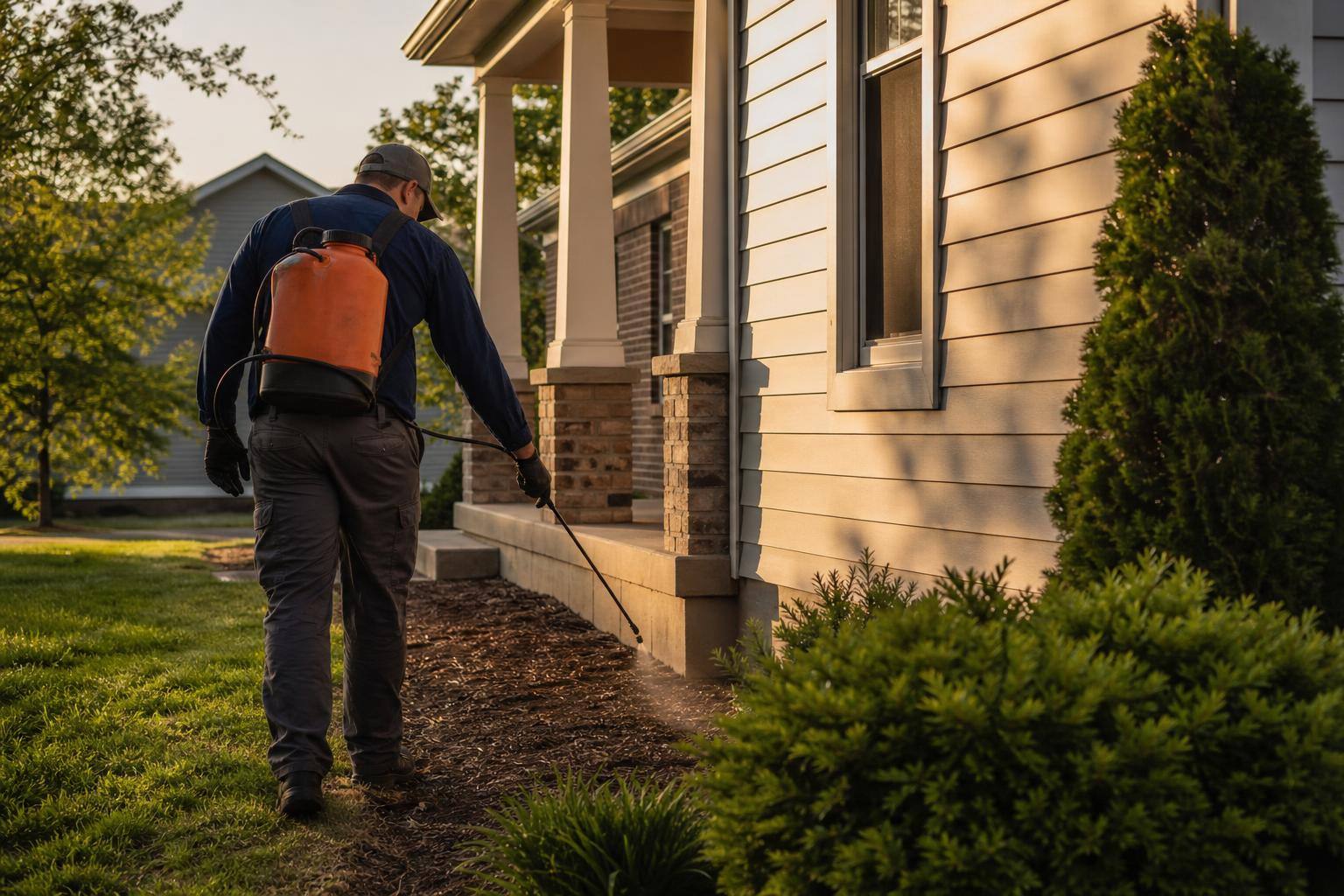
Spider control service · Columbus, OH
A Victorian home in German Village can hold webs in basement windows, porch corners, and attic vents. One phone call sorts the inspection, treatment type, and access plan for the property.
A real person answers · No forms · No waiting on a quote email
Plan
Older Columbus homes often start with an inspection, while active webs around a house, garage, or apartment may need a targeted treatment.
Quote
The quote is given on the call and changes with activity, treatment areas, access, materials, distance, and after-hours work.
Time
The visit time is set on the call around property access, household routines, and the treatment areas needing attention.
Columbus jobs range from basement activity in Clintonville and Bexley to porch webs in German Village and exterior work around Dublin edges. Humid summers support spider activity, while dense development, mixed housing ages, and narrow access can change where a technician works and how the treatment is planned.
Services
Columbus
Columbus has older brick homes, postwar houses, apartment buildings, and dense commercial sites packed into changing blocks. That variety affects access to basements, crawl spaces, porches, utility rooms, and shared corridors. A spider treatment is planned around where webs appear, where spiders shelter, and whether the problem is limited to one area or returning around the property.
Residential service covers Columbus houses from German Village brick homes to newer builds, with treatment areas selected around actual spider activity.
Indoor treatment addresses webs and hiding areas in Columbus basements, attics, garages, utility rooms, and occupied living spaces.
Outdoor treatment focuses on Columbus porches, eaves, doors, windows, detached garages, and shaded yards where webs collect.
Web removal clears visible buildup around Columbus entrances, rooflines, porches, and exterior fixtures while the treatment plan addresses recurring activity.
Recurring prevention suits Columbus properties that repeatedly develop webs through humid summers, especially larger homes and managed buildings.
Property managers in Columbus can coordinate treatment around apartment entries, basements, common areas, and tenant access requirements.
Commercial service covers Columbus storefronts, offices, warehouses, and service buildings where exterior lighting and loading areas attract web activity.
A targeted treatment fits many Columbus jobs when activity is visible in selected rooms, around a porch, or along one exterior wall. An inspection is the better starting point when the source is unclear, especially in older homes with basements, attics, and multiple additions.
A technician checks common hiding areas, identifies spider activity, and looks for conditions attracting spiders.
An inspection fits a Clintonville attic, Bexley basement, or older Columbus garage when the activity is noticed but the hiding areas and attracting conditions are not clear.
A targeted treatment addresses visible activity in selected indoor or outdoor areas and may include web removal.
A targeted treatment suits visible webs at a German Village porch, selected basement windows, or one apartment area without treating every part of the property.
A whole-home service treats interior and exterior areas where spiders commonly travel, shelter, or build webs.
A whole-home treatment fits a Columbus house with activity across interior and exterior travel routes, including basements, attic access points, eaves, doors, and garage edges.
A recurring plan uses scheduled inspections and perimeter treatments to help reduce repeat spider activity.
Recurring prevention fits larger Columbus homes, managed properties, and buildings where webs return around exterior lights, entries, shaded walls, or shared access areas.
Cost
The exact quote is given on the call after the job is described. Cost depends on the type and size of the treatment, parts and materials, time on site, distance, access, and any after-hours work needed for the Columbus property.
A single porch or basement area takes a different plan from a whole Columbus house, apartment unit, commercial building, or recurring perimeter service.
Basements, crawl spaces, narrow alleys, shared hallways, and dense Columbus sites can change setup, movement, time on site, and distance between work areas.
Parts and materials depend on the treatment areas, web removal needs, application method, and conditions found around the specific property.
After-hours work, tenant coordination, occupied spaces, and difficult access around Columbus buildings can affect the work plan and overall cost.
To avoid surprise charges, describe every active area, access limitation, detached structure, and scheduling concern on the call. The exact quote is given before the visit is arranged.
What goes in
This covers spiders or webs in basements, attics, garages, utility rooms, and living areas, including the mixed interior spaces common in Columbus houses.
This covers webs on porches, eaves, doors, windows, lights, and detached garages, including the exterior buildup seen around Columbus homes after humid weather.
This covers repeat activity that returns around entries, shaded walls, exterior lighting, or shared areas, including larger Columbus properties and managed buildings.
Not accepted. The service does not cover unrelated pests, unsafe or inaccessible areas, unknown substances, or materials and conditions outside the agreed spider treatment.
Projects
Attic treatment checks roofline edges, vents, stored items, and access points in Columbus homes where heat and seasonal movement can concentrate spider activity.
Basement service addresses window wells, utility areas, corners, and foundation-side access in Columbus homes, including older properties in Clintonville and Bexley.
Garage treatment covers door edges, shelving, corners, and exterior transitions at Columbus houses where stored items and open access create hiding areas.
Exterior service treats eaves, porches, lights, doors, and windows around Columbus homes, with access planned for dense lots and narrow driveways.
Web removal focuses on visible buildup around Columbus rooflines, porches, garages, and entrances, followed by a treatment plan for active areas.
Apartment work can address unit interiors, shared entries, storage areas, and exterior access points while coordinating with Columbus property managers and residents.
Commercial service covers Columbus storefronts, offices, warehouses, loading areas, and exterior lights where customer access and work hours shape the plan.
A real person answers by phone and records the Columbus property type, location, visible activity, and areas that need attention.
Explain where webs or spiders appear, how often they return, what has been tried, and whether basements, attics, garages, or shared spaces are involved.
The treatment type, work areas, access needs, and exact quote are reviewed on the call before the visit is arranged.
The technician works in the agreed areas, may remove visible webs, and can discuss recurring prevention when activity continues.
Weather
Columbus humidity can support summer spider activity, while spring storms bring debris and wet conditions around porches, yards, and exterior walls. Freeze thaw cycles can shift access conditions around foundations and slabs. The treatment plan accounts for exposed areas and the weather present during the visit.
Placement
Work may happen in crawl spaces, on slabs, in basements, utility rooms, garages, yards, porches, and exterior wall lines. Columbus density can limit parking, alley movement, ladder placement, or shared hallway access, so the call should cover tight lots and occupied buildings.
Permits
A spider treatment on private property generally does not require a City of Columbus permit or inspection, but street obstruction, public right of way use, or unusual exterior access can involve local approval. The call covers whether a local government question applies and who arranges it.
Franklin County homeowners associations, condominium rules, landlords, and covenants may control exterior treatments, shared entries, notices, or scheduling. Confirm property rules before work at a managed or shared Columbus address.
Clear access to the problem area, nearby shutoffs, basement and utility rooms, crawl spaces, porches, and exterior walls. Provide parking for the work vehicle where possible, keep pets and people clear, and account for wet ground, storms, or freeze thaw conditions.
Service covers Columbus neighborhoods and settings including German Village, Clintonville, Bexley, Short North, Downtown, the Near East Side, the South Side, and North Columbus. Work also reaches dense apartment corridors, older residential blocks, commercial areas, and nearby Franklin County properties when the address and access plan are reviewed on the call.
Not sure about your street? Ask on the call and we will tell you which office handles it.
Timing
Spider activity often becomes more noticeable in Columbus during humid summer weather, especially around exterior lights, porches, garages, and shaded walls. Spring storms can increase debris and outdoor access problems, while fall movement can bring spiders toward sheltered interiors. Older and densely divided properties may show activity in different areas at once.
Humid Columbus summers can make webs more noticeable around lights, eaves, porches, and garage doors. Outdoor treatment areas should be reachable and free of household items before the visit.
Spring storms and freeze thaw cycles can leave wet ground, debris, and difficult foundation access around Columbus homes. Describe damaged, muddy, or restricted areas when setting the work plan.
Service area
Columbus is part of our Franklin County coverage, and we also serve the neighboring communities below.
Why us
Columbus combines older brick homes, postwar housing, apartments, and commercial buildings within a dense central Ohio market. That means a spider treatment may involve basement windows at one property, shared entries at another, and exterior lighting or loading areas elsewhere.
Getcha Pest Control · Columbus
Humid summers, spring storms, and freeze thaw cycles change how webs build up and how technicians reach foundations, yards, porches, and utility areas. The local plan starts with the property type, visible activity, and practical access rather than assuming every Columbus job needs the same treatment.
Click Here to Call (888) 510-9023FAQs
Still have a question about Columbus? Call (888) 510-9023 and ask a real person.
The exact quote is given on the call. Cost depends on treatment type and size, activity location, parts and materials, time on site, distance, access, and after-hours work. Describe basements, attics, detached garages, exterior walls, and any shared or restricted areas so the quote reflects the Columbus property.
An inspection fits unclear activity, a targeted treatment fits selected active areas, a whole-home treatment fits activity across interior and exterior routes, and recurring prevention fits repeat webs. Older Columbus homes with basements, additions, and attic access often benefit from describing every affected area first.
The visit time is set on the call because access, treatment areas, and scheduling needs differ. Ask about available timing when describing the property, including whether a basement, apartment, commercial space, or after-hours visit affects the arrangement.
The treatment covers agreed interior or exterior areas where spiders travel, shelter, or build webs, and may include web removal. The exact areas depend on the selected service and findings at the property, such as a porch, basement, attic, garage, utility room, or yard.
It does not cover unrelated pests, unsafe or inaccessible areas, unknown substances, or materials and conditions outside the agreed spider treatment. Mention other pest activity, blocked spaces, and difficult exterior access on the call so the work plan is accurate.
Private-property spider treatment generally does not need a City of Columbus permit or inspection. Street obstruction, public right of way use, or unusual exterior access can raise a local approval question, and the call covers who needs to arrange it.
You may need to keep people and pets away from active work areas, but the access arrangement depends on the treatment plan. Clear basements, utility rooms, garages, porches, and exterior walls, then discuss occupied rooms or shared hallways on the call.
Have the Columbus property address, property type, affected rooms or exterior areas, photos or descriptions of webs, access restrictions, pets, prior treatment, and scheduling limits ready. Also mention detached structures, tenant coordination, and whether activity returns after treatment.
Yes. Humid summers can increase visible webs, while spring storms and freeze thaw cycles can affect outdoor access, foundation areas, and ground conditions. Describe wet, muddy, storm-damaged, or exposed areas so the visit plan matches the property conditions.
Yes, apartment treatment can address agreed unit interiors, shared entries, storage areas, and exterior access points. Property managers and residents should clarify landlord rules, shared-area access, notices, and whether activity is limited to one unit or appears across the building.
A real person answers · No forms · Every quote given on the phone