Residential spider control
Residential treatment covers common hiding areas around Elizabethtown farmhouses, suburban foundations, garages, and attached porches.
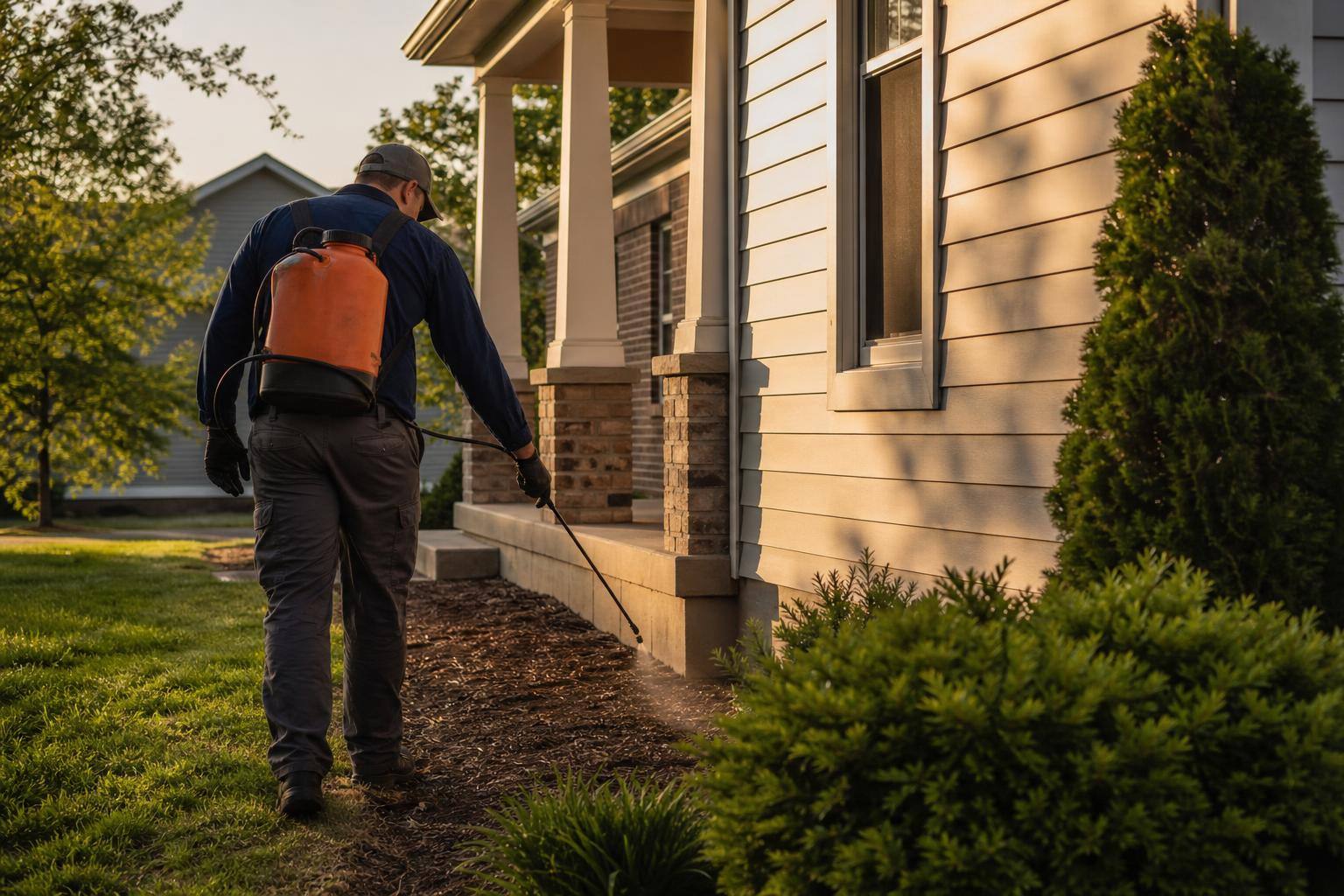
Spider control service · Elizabethtown, PA
Lancaster farmhouses near Elizabethtown’s older village streets often need spider work around deep eaves, stone foundations, and attached barns. One phone conversation sorts the activity, access, and treatment size.
A real person answers · No forms · No waiting on a quote email
Plan
Farmhouses, split-levels, and suburban infill homes often suit a targeted treatment, while activity across rooms, foundations, and eaves may need whole-home treatment.
Quote
The exact quote is given on the call, based on treatment size, access, activity, materials, and distance.
Time
The visit time is set on the call around access, weather, and the property’s work areas.
Work around Elizabethtown’s older farmhouses differs from jobs in newer suburban infill near Route 283. Basements around the village core, garages near West Donegal Township, and yards along the Conoy Creek area can each show different spider activity. The treatment is planned around foundations, eaves, utility rooms, and sheltered outdoor edges.
Services
Elizabethtown
Elizabethtown properties range from older Lancaster County farmhouses with stone foundations to tighter suburban homes with finished basements, garages, and attached decks. Humid summers support spider activity around shaded walls and eaves, while heavy storms can push insects and spiders toward sheltered indoor edges. The work is sized by where activity appears and how much perimeter needs attention.
Residential treatment covers common hiding areas around Elizabethtown farmhouses, suburban foundations, garages, and attached porches.
Indoor treatment checks basements, attics, utility rooms, and window edges where Elizabethtown homes can shelter spiders.
Outdoor treatment focuses on eaves, foundation lines, sheds, and shaded yards throughout Elizabethtown and Lancaster County.
Web removal addresses visible webs around doors, soffits, porch ceilings, barns, and garage corners in Elizabethtown.
Recurring prevention combines scheduled inspections and perimeter treatments for repeat activity around Elizabethtown homes and outbuildings.
Property managers can coordinate treatment for apartments and rentals near Elizabethtown’s village center and suburban corridors.
Commercial service covers entrances, loading areas, storage spaces, and exterior lighting around Elizabethtown workplaces.
The most common Elizabethtown jobs begin with visible webs or activity at a farmhouse foundation, garage, or suburban entry. A targeted treatment often fits selected areas, while connected indoor and outdoor activity may call for whole-home treatment.
A technician checks common hiding areas, identifies spider activity, and looks for conditions attracting spiders.
An inspection suits an Elizabethtown homeowner who has spotted occasional spiders in a basement, attic, garage, or around farmhouse eaves and needs the hiding areas checked first.
A targeted treatment addresses visible activity in selected indoor or outdoor areas and may include web removal.
A targeted treatment fits visible activity at selected doors, porch ceilings, foundation sections, or utility rooms in Elizabethtown homes, with web removal where appropriate.
A whole-home service treats interior and exterior areas where spiders commonly travel, shelter, or build webs.
A whole-home treatment suits an older farmhouse or suburban house with activity across basements, living areas, garages, foundations, and exterior travel routes.
A recurring plan uses scheduled inspections and perimeter treatments to help reduce repeat spider activity.
Recurring prevention fits properties with repeat webs around eaves, exterior lights, barns, or foundations, especially where humid summers keep outdoor activity returning.
Cost
The exact quote is given on the call after the work area is understood. Cost depends on the type and size of treatment, spider activity, interior and exterior access, parts or materials, time on site, distance, and after-hours work.
A single garage or porch differs from a farmhouse with basement, attic, foundation, and outbuildings requiring whole-home treatment.
Rolling clay-loam ground, narrow drives, rear yards, and distance from central Elizabethtown can affect setup, access, and time on site.
Treatment materials and any parts needed for the selected work area affect the quote, based on the conditions found during planning.
Evening or overnight work, when available, can change the rate because access, scheduling, and time on site differ.
To avoid surprise charges, describe every active area, building, access restriction, and prior treatment on the call. The exact quote is discussed before the visit, with added work addressed before it proceeds.
What goes in
This covers spiders or webs in basements, attics, utility rooms, garages, and living areas, including a typical Elizabethtown farmhouse lower level.
This covers webs on eaves, porches, doors, sheds, barns, and foundation lines around Elizabethtown homes and suburban infill lots.
This covers repeat activity requiring scheduled inspections and perimeter treatments around homes, rentals, farm buildings, or commercial property in Lancaster County.
Not accepted. The service does not cover unrelated pest species, structural repairs, unsafe access areas, or materials and work outside the agreed spider treatment.
Projects
Attic treatment checks rafters, insulation edges, vents, and stored items where warm, sheltered spaces can support spider activity in Elizabethtown homes.
Basement work addresses corners, utility areas, foundation edges, and windows, including stone lower levels common in Lancaster County farmhouses.
Garage service treats selected indoor and exterior edges around attached garages, detached farm garages, and suburban Elizabethtown storage areas.
Exterior work follows eaves, soffits, porches, lights, doors, and foundation lines around Elizabethtown houses and rolling clay-loam lots.
Web removal clears visible webs from porch ceilings, barns, sheds, windows, and entry areas before the selected treatment is completed.
Apartment work can be planned around individual units, shared entries, basements, and exterior walls near Elizabethtown’s village and suburban housing.
Commercial treatment covers entrances, storage, loading areas, exterior lights, and sheltered service spaces at Lancaster County buildings.
A real person answers by phone, records the Elizabethtown property type, activity, access, and buildings needing attention.
Explain where spiders or webs appear, how often they return, and whether the activity is indoors, outdoors, or throughout the property.
The treatment size, work areas, materials, access needs, and exact quote are reviewed before the visit is arranged.
The technician treats the agreed areas, removes webs where included in the selected work, and discusses recurring prevention when repeat activity is present.
Weather
Humid Elizabethtown summers can increase activity around shaded foundations, porches, and eaves. Heavy thunderstorms may shift spiders and insects toward sheltered edges, while winter freezes reduce outdoor movement. Wet ground and storms can affect exterior access, so the visit conditions are reviewed on the call.
Placement
Work may involve crawl spaces, slabs, basements, utility rooms, garages, yards, eaves, and foundation lines. Stored items, locked rooms, narrow side yards, wet clay-loam ground, steep access, and limited parking can restrict setup. People and pets stay clear while the technician works.
Permits
Spider treatment at a private Elizabethtown property generally does not require a street permit or local inspection. If equipment, access, or placement affects a public area, ask the City of Elizabethtown or the relevant local government. The call covers who needs to arrange any required approval.
Lancaster County covenants, homeowners associations, and landlords may set rules for exterior treatment, entry access, notices, or work around shared buildings. Review those rules before the visit and have any required owner or manager approval ready.
Clear a path to basements, utility rooms, garages, crawl spaces, eaves, and yard edges. Provide workable parking for the vehicle, secure pets and people away from treatment areas, and mention wet ground, storm damage, locked doors, or seasonal access limits.
Service covers Elizabethtown’s village center, older farmhouse properties, suburban infill near Route 283, West Donegal Township edges, and homes around the Conoy Creek area. Nearby Lancaster County properties can be discussed on the call, along with service in Mechanicsburg, Hanover, Rising Sun, Lutherville Timonium, and Abingdon.
Not sure about your street? Ask on the call and we will tell you which office handles it.
Timing
Spider activity in Elizabethtown often becomes more noticeable during humid summer weather, when webs build around shaded foundations, porch ceilings, eaves, and exterior lights. Heavy thunderstorms can move activity toward sheltered openings. Fall brings indoor sightings as temperatures change, while winter freezes usually reduce exterior movement but do not remove indoor shelter.
Humid summers increase visible webs around porches, eaves, barns, and foundation lines. After heavy thunderstorms, describe any new indoor activity and wet or difficult exterior access before the treatment is planned.
As temperatures drop, spiders may be noticed in garages, basements, attics, and utility rooms. Winter freezes limit exterior activity, but sheltered indoor areas can still need inspection or treatment.
Service area
Elizabethtown is part of our Lancaster County coverage, and we also serve the neighboring communities below.
Why us
Elizabethtown’s mix of Lancaster farmhouses and newer suburban homes changes where spiders shelter. Stone foundations, barns, attached garages, porches, and finished lower levels need different inspection points and treatment boundaries.
Getcha Pest Control · Elizabethtown
Humid summers, heavy thunderstorms, winter freezes, and rolling clay-loam ground affect exterior work around Elizabethtown. The plan accounts for wet access, sheltered eaves, foundation lines, utility rooms, and the distance between buildings.
Click Here to Call (888) 510-9023FAQs
Still have a question about Elizabethtown? Call (888) 510-9023 and ask a real person.
The exact quote is given on the call after the treatment area is understood. Cost changes with the type and size of job, spider activity, indoor and outdoor access, materials, time on site, distance, and after-hours work. Describe every building and active area, including barns or detached garages.
A targeted treatment fits selected active areas, while a whole-home treatment fits activity across rooms, foundations, garages, and eaves. An inspection suits uncertain activity, and recurring prevention fits repeat webs. The property type, number of areas, and spread of activity determine the recommendation.
The visit time is set on the call after access, weather, work areas, and scheduling are reviewed. Same-day or next-day availability can be asked about, but no arrival time is promised without confirming the visit.
Treatment can cover agreed indoor or outdoor areas where spiders travel, shelter, or build webs, such as basements, attics, garages, porches, eaves, and foundation lines. The selected tier determines whether the work is focused or covers the whole home and perimeter.
It does not cover unrelated pest species, structural repairs, unsafe access areas, or work and materials outside the agreed spider treatment. Mention other pests, damaged structures, locked spaces, and difficult access during the call so the scope is clear.
Private spider treatment generally does not need a permit or inspection. If work affects a public street, shared property, or another regulated area, ask the City of Elizabethtown or the relevant local government. The call reviews who handles any required approval.
Provide access to the agreed basement, attic, garage, utility room, yard, eaves, and foundation areas. Clear stored items where practical, secure pets, keep people away from work areas, and explain parking limits, locked doors, wet ground, or narrow side access.
Have the Elizabethtown property address, building type, active locations, web history, recent treatment details, access limits, detached buildings, and preferred visit conditions ready. Photos can help describe high eaves or distant areas, but the technician still needs the site details.
Yes, humid summers and heavy thunderstorms can increase activity near sheltered exterior edges, while wet rolling clay-loam ground can limit access. Winter freezes reduce outdoor movement, but indoor shelter remains relevant. Weather and safe work areas are reviewed when setting the visit.
Yes, farmhouse service can address stone foundations, basements, barns, porches, eaves, garages, and yard edges after the work areas are reviewed. Detached buildings, long drives, wet ground, and the distance between structures should be described when arranging the treatment.
A real person answers · No forms · Every quote given on the phone