Residential spider control
Rocky Mount houses on sloped lots may need attention at eaves, crawl-space vents, garages, and foundation edges where webs keep returning.
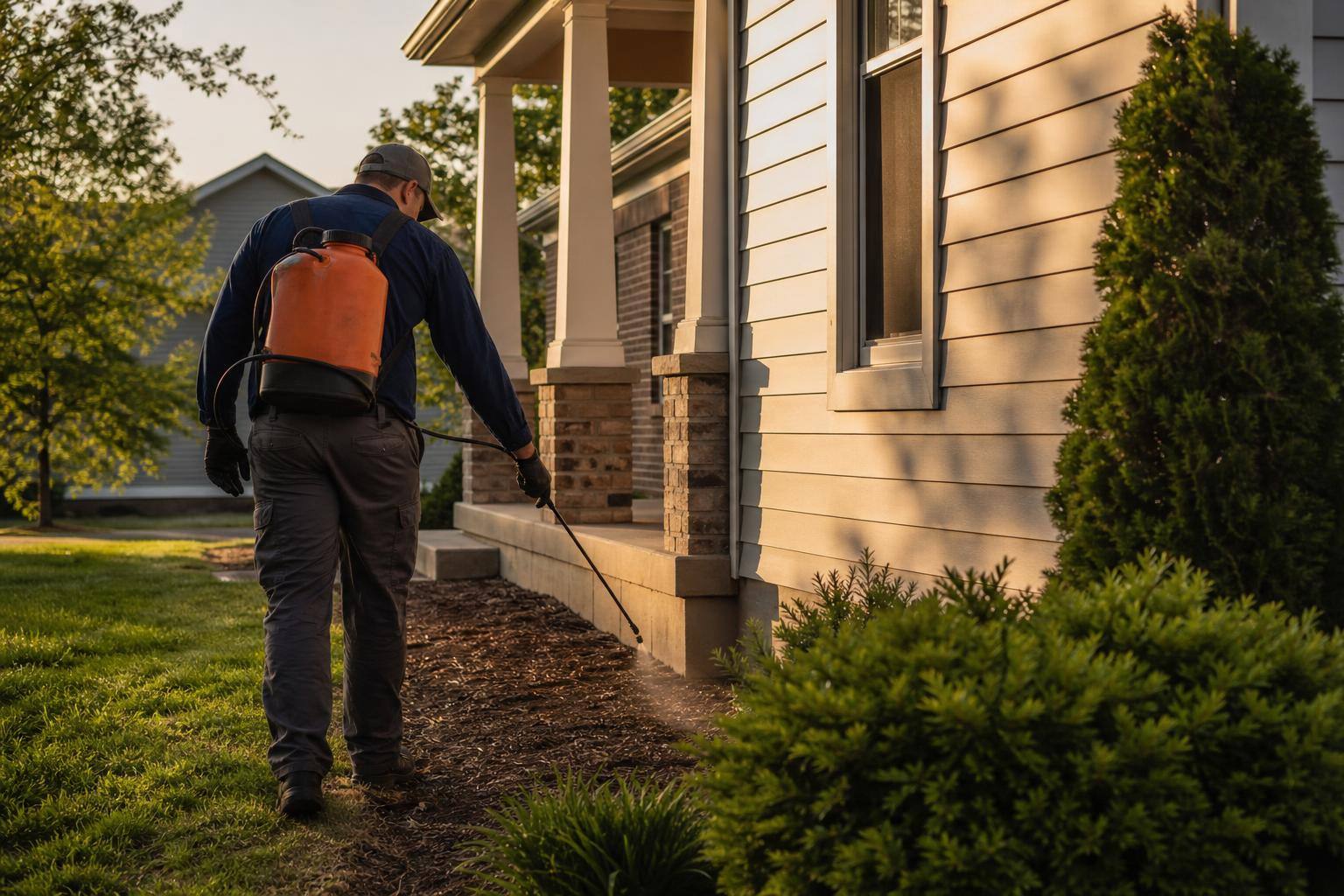
Spider control service · Rocky Mount, VA
A hillside home off the Route 220 corridor can collect webs around eaves, crawl-space vents, and retaining walls. One call gets the spider treatment sorted for Rocky Mount access and slope conditions.
A real person answers · No forms · No waiting on a quote email
Plan
Foothill homes with long sloped driveways commonly need a targeted treatment, while widespread activity across living areas, basements, and exteriors fits a whole-home treatment.
Quote
The exact quote is given on the call, based on treatment size, activity, access, materials, and time on site.
Time
The visit time is set on the call around driveway access, household needs, and any weather concerns.
Rocky Mount work ranges from downtown apartments and older homes near town roads to larger Franklin County properties on Blue Ridge slopes. Basements, garages, attic edges, porches, and wooded yards each give spiders different shelter, so the treatment is matched to the active areas rather than treated as one identical space.
Services
Rocky Mount
Rocky Mount homes often meet wooded slopes, damp ground, and long driveways, giving spiders cover near foundations and exterior lights. Downtown apartments and older houses may show activity around utility rooms, basements, porches, and attic openings. Commercial spaces along the Route 220 corridor need a plan that separates occupied rooms, storage areas, entrances, and exterior web locations.
Rocky Mount houses on sloped lots may need attention at eaves, crawl-space vents, garages, and foundation edges where webs keep returning.
Indoor work covers selected rooms, basements, attics, and utility areas in Rocky Mount homes after activity and hiding places are checked.
Exterior treatment can focus on porches, entry lights, retaining walls, and yard-side foundation areas around Rocky Mount foothill properties.
Web removal addresses visible buildup around Rocky Mount doors, windows, soffits, and outbuildings, with treatment considered where activity remains.
Recurring prevention suits Rocky Mount properties with repeat webs after humid weather, using scheduled inspections and perimeter treatments.
Managers of Rocky Mount apartments can coordinate treatment around occupied units, shared entries, basements, storage rooms, and exterior walkways.
Commercial buildings near Rocky Mount roads may need separate attention for entrances, loading areas, lights, storage rooms, and customer spaces.
The targeted treatment fits many Rocky Mount jobs where activity is limited to a porch, garage, basement, or exterior wall. Larger foothill homes with activity across several levels and outdoor edges usually need a whole-home treatment.
A technician checks common hiding areas, identifies spider activity, and looks for conditions attracting spiders.
An inspection fits a Rocky Mount homeowner who has found a few webs in a basement, attic, garage, or around a long driveway and needs the activity identified first.
A targeted treatment addresses visible activity in selected indoor or outdoor areas and may include web removal.
A targeted treatment suits visible webs at a porch, entry, garage, or selected foundation section, including a Rocky Mount property where activity stays in defined areas.
A whole-home service treats interior and exterior areas where spiders commonly travel, shelter, or build webs.
A whole-home treatment fits a larger Franklin County house with spiders moving between basements, living areas, attic edges, exterior walls, and wooded yard features.
A recurring plan uses scheduled inspections and perimeter treatments to help reduce repeat spider activity.
Recurring prevention suits Rocky Mount homes or businesses that see repeat webs around lights, eaves, porches, and foundation edges through humid seasons.
Cost
The exact quote is given on the call after the activity and property are discussed. Cost depends on the type and size of treatment, indoor and outdoor areas, parts or materials, time on site, distance, driveway access, and after-hours work.
A single porch or garage differs from a whole-home visit covering basements, attic edges, several rooms, and exterior walls.
Long sloped driveways, narrow approaches, hillside parking, and distance from the Rocky Mount service area can change the work involved.
Treatment materials and any needed service supplies depend on the spider activity, surfaces, selected areas, and conditions found during the visit.
After-hours work, heavy thunderstorms, winter ice, and difficult footing can affect time on site and how the treatment is carried out.
To avoid surprise charges, describe every active area on the call, including sheds, crawl spaces, garages, and exterior walls. The quote is discussed before the treatment plan is approved, with access conditions included in that conversation.
What goes in
This covers spiders or webs in living spaces, basements, attics, garages, and utility rooms, including a Rocky Mount load of activity after humid weather.
This covers webs around eaves, doors, porches, lights, retaining walls, and foundation edges on Rocky Mount homes with sloped yards or wooded borders.
This covers repeat activity that returns around the same entrances, exterior lights, crawl-space vents, or commercial edges after treatment or seasonal weather.
Not accepted. Spider treatment does not cover unrelated pest problems, structural repairs, concealed damage, unsafe access areas, or materials and work outside the approved treatment plan.
Projects
Attic edges in Rocky Mount homes can hold webs near vents, roof framing, and stored items, so access and activity are checked before treatment.
Basements in Franklin County houses may stay cool and damp near foundation walls, making them a common place to inspect for spiders and webs.
A Rocky Mount garage with an open door, shaded wall, or stored equipment may need targeted attention around corners, lights, and entry edges.
Exterior treatment for Rocky Mount homes can focus on eaves, porches, foundation lines, retaining walls, and lights beside sloped driveways.
Visible webs around Rocky Mount doors, windows, soffits, and outbuildings can be removed while nearby conditions are checked for continued activity.
Downtown Rocky Mount apartments may need work in a unit, shared entry, basement, or utility room, with the treatment area clearly identified.
Commercial properties along the Rocky Mount corridor may need separate plans for entrances, storage, customer areas, exterior lights, and loading access.
A real person answers by phone and records the Rocky Mount property type, activity areas, access limits, and preferred visit details.
Explain where webs or spiders appear, how often they return, and whether basements, attics, garages, porches, or yards are involved.
The treatment size, work areas, access needs, materials, and exact quote are reviewed before the selected service is approved.
The technician works in the approved areas, removes webs where appropriate, and discusses recurring prevention when repeat activity is present.
Weather
Rocky Mount summers are humid, and heavy thunderstorms can wet exterior surfaces or limit safe work on slopes. Winter ice can affect driveway access and footing. The visit is set with current conditions in mind, especially for exterior walls, porches, and long hillside approaches.
Placement
Work may occur around crawl spaces, slabs, basements, utility rooms, garages, attic edges, porches, and yards. Rocky Mount slopes, retaining walls, gates, stored items, narrow driveways, and wet or icy footing can limit access and change where the technician can safely work.
Permits
Spider treatment on private property generally does not require a town permit or inspection. If a street-side setup, public access issue, or unusual property condition raises a question, the City of Rocky Mount or Franklin County can identify the responsible authority, and the call covers who should arrange any required approval.
Some Franklin County subdivisions, rental properties, and planned communities have rules about exterior work, notices, chemicals, or access. Check HOA, covenant, or landlord requirements before the visit and share those conditions on the call.
Keep the route to the problem area clear, including access to crawl spaces, basements, utility rooms, garages, and exterior walls. Provide practical parking for the work vehicle, secure pets and people, unlock needed gates, and mention wet ground, storms, or winter ice.
Service covers Rocky Mount properties through downtown, residential streets near the Route 220 corridor, town-edge homes, hillside lots, and foothill properties around Franklin County. Nearby service discussions can also include Boones Mill, with other linked areas such as Blacksburg, Winston Salem, Mebane, and Bluefield handled according to the service area.
Not sure about your street? Ask on the call and we will tell you which office handles it.
Timing
Spider activity in Rocky Mount often becomes more noticeable through humid summer weather, when webs collect around lights, eaves, porches, and shaded foundations. Thunderstorms can shift activity toward sheltered areas. Fall brings attention to indoor edges, while winter ice can limit exterior access and make basements, garages, and utility rooms more relevant.
Warm, humid conditions can make exterior webs more visible around Rocky Mount porches, eaves, lights, and retaining walls. Heavy thunderstorms may require attention to sheltered areas and safe footing.
Occasional winter ice can restrict long sloped driveways and exterior work. Spiders may be noticed instead in basements, garages, attics, and utility rooms where access can be planned.
Service area
Rocky Mount is part of our Franklin County coverage, and we also serve the neighboring communities below.
Why us
Rocky Mount properties often combine steep approaches, wooded edges, damp foundation areas, and outbuildings. That combination changes where spiders shelter and how a technician reaches exterior walls, porches, crawl spaces, and garages.
Getcha Pest Control · Rocky Mount
A downtown apartment, a house near Route 220, and a Franklin County foothill home do not present the same treatment area. Describing the building and slope access first helps match the visit to the actual activity.
Click Here to Call (888) 510-9023FAQs
Still have a question about Rocky Mount? Call (888) 510-9023 and ask a real person.
The exact quote is given on the call. Cost changes with the treatment type and size, indoor or outdoor areas, parts and materials, time on site, distance, driveway access, and after-hours work. Describe every area involved, including garages, sheds, basements, and exterior walls.
A targeted treatment fits visible activity in selected areas, while a whole-home treatment fits activity across several rooms and exterior sections. An inspection suits uncertain activity, and recurring prevention fits repeat webs around eaves, lights, porches, and foundations.
The visit time is set by phone after the property and access details are reviewed. Ask about available scheduling, and mention long sloped driveways, gates, winter ice, or exterior areas that may affect the visit.
The approved treatment covers the selected indoor, outdoor, or recurring prevention areas discussed on the call. These may include basements, attics, garages, porches, eaves, foundation edges, utility rooms, and exterior lights.
It does not cover unrelated pest problems, structural repairs, concealed damage, unsafe access areas, or work outside the approved plan. Tell the technician about other pests or building concerns so they can be separated from the spider treatment.
Private-property spider treatment generally does not need a town permit or inspection. If a street-side setup or unusual access issue creates a government requirement, the City of Rocky Mount or Franklin County can identify the authority and the call covers who arranges it.
Clear access to basements, crawl spaces, garages, utility rooms, attics, porches, and exterior walls. Secure pets and people, unlock gates, provide parking, and explain any steep driveway, stored items, wet ground, or ice.
Have the property address, building type, rooms or exterior areas involved, web locations, how often activity returns, pets, access limits, and any landlord or HOA rules ready for the phone conversation.
Yes, heavy thunderstorms can wet exterior surfaces and make slopes, porches, and driveway approaches less safe. Humid weather can also make webs more visible. The visit plan accounts for current conditions and may focus on sheltered areas when needed.
They can require more access planning because long sloped driveways, wooded edges, retaining walls, and multiple levels create separate treatment areas. Describe the slope, parking, gates, crawl spaces, and exterior activity so the visit is sized properly.
A real person answers · No forms · Every quote given on the phone