Residential spider control
Residential service covers San Martin houses, detached garages, sheds, and exterior walls where webs and sheltered corners support spider activity.
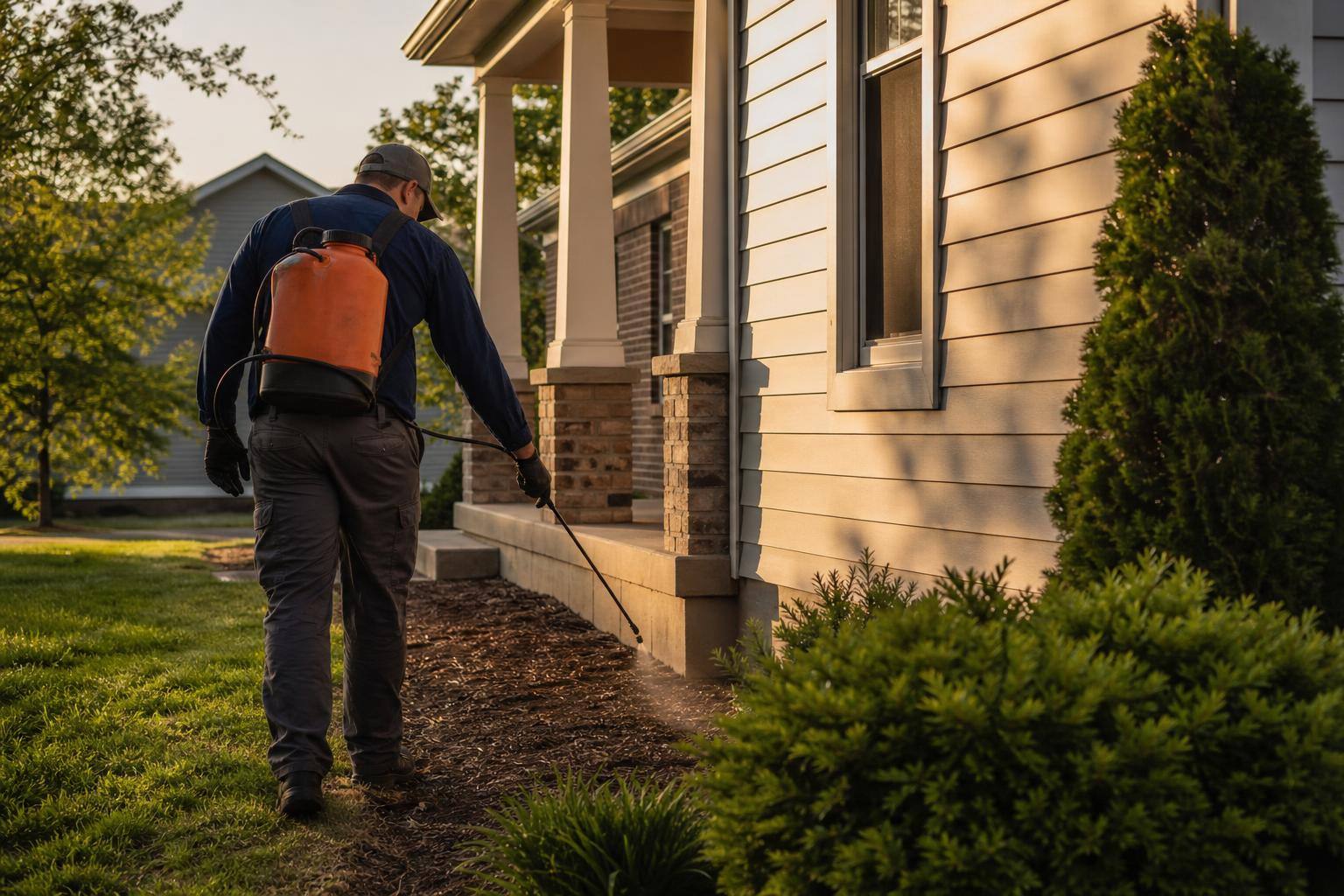
Spider control service · San Martin, CA
A rural wine property near Monterey Road can have webs across a detached shed, barn eaves, and the house foundation. One phone call sorts the inspection, treatment size, and access plan.
A real person answers · No forms · No waiting on a quote email
Plan
San Martin homes with detached garages, sheds, or outbuildings often need a targeted treatment first, while repeat activity across the house and grounds may fit whole-home treatment.
Quote
The exact quote is given on the call and changes with treatment areas, spider activity, access, materials, and distance.
Time
The visit time is set on the call around access to the home, outbuildings, pets, and work areas.
Spider work in central San Martin homes, rural parcels along Bailey Avenue, and properties near Santa Teresa Boulevard often extends beyond the main house. We inspect garages, sheds, barn edges, crawl spaces, utility rooms, covered patios, and exterior webs where dry summers, irrigation, and winter rain create different hiding conditions.
Services
San Martin
San Martin properties commonly include detached garages, storage sheds, garden structures, and wine country outbuildings separated from the main house. That layout changes how spider activity is traced. Interior rooms, foundation edges, irrigation zones, barn eaves, and utility spaces may need separate attention, especially where dry summer conditions meet watered landscaping.
Residential service covers San Martin houses, detached garages, sheds, and exterior walls where webs and sheltered corners support spider activity.
Indoor treatment checks San Martin living areas, garages, attics, utility rooms, and other places spiders travel or build webs.
Outdoor treatment addresses webs around San Martin patios, outbuildings, fence lines, eaves, and irrigated garden areas.
Web removal clears visible webs from San Martin house exteriors, detached structures, porch ceilings, and sheltered barn edges.
Recurring prevention suits San Martin properties where irrigation, outbuildings, and seasonal weather bring spider activity back around the perimeter.
Property managers can coordinate spider work across San Martin rentals, shared exterior areas, garages, and separate utility spaces.
Commercial service covers San Martin offices, agricultural buildings, storage areas, and work spaces with exterior access challenges.
The most common San Martin job is a targeted treatment because activity often starts in selected rooms, garages, eaves, or detached structures. A whole-home treatment fits broader travel paths, while recurring prevention helps properties with repeated outdoor activity.
A technician checks common hiding areas, identifies spider activity, and looks for conditions attracting spiders.
An inspection fits a San Martin home where the source is unclear. The technician checks hiding areas, identifies activity, and looks for irrigation, clutter, or structural conditions attracting spiders.
A targeted treatment addresses visible activity in selected indoor or outdoor areas and may include web removal.
A targeted treatment suits visible webs in a garage, shed, patio, or selected rooms near Monterey Road. It addresses chosen indoor or outdoor areas and may include web removal.
A whole-home service treats interior and exterior areas where spiders commonly travel, shelter, or build webs.
A whole-home treatment fits a rural San Martin property where spiders move between the house, foundation, garage, and outbuildings. Interior and exterior travel and shelter areas are treated.
A recurring plan uses scheduled inspections and perimeter treatments to help reduce repeat spider activity.
Recurring prevention suits a San Martin parcel with repeat activity around irrigated landscaping, detached buildings, and house eaves. Scheduled inspections and perimeter treatments help reduce repeated spider presence.
Cost
The exact quote is given on the call after the job is described. Spider treatment prices depend on the type and size of the property, treatment areas, activity level, parts or materials, time on site, access, distance from the San Martin setting, and after-hours work.
The number of rooms, exterior walls, garages, sheds, and outbuildings changes the work involved on rural San Martin properties.
Long drives across rural parcels, narrow approaches, separated buildings, crawl spaces, and difficult parking can change time on site and access requirements.
Materials used for the selected treatment, along with any needed parts for the work area, affect the quote after the activity and surfaces are reviewed.
Heavy webbing, repeated activity, after-hours work, and the amount of inspection or removal needed can change the service cost.
The quote is discussed before the treatment plan is approved. Describe every building, affected area, access issue, and recurring concern so the work is sized for the San Martin property rather than guessed from the house alone.
What goes in
This covers spiders or webs in San Martin bedrooms, garages, attics, crawl spaces, utility rooms, and other interior areas, including a detached farm building load.
This covers webs around San Martin eaves, patios, fences, sheds, irrigation zones, and exterior lighting where insects and shelter support activity.
This covers repeat activity across San Martin homes and outbuildings, especially properties with irrigated landscaping, sheltered storage, and several separate structures.
Not accepted. The service does not cover unrelated pest work, unsafe access, concealed structural repairs, or materials and areas that were not described and approved for treatment.
Projects
Attic treatment checks rafters, insulation edges, vents, and stored items in San Martin homes where dry conditions and roof shelter support webs.
Basements and lower utility areas in Santa Clara County need attention around corners, pipes, windows, and foundation walls where moisture can linger.
San Martin garages often connect indoor storage with outdoor activity, so treatment may include door edges, shelving, corners, and the exterior threshold.
Exterior service covers eaves, porch ceilings, foundation lines, windows, and lighting around San Martin homes and rural properties.
Web removal clears visible buildup from San Martin patios, sheds, barn edges, detached garages, and other sheltered structures before treatment.
Apartment work in San Martin focuses on interior corners, balconies, entry areas, utility spaces, and shared exterior locations with approved access.
Commercial buildings near San Martin agricultural corridors may need work around loading areas, storage rooms, roof edges, and employee access points.
A real person answers by phone, records the San Martin property type, and starts with the building and activity details.
Explain where spiders or webs appear, which buildings are involved, how often they return, and whether irrigation or recent rain changes the pattern.
The treatment size, work areas, access needs, and exact quote are reviewed before the San Martin service is approved.
The technician treats the selected areas, may remove webs, and discusses recurring prevention when the property has continuing outdoor activity.
Weather
San Martin summers are dry, while winter rain changes exterior surfaces, sheltered areas, and spider movement. Wildfire conditions can affect outdoor access and site readiness. Irrigated rural landscaping may maintain activity through dry periods, so the treatment plan is set around current site conditions.
Placement
Work may occur in crawl spaces, on slabs, in garages, basements, utility rooms, attics, yards, eaves, and detached outbuildings. Clear paths, locked gates, narrow rural approaches, stored equipment, steep ground, and separated structures can limit access around San Martin properties.
Permits
Spider treatment at a private San Martin property generally does not require a building permit. If work affects a public right of way, a structure, or another regulated condition, the City of San Martin or Santa Clara County can identify whether an approval or inspection applies. The phone discussion covers who needs to arrange it.
Santa Clara County HOA rules, neighborhood covenants, and landlord policies may control exterior treatments, balcony access, notices, or work around shared buildings. Have those rules available when discussing a San Martin property.
Keep the affected rooms, crawl spaces, slabs, utility areas, yards, and outbuildings reachable. Provide parking for the work vehicle, unlock gates and shutoffs, keep pets and people clear, and account for wet ground, smoke conditions, or other seasonal limits.
Service covers central San Martin, properties along Monterey Road and Santa Teresa Boulevard, rural parcels near Bailey Avenue, and homes with separated outbuildings on the town's surrounding agricultural edges. Nearby service discussions may also include Morgan Hill, Los Gatos, Cupertino, Pacific Grove, and Newark when arranged by phone.
Not sure about your street? Ask on the call and we will tell you which office handles it.
Timing
Spider activity in San Martin can shift through the year rather than follow one short season. Dry summer weather keeps webs visible around eaves and outbuildings, irrigation supports outdoor insect activity, and winter rain changes shelter and movement. The work area and current conditions determine the treatment plan.
Summer heat and irrigated landscaping can keep spiders active around patios, lighting, sheds, and barn edges. Exterior treatment may need attention to separate structures across a rural San Martin parcel.
Winter rain can push activity toward covered eaves, garages, utility rooms, and interior edges. Wet ground, access roads, and exposed work areas should be discussed before setting the San Martin visit.
Service area
San Martin is part of our Santa Clara County coverage, and we also serve the neighboring communities below.
Why us
San Martin properties often spread the spider problem across a house, detached garage, shed, barn edge, and irrigated yard. The treatment has to account for those separate areas instead of assuming the main house tells the whole story.
Getcha Pest Control · San Martin
Dry summers make exterior webs easy to spot, while winter rain and rural irrigation change where spiders shelter. A site-specific inspection helps separate a focused treatment from broader work across the property.
Click Here to Call (888) 510-9023FAQs
Still have a question about San Martin? Call (888) 510-9023 and ask a real person.
The exact quote is given on the call. Cost depends on the property and treatment size, activity level, rooms and outbuildings involved, parts or materials, time on site, access, distance across the San Martin setting, and after-hours work.
A targeted treatment fits selected rooms, eaves, garages, or sheds. Whole-home treatment fits activity across the house and exterior, while recurring prevention suits repeat webs around irrigated yards and outbuildings. An inspection fits unclear activity.
The visit time is set on the call after the property and access details are reviewed. Ask about current availability, including after-hours service, and explain if winter rain, wildfire conditions, gates, or rural roads affect the work area.
Treatment can cover selected indoor or outdoor areas where spiders travel, shelter, or build webs. Depending on the approved service, this may include rooms, garages, crawl spaces, eaves, patios, foundations, sheds, and other described outbuildings.
It does not cover unrelated pest work, unsafe access, concealed structural repairs, or areas and materials that were not described and approved. Mention other pest concerns separately when discussing a San Martin property.
Private spider treatment generally does not need a building permit. If work affects a public right of way, a structure, or another regulated condition, the City of San Martin or Santa Clara County can explain the applicable approval or inspection.
Clear access to affected rooms, walls, crawl spaces, utility areas, yards, and outbuildings. Unlock gates, provide parking, secure pets and people, and move stored items where practical so the technician can inspect the activity.
Have the property location, building types, affected rooms or outdoor areas, web locations, recurrence pattern, access instructions, gate details, pets, and any landlord or HOA rules ready for the phone discussion.
Yes. Dry summers can increase visible exterior webs, irrigation can support outdoor activity, and winter rain can shift spiders toward covered or interior shelter. Wet ground, smoke conditions, and access roads may affect how the visit is arranged.
They may, because a detached garage, shed, barn edge, or storage building can have different shelter and access conditions from the main house. List every structure with activity so the treatment is sized across the rural property.
A real person answers · No forms · Every quote given on the phone