Residential spider control
Residential service covers Woodland Hills rooms, garages, eaves, patios, and yard edges where webs or spider activity keep returning.
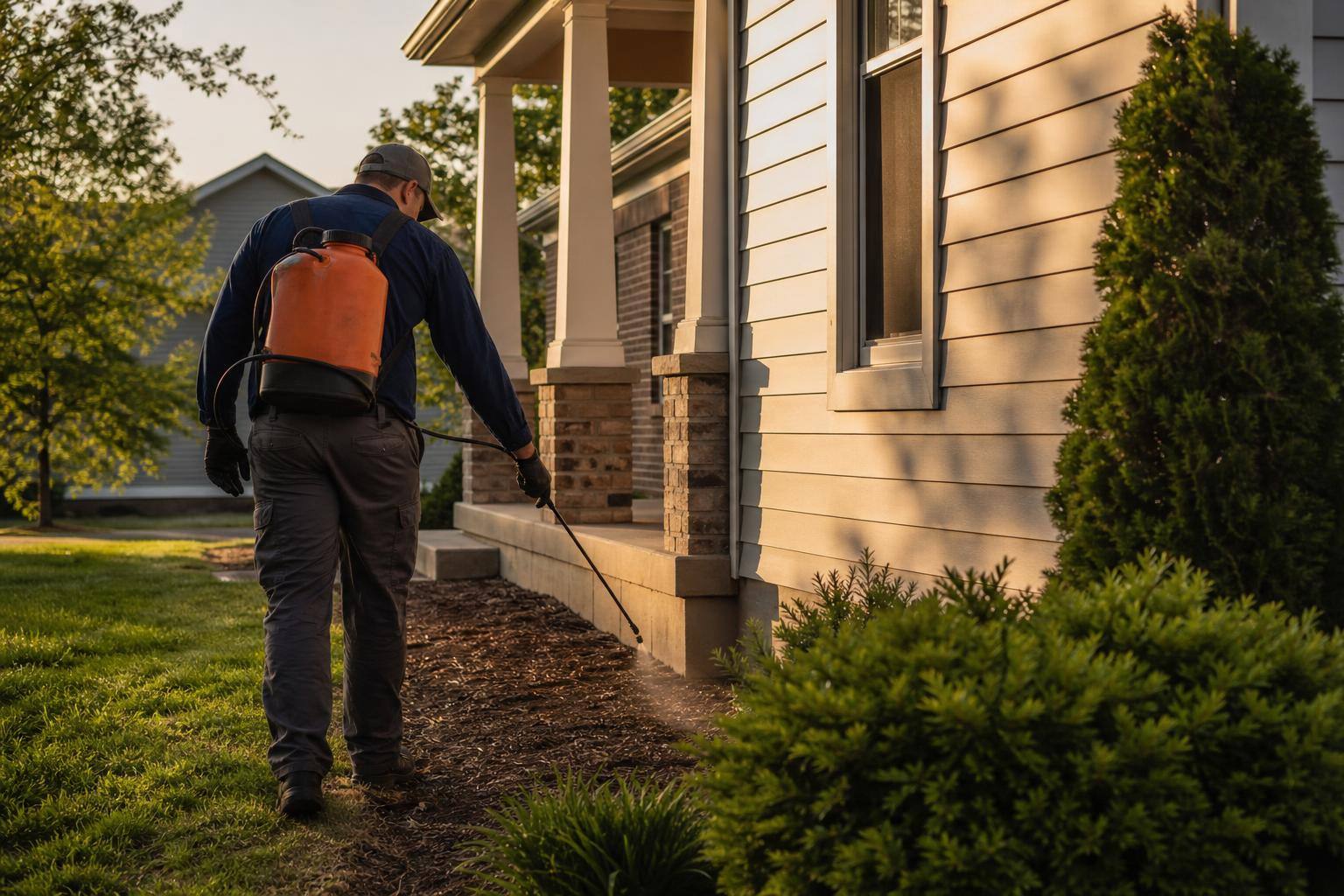
Spider control service · Woodland Hills, CA
In Woodland Hills hillside estates, spiders often settle beneath eaves, around stone walls, and in wildfire-sensitive landscaping. One phone call sorts the activity, the access, and the right spider treatment.
A real person answers · No forms · No waiting on a quote email
Plan
Hillside homes in Woodland Hills commonly need a targeted treatment for selected rooms, garages, eaves, or yard edges, with whole-home treatment for activity across the property.
Quote
The exact quote is given on the call, based on treatment size, access, activity, materials, and time on site.
Time
The visit time is set on the call around access, household routines, and any outdoor work limits.
From homes above Ventura Boulevard to properties near Topanga Canyon, Woodland Hills jobs vary between shaded yards, dry slopes, garages, and large exterior walls. We handle attic activity, web-covered patios, hillside eaves, apartment units, and commercial spaces across Los Angeles County with treatment matched to the actual hiding areas.
Services
Woodland Hills
Woodland Hills homes often combine broad rooflines, attached garages, stucco walls, patios, and drought-hardened planting beds. Hillside estates can have retaining walls and difficult exterior access, while rentals near major corridors may need focused indoor work. The treatment plan accounts for where spiders are active, how people use the space, and whether wildfire-sensitive landscaping limits exterior application.
Residential service covers Woodland Hills rooms, garages, eaves, patios, and yard edges where webs or spider activity keep returning.
Indoor treatment checks attic access, utility rooms, closets, and garages in Woodland Hills homes before addressing selected areas.
Outdoor work targets eaves, walls, fences, retaining areas, and landscaping edges around Woodland Hills properties without treating blindly.
Web removal clears visible webs from exterior corners, porch ceilings, and shaded structures in Woodland Hills before treatment decisions are made.
Recurring prevention suits Woodland Hills properties with repeat activity around dry landscaping, hillside walls, rooflines, or exterior lighting.
Property managers in Woodland Hills can arrange unit-specific or shared-area treatment for apartments, walkways, garages, and service spaces.
Commercial service covers offices, storefronts, storage areas, and building exteriors along Woodland Hills corridors where access must be coordinated.
Most Woodland Hills jobs fit a targeted treatment because activity is often concentrated at a garage, patio, attic, or exterior wall. Whole-home treatment makes more sense when several elevations, rooms, and sheltered landscaping areas show signs.
A technician checks common hiding areas, identifies spider activity, and looks for conditions attracting spiders.
An inspection fits a Woodland Hills home where the source is unclear, especially around hillside retaining walls, attic access, garages, and dry planting beds.
A targeted treatment addresses visible activity in selected indoor or outdoor areas and may include web removal.
A targeted treatment suits visible webs or spiders at selected eaves, rooms, patios, garages, or walls near Ventura Boulevard and surrounding residential streets.
A whole-home service treats interior and exterior areas where spiders commonly travel, shelter, or build webs.
Whole-home treatment fits a larger Woodland Hills property with activity moving between interior rooms, roof edges, attached garages, and outdoor shelter areas.
A recurring plan uses scheduled inspections and perimeter treatments to help reduce repeat spider activity.
Recurring prevention suits hillside estates, rental properties, and homes with repeat exterior activity around drought-hardened soil, landscaping, lighting, and retaining walls.
Cost
The quote is given on the call after we understand the property and the activity. Cost depends on the type and size of treatment, parts and materials, time on site, distance, access, and any after-hours work.
A garage corner, single room, full exterior, and whole-home job require different preparation, labor, materials, and time on site.
Hillside driveways, retaining walls, roofline height, locked gates, crawl spaces, and long approaches can change access from one Woodland Hills property to another.
Materials used for web removal, targeted treatment, perimeter work, and difficult exterior areas affect the quote according to the treatment plan.
Distance within Woodland Hills, parking, property coordination, restricted landscaping, and after-hours work can change the work required.
To avoid surprise charges, describe every affected area, access issue, gate, pet, and recurring problem when booking. The exact quote is given on the call before the treatment plan is approved.
What goes in
This covers spiders or webs in rooms, attics, garages, closets, and utility areas, including the stored-material clutter common in active Woodland Hills garages.
This covers webs on eaves, patios, fences, walls, lights, and landscaping edges, including exterior work around Woodland Hills hillside homes.
This covers repeat activity needing scheduled inspections and perimeter treatments around rooflines, retaining walls, dry planting beds, and shared property areas.
Not accepted. Spider treatment does not cover unrelated pests, hazardous materials, inaccessible areas, concealed structural damage, or work outside the agreed treatment area.
Projects
Attic service checks roofline access, rafters, insulation edges, and stored items in Woodland Hills homes where heat and dryness can leave sheltered activity.
Basement work addresses corners, utility penetrations, storage, and damp or shaded areas, including uncommon lower-level spaces in larger Los Angeles County homes.
Garage treatment focuses on door edges, corners, stored materials, and exterior transitions in Woodland Hills properties near residential corridors.
Exterior service treats selected eaves, walls, fences, lights, and landscaping edges around Woodland Hills hillside homes while accounting for sensitive planting.
Web removal clears visible buildup from porches, roof edges, patios, and retaining areas in Woodland Hills before deciding where treatment is needed.
Apartment service can focus on a unit, balcony, hallway, or shared exterior area in Woodland Hills, with access coordinated through the property manager.
Commercial work covers storefronts, offices, loading areas, storage rooms, and building exteriors along Woodland Hills business corridors and nearby Los Angeles County sites.
A real person answers by phone. Explain the property type, visible activity, affected areas, and any access limits.
Share where webs appear, how often they return, whether activity is indoors or outdoors, and what has already been tried.
The treatment plan and exact quote are discussed on the call, including the areas to inspect, treat, or revisit.
The technician works through the approved areas, removes accessible webs where included, and explains practical steps for reducing repeat activity.
Weather
Hot, dry Woodland Hills summers can increase activity around shaded eaves, lights, irrigation edges, and drought-hardened soil. Intense rain can disturb webs and change exterior access, while wildfire conditions may limit work around sensitive landscaping. Outdoor treatment is planned around the conditions present at the property.
Placement
Work may occur in crawl spaces, attics, garages, utility rooms, basements, slabs, patios, eaves, retaining walls, and yards. Locked gates, steep slopes, narrow side yards, stored belongings, roofline height, and protected landscaping can limit access and change the treatment area.
Permits
Spider treatment on private property generally does not require a permit, but street use, vehicle placement, or work affecting public space can bring questions for the City of Los Angeles. The call covers whether local approval or an inspection applies and who arranges it.
HOA covenants, landlord rules, and Los Angeles County property policies may control exterior applications, shared walls, landscaping, or notice to residents. Have the property rules available so the treatment area can be coordinated correctly.
Clear access to the affected rooms, crawl spaces, utility areas, eaves, and yard edges. Provide safe parking for the work vehicle, secure pets and people, unlock gates, and mention wildfire conditions, intense rain, or landscaping that must remain undisturbed.
Service covers Woodland Hills from the hillside neighborhoods and streets above Ventura Boulevard through Warner Center, Walnut Acres, and areas near Topanga Canyon Boulevard. Nearby service can also be discussed for Van Nuys, Newport Beach, Lompoc, Del Mar, and Rancho Mirage when the property details are provided.
Not sure about your street? Ask on the call and we will tell you which office handles it.
Timing
Spider activity in Woodland Hills often becomes more noticeable during hot, dry weather when sheltered rooflines, garages, lights, and landscaping edges stay attractive. Intense rain can shift webs and create short exterior access limits. Hillside properties may also need planning around wildfire conditions and protected planting.
During hot, dry periods, check eaves, garage corners, patio lights, retaining walls, and shaded irrigation edges. Woodland Hills homes with broad exterior areas may fit targeted treatment or recurring prevention.
Intense rain can disrupt webs and make slopes or exterior paths harder to work safely. Wildfire-sensitive landscaping may limit product placement, so describe those restrictions before outdoor treatment is planned.
Service area
Woodland Hills is part of our Los Angeles County coverage, and we also serve the neighboring communities below.
Why us
Woodland Hills properties often spread spider habitat across rooflines, patios, retaining walls, garages, and drought-tolerant landscaping. A treatment sized for one visible web may miss activity moving between those sheltered areas.
Getcha Pest Control · Woodland Hills
Hillside access and wildfire-sensitive planting change how exterior work is approached in Woodland Hills. The plan accounts for slopes, gates, parking, protected landscaping, and the indoor areas connected to the exterior problem.
Click Here to Call (888) 510-9023FAQs
Still have a question about Woodland Hills? Call (888) 510-9023 and ask a real person.
The exact quote is given on the call. Cost depends on the treatment size, activity, parts and materials, time on site, distance, access, and after-hours work. Hillside driveways, roofline access, locked gates, and sensitive landscaping can change the work required.
A targeted treatment fits activity limited to a room, garage, patio, or selected exterior area. Whole-home treatment fits activity across several connected areas, while recurring prevention suits repeat problems around rooflines, retaining walls, and landscaping.
The visit time is set by phone after the property and activity are described. Ask about available scheduling, including after-hours options, and explain any gate, parking, tenant, or wildfire-related access limits.
It can cover selected indoor or outdoor areas where spiders travel, shelter, or build webs, according to the approved plan. Common locations include attics, garages, utility rooms, eaves, patios, walls, fences, and landscaping edges.
It does not cover unrelated pests, hazardous materials, inaccessible areas, concealed structural damage, or work outside the agreed treatment area. Mention other pest activity separately so the service can be properly assessed.
Treatment on private property generally does not require a permit, but street use, public-space work, or local inspection questions may involve the City of Los Angeles. The call covers whether approval applies and who arranges it.
Provide clear access to affected rooms, attics, garages, crawl spaces, utility areas, eaves, and yard edges. Unlock gates, secure pets and people, provide safe vehicle parking, and move loose storage away from walls when safe.
Have the property type, address, affected areas, web locations, recurrence pattern, access restrictions, pets, tenant or HOA rules, and any sensitive landscaping details ready. Photos can help explain activity during the call.
Yes. Hot, dry weather can increase activity around shaded eaves, lights, and drought-tolerant landscaping, while intense rain can disrupt webs and affect slope access. Wildfire conditions may also limit exterior work near sensitive planting.
Yes, the treatment plan can account for hillside yards, retaining walls, dry soil, and wildfire-sensitive landscaping. Describe protected plants, narrow paths, slopes, gates, and any areas that must remain untouched before outdoor work is planned.
A real person answers · No forms · Every quote given on the phone