Residential spider control
Residential service addresses spiders in Waterbury houses, including basements, garages, attics, window edges, and foundation areas.
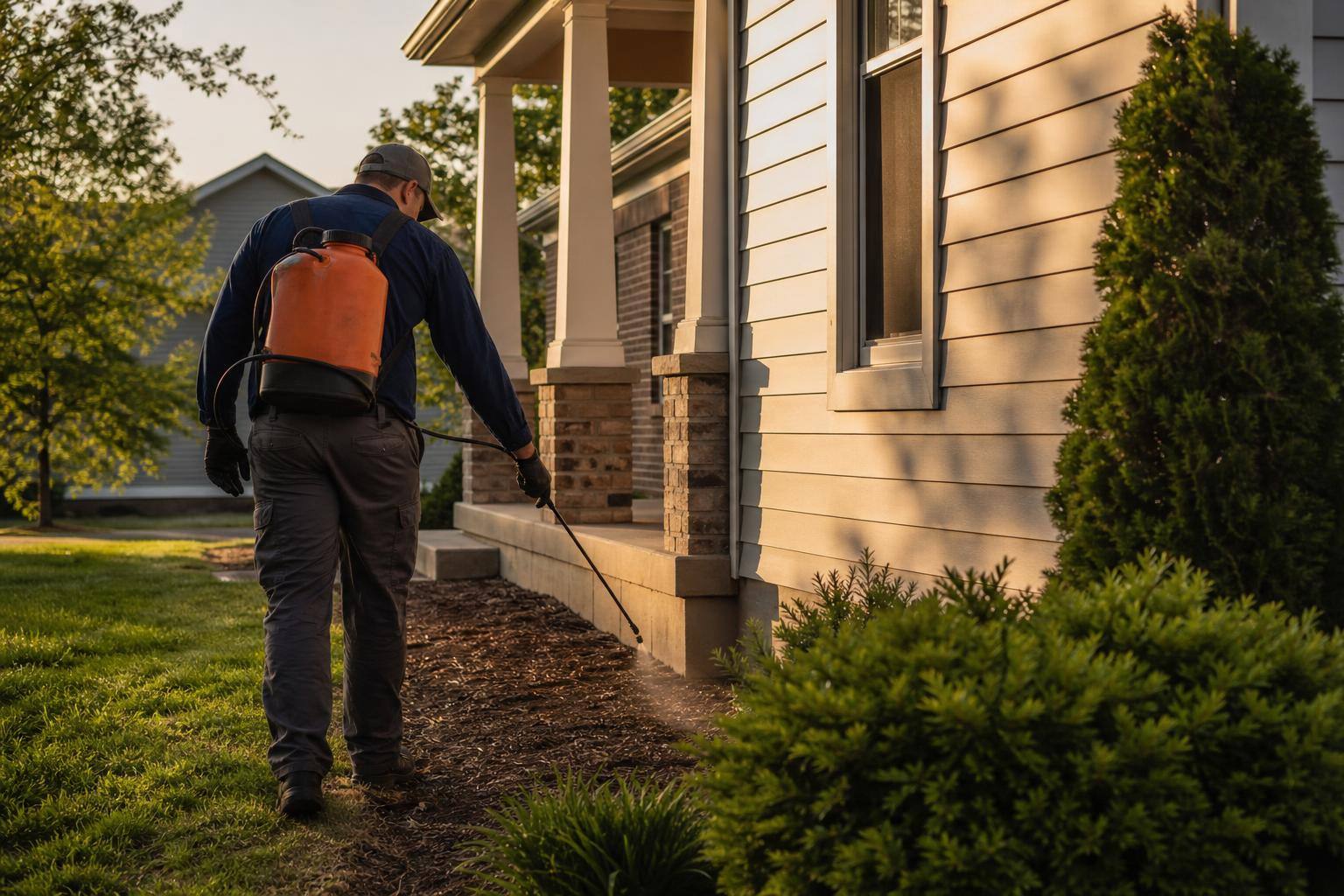
Spider control service · Waterbury, CT
Aging multifamily buildings near downtown Waterbury often hold webs in basement corners and utility rooms. One phone call sorts the activity, access points, and treatment size.
A real person answers · No forms · No waiting on a quote email
Plan
Older Waterbury multifamily housing commonly needs a targeted treatment, while widespread attic, basement, and exterior activity may fit a whole-home treatment.
Quote
The exact quote is given on the call, based on activity, property size, access, materials, and time on site.
Time
The visit time is set on the call around access, occupants, pets, and the work area.
Waterbury jobs range from basement webs in Town Plot to attic activity around Bunker Hill, apartment turnover near downtown, and exterior webs along the Mill Plain corridor. Dense older housing can connect crawl spaces, utility rooms, and shared walls, so the technician sizes the spider treatment around where activity starts and how it travels.
Services
Waterbury
Waterbury’s compact housing stock puts spider activity close to living areas, shared basements, and utility penetrations. Wet springs and humid summers can support insects that spiders follow, while older multifamily buildings create more hiding places. The work may involve interior corners, attics, slabs, crawl spaces, window edges, exterior foundations, and shared access points across residential and commercial properties.
Residential service addresses spiders in Waterbury houses, including basements, garages, attics, window edges, and foundation areas.
Indoor treatment focuses on webs, corners, utility rooms, and other hiding areas in Waterbury homes and aging apartments.
Outdoor treatment covers foundation lines, doors, lighting areas, and yard structures where Waterbury spiders build webs.
Web removal clears visible webs from Waterbury porches, eaves, basement windows, garages, and commercial entrances.
Recurring prevention uses scheduled inspections and perimeter treatments for repeat activity around Waterbury homes and properties.
Property managers in downtown Waterbury and Town Plot can address shared basements, vacant units, corridors, and exterior access points.
Commercial treatment fits Waterbury storefronts, industrial spaces, loading areas, utility rooms, and buildings along the city’s working corridors.
Targeted treatment fits many Waterbury jobs because activity is often concentrated in a basement, garage, apartment, or exterior foundation line. Whole-home treatment makes more sense when older construction, shared utility paths, and attic or crawl-space activity spread the problem.
A technician checks common hiding areas, identifies spider activity, and looks for conditions attracting spiders.
An inspection fits a Waterbury homeowner who sees occasional spiders but cannot locate the source. Common checks include basement corners, attic access, window edges, utility rooms, and exterior shelter.
A targeted treatment addresses visible activity in selected indoor or outdoor areas and may include web removal.
A targeted treatment suits visible webs around a Town Plot porch, a garage near Bunker Hill, or selected rooms in an older Waterbury apartment.
A whole-home service treats interior and exterior areas where spiders commonly travel, shelter, or build webs.
A whole-home treatment fits widespread activity across a Waterbury house, including the basement, attic, interior rooms, foundation, doors, and exterior web-building areas.
A recurring plan uses scheduled inspections and perimeter treatments to help reduce repeat spider activity.
Recurring prevention suits multifamily properties and homes with repeat activity after wet springs or humid summers, using scheduled inspections and perimeter treatments around the Waterbury property.
Cost
The exact quote is given on the call. Cost depends on the type and size of the property, the treatment area, visible activity, access to basements or attics, time on site, distance from the Waterbury setting, and parts or materials needed.
A single apartment, detached house, multifamily building, and commercial space require different work areas, inspection paths, treatment coverage, and time on site.
Basements, attics, crawl spaces, garages, slabs, porches, and exterior walls each change access and the materials used for the spider treatment.
Distance, parking, shared entrances, locked utility rooms, narrow stairs, and dense multifamily layouts can affect setup and time on site.
The treatment plan may require different materials for interior corners, foundation lines, web removal, perimeter work, or areas exposed to weather.
To avoid surprise charges, describe every affected area, access limitation, building level, and recurring concern before the quote is set. The exact scope and price are discussed on the call.
What goes in
This covers spiders and webs in living areas, basements, attics, garages, utility rooms, and apartment interiors, including older Waterbury multifamily buildings.
This covers webs around doors, porches, eaves, lighting, foundation walls, and yard structures, including common exterior loads on Waterbury houses.
This covers repeat activity requiring scheduled inspections and perimeter treatments, especially around damp basements, shared entries, and older New Haven County properties.
Not accepted. The service does not cover unrelated pests, unsafe work areas, concealed structural repairs, or items that cannot be safely accessed or treated.
Projects
Attic treatment addresses rafters, insulation edges, vents, and access points in Waterbury homes where spiders shelter above finished rooms.
Basement work covers slabs, utility rooms, bulkheads, window wells, and foundation edges common in older Waterbury housing.
Garage treatment targets door tracks, corners, stored materials, and exterior transitions around houses in Bunker Hill and other Waterbury areas.
Exterior service treats foundation lines, porches, eaves, lights, and doors where wet conditions support web building around Waterbury houses.
Web removal clears visible buildup from entrances, basement windows, porches, and commercial fronts across Waterbury’s compact corridors.
Apartment service can address a unit, shared basement, corridor, or exterior entry in downtown Waterbury and nearby multifamily buildings.
Commercial treatment fits storefronts, industrial spaces, loading areas, and utility rooms across Waterbury and New Haven County.
A real person answers by phone around the clock and gathers the property type, location, activity, access concerns, and preferred visit timing.
Explain where spiders or webs appear, how often they return, and whether the activity involves a basement, attic, apartment, garage, or exterior.
The technician reviews the suitable visit or job type, treatment areas, access needs, and exact quote before work is arranged.
The technician treats the agreed areas, removes accessible webs when included in the plan, and discusses prevention for repeat activity.
Weather
Waterbury’s wet springs can increase insect activity around foundations and basements, while humid summers support exterior webs. Cold snowy winters may push spiders toward sheltered interior areas. Weather can affect exterior access and treatment conditions, so the visit plan is set with current site conditions in mind.
Placement
Work may occur in crawl spaces, on basement slabs, inside utility rooms, around attic access, along foundation lines, or in yards. Stored items, locked rooms, narrow stairs, shared entrances, snow, mud, and standing water can limit access.
Permits
A spider treatment usually concerns the property rather than public street work, but unusual placement, shared access, or work affecting public space may require review by the City of Waterbury. The call covers whether local approval or inspection applies and who arranges it.
An HOA, covenant, or landlord may control exterior treatment, shared basements, tenant entry, or visible equipment in New Haven County. Have the property rules and manager information ready so access and approval are clear.
Keep the affected rooms, crawl spaces, slabs, utility rooms, yards, and foundation edges reachable. Provide safe parking for the work vehicle, keep people and pets clear, unlock shared areas, and mention snow, mud, water, or other seasonal limits.
Service covers Waterbury neighborhoods and settings including downtown, Town Plot, Bunker Hill, the East End, the West End, and the Mill Plain area. Nearby service can also be arranged for Plainville, Farmington, Middletown, Sherman, and Kent through the broader coverage area.
Not sure about your street? Ask on the call and we will tell you which office handles it.
Timing
Spider activity in Waterbury often becomes more noticeable during wet springs and humid summers, when insects and moisture draw spiders toward foundations, windows, porches, and basements. Cold snowy winters can shift activity into attics, utility rooms, garages, and other sheltered spaces. Repeat problems may need prevention beyond a single visible web.
Spring moisture can make basements, bulkheads, window wells, and foundation lines more active around Waterbury homes. Exterior access may be affected by mud or standing water, so the work area needs a practical route.
Humid summers can bring webs to porches, lights, eaves, doors, and commercial entrances. Treatment planning considers exterior exposure, shaded corners, stored materials, and the access available around the property.
Service area
Waterbury is part of our New Haven County coverage, and we also serve the neighboring communities below.
Why us
Waterbury’s compact industrial layout places older multifamily housing, commercial buildings, garages, and shared utility areas close together. A spider treatment must account for connected access points, tenant spaces, basements, and exterior foundation lines rather than only the room where webs are visible.
Getcha Pest Control · Waterbury
Wet springs, humid summers, and snowy winters change where spiders shelter in Waterbury. Checking basements, attic access, crawl spaces, window edges, porches, and utility rooms helps match the treatment to the property’s actual travel and hiding areas.
Click Here to Call (888) 510-9023FAQs
Still have a question about Waterbury? Call (888) 510-9023 and ask a real person.
The exact quote is given on the call and depends on property size, activity, treatment areas, access, materials, time on site, and distance. Describe every affected level and exterior area, especially in an older Waterbury multifamily building.
An inspection fits uncertain activity, targeted treatment fits selected areas, whole-home treatment fits widespread interior and exterior activity, and recurring prevention fits repeat problems. The property type, number of affected areas, and access determine the suitable option.
The visit time is set on the call because access, current scheduling, property rules, and treatment conditions all matter. Ask about available timing and explain if a basement, apartment turnover, or commercial area has a specific access window.
Treatment can cover agreed indoor and outdoor areas where spiders travel, shelter, or build webs, such as basements, attics, garages, foundations, porches, and utility rooms. The exact work area is established before the visit.
It does not cover unrelated pests, unsafe work areas, concealed structural repairs, or places that cannot be safely accessed or treated. Mention other pest activity separately so the service can be evaluated accurately.
Most property spider treatments do not involve public street work, but unusual placement or work affecting public space may require City of Waterbury review. The call covers whether approval or inspection applies and who arranges it.
The technician needs a clear route to affected rooms, crawl spaces, slabs, utility rooms, attics, garages, yards, and foundation edges. Unlock shared areas, provide parking, and keep people and pets away from the work area.
Have the property type, Waterbury location, affected rooms or exterior sides, spider and web locations, recurrence pattern, access limits, pets, and any landlord or HOA rules ready for the phone conversation.
Wet springs, humid summers, snow, mud, and standing water can change exterior access and where spiders shelter. Interior work may remain possible, but the treatment plan and visit conditions are reviewed on the call.
Older Waterbury multifamily buildings often have shared basements, utility penetrations, window wells, and damp foundation areas that provide sheltered travel routes. Treatment may need to address the unit, shared spaces, and exterior access points together.
A real person answers · No forms · Every quote given on the phone